

Sony A7R VI Specs Key Takeaways
The Sony A7R VI Specs build on Sony’s high-resolution full-frame legacy with smarter autofocus, improved video, and better handling for demanding Australian conditions.
- The biggest leap in Sony A7R VI Specs is the combination of ultra‑high resolution, next‑gen autofocus, and upgraded stabilisation for hand‑held work.
- Compared with the A7R V, the A7R VI focuses faster, tracks subjects more intelligently, and offers more robust video options for hybrid shooters.
- For Aussie landscape, wildlife, and wedding photographers, the upgrades mean sharper files, more keepers, and better reliability in harsh light and weather.
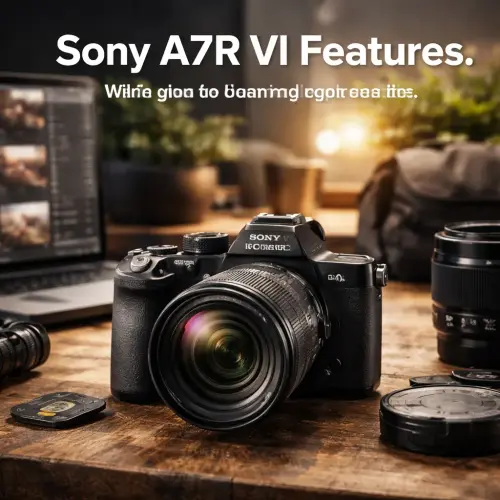
What Australian Photographers Should Know About Key Sony A7R VI Specs
The Sony A7R VI continues Sony’s tradition of ultra‑high‑resolution full‑frame cameras, but it is more than just a megapixel bump. For shooters across Australia – from the Kimberley to suburban Sydney studios – the balance of resolution, speed, and durability is what really matters. For a related guide, see Panasonic Lumix L10 Review: Is This Classic DSLR Still Worth It?.
While exact numbers may vary slightly from final production details, the A7R VI is designed as a workhorse for pros and serious enthusiasts who need both detail and reliability. Think huge dynamic range for midday outback sun, robust weather sealing for coastal shoots, and autofocus that stays locked on unpredictable wildlife.
Headline Sony A7R VI Features Aussies Will Notice First
Before diving into the full list of Sony A7R VI Specs, it helps to highlight the changes you will feel immediately the first time you take the camera out on an Australian job or road trip.
1. Higher‑Resolution Full‑Frame Sensor With Better Dynamic Range
The A7R series has always been about resolution. The A7R VI pushes that further with an ultra‑high‑resolution backside‑illuminated (BSI) sensor aimed at medium‑format‑like detail in a much smaller package. Expect:
- Enormous files ideal for large prints, cropping wildlife images, and commercial work.
- Improved dynamic range to handle high‑contrast scenes – like bright Aussie beaches with dark rock shadows.
- Cleaner high‑ISO output than older R‑series despite the megapixel count, thanks to back‑illuminated and improved processing.
2. Next‑Generation AI Autofocus and Subject Recognition
Sony continues to lean into AI‑driven autofocus, and the A7R VI benefits from smarter subject detection and tracking. In the field, this means:
- Stickier eye and face AF for weddings and events, even when subjects briefly turn away.
- Better recognition of animals and birds – perfect for Australian birding hotspots from Kakadu to Tasmania.
- More reliable tracking in backlit or low‑contrast conditions.
3. Improved In‑Body Image Stabilisation (IBIS)
The updated IBIS system aims to deliver more stops of stabilisation than the A7R V, giving you sharper handheld shots at slower shutter speeds. For Australian shooters, that translates to:
- Confident hand‑held landscapes at dusk on the Great Ocean Road.
- Cleaner indoor event shots without always leaning on flash.
- More usable hand‑held video for run‑and‑gun documentary work.
4. Stronger Video Feature Set for Hybrid Creators
The A7R VI continues the trend of R‑series bodies becoming serious hybrid tools. Expect refined 4K recording options, oversampled modes, and improved codecs tuned for colour‑grading. While it won’t replace a dedicated cinema camera, it’s now much more viable as a single body for both stills and video gigs.
Detailed Sony A7R VI Specs: Sensor, Autofocus, Video and More
This section breaks down the core Sony A7R VI specs so you can quickly judge whether it fits your style of shooting and business needs in Australia.
Sensor and Resolution
- Full‑frame (35mm) BSI CMOS sensor.
- Ultra‑high megapixel count (R‑series flagship territory) for extreme detail.
- Wide native ISO range suitable for both bright midday sun and low‑light work.
- Advanced noise reduction through the latest BIONZ‑class image processor.
Autofocus and Shooting Speed
- Dense phase‑detection AF points covering a large portion of the frame.
- AI‑based subject recognition: humans, animals, birds, and vehicles.
- Fast continuous shooting with AF/AE tracking – plenty for weddings, lifestyle and moderate action.
- Improved AF reliability in low‑light and backlit situations compared with previous models.
Video Capabilities
- High‑quality 4K recording with oversampling from the full sensor width or cropped modes.
- Advanced picture profiles and log options for colour‑grading in post.
- Support for higher data‑rate codecs for broadcast and commercial delivery.
- Eye AF and subject tracking available in video for more confident focus pulls.
Stabilisation and Handling
- Enhanced 5‑axis in‑body image stabilisation.
- Refined ergonomics with a deep grip, ideal for long wedding days or hiking with gloves.
- Weather‑sealed magnesium alloy body built to handle dust, sea spray, and heat.
- High‑resolution electronic viewfinder and bright articulating rear LCD.
Battery Life and Storage
- Uses Sony’s Z‑series battery, proven for long shooting sessions.
- Improved efficiency via updated processor and power management.
- Dual card slots compatible with fast SD or CFexpress (depending on final configuration), suited for 4K video and burst stills.
Connectivity and Workflow
- Fast USB‑C connectivity for tethered shooting and quick file transfers.
- Wi‑Fi and Bluetooth for remote control and wireless image delivery on location.
- Support for mobile workflows – handy if you are sending selects to clients from location in Byron Bay or Uluru.
| Feature | Sony A7R VI | A7R V (previous) |
|---|---|---|
| Sensor Type | New BSI full‑frame high‑res | High‑res BSI full‑frame |
| Autofocus | Next‑gen AI subject recognition | AI‑based AF (earlier version) |
| Stabilisation | Improved 5‑axis IBIS (more stops) | 5‑axis IBIS |
| Video | Refined 4K, better codecs | Advanced 4K options |
| Processor | Latest‑gen image processor | Previous‑gen processor |
| Body Design | Refined ergonomics, sealing tweaks | Established A7R V design |
Sony A7R VI vs A7R V: Camera Upgrades Explained
If you already own an A7R V, you are probably wondering whether the step to the A7R VI is worth the outlay at current Sony A7R VI price Australia levels. Here is how the upgrades stack up in meaningful, day‑to‑day use.
Autofocus: Smaller Upgrade on Paper, Bigger in the Field
On spec sheets, both cameras feature AI‑driven autofocus. In practice, the A7R VI offers more reliable subject detection and tracking, especially with erratic wildlife and fast‑moving people in low light. For Australian wedding and event shooters, this can mean noticeably fewer missed moments, especially during fast‑paced parts of the day like the ceremony exit or first dance.
Stabilisation and Hand‑Held Performance
The updated IBIS system gives the A7R VI a real‑world edge over the A7R V. If you like travelling light around Australia – shooting hand‑held at dusk in Melbourne’s laneways or during golden hour in the outback – the extra stabilisation headroom matters. It also helps video shooters smooth out walking shots when you don’t have a gimbal handy.
Processing Power, Detail and Colour
The new processor improves how files look straight out of camera and how much you can push them in post. Think better colour separation in tricky lighting (fluoro‑lit community halls, mixed indoor/outdoor reception venues) and more flexibility when recovering skies and shadows in RAW. This is where the Sony A7R VI features will appeal to landscape pros printing large for galleries or tourism clients.
Video: A More Confident Hybrid Body
Compared with A7R V, the A7R VI’s video refinements are incremental, but together they make the body more trustworthy for paid video work. Improved codecs and autofocus reliability give you more confidence filming interviews, elopements, or short promos that might have previously been assigned to a dedicated video camera.
Is It Worth Upgrading in Australia Right Now?
Whether the upgrade is justified depends on your workload. If you mostly shoot static landscapes on a tripod, the A7R V remains excellent. If you shoot fast‑paced weddings, wildlife, or hybrid photo‑video assignments, the sum of autofocus, stabilisation, and processing improvements in the A7R VI is easier to justify, even allowing for the higher Sony A7R VI price Australia at launch.
Real‑World Benefits of Sony A7R VI Specs for Australian Shooters
Spec sheets are one thing; life on location across Australia is another. Here is how the Sony A7R VI camera upgrades explained above translate into real gains in common Aussie scenarios.
Landscape and Travel Photography Around Australia
Australia’s scale and diversity are tailor‑made for the A7R VI. The high‑resolution sensor is ideal for:
- Big panoramic prints of the Twelve Apostles, Cradle Mountain, or Uluru.
- Heavy cropping when you can’t hike closer to a composition.
- Retaining detail despite heat haze and atmospheric conditions common in the outback.
The improved dynamic range and stabilisation mean more usable handheld shots at dawn and dusk, plus greater flexibility when editing skies and foregrounds.
Wildlife and Bird Photography
From cockatoos in suburban parks to sea eagles along the coast, Australian wildlife moves fast. The A7R VI’s AI autofocus and generous resolution help you:
- Lock onto birds in flight more reliably than previous R‑series bodies.
- Crops heavily into distant animals without losing detail.
- Work at slightly slower shutter speeds in low light thanks to improved IBIS.
Weddings, Events and Portrait Work
For full‑day Australian weddings that might move from harsh midday sun to dim reception halls, the A7R VI offers:
- Fast, accurate eye AF that copes with backlit ceremonies and dance‑floor chaos.
- Files that hold up beautifully to retouching and large wall prints.
- Enough resolution to crop for albums without re‑shooting or changing lenses constantly.
Video and Hybrid Content Creation
Aussie creatives increasingly need hybrid coverage – stills, Reels, and longer‑form video. The A7R VI’s blend of high‑end stills and competent video means:
- One body can comfortably handle both photography and video for many small‑to‑medium clients.
- Eye and subject tracking in video helps solo shooters keep interviews sharp.
- Better stabilisation means smoother handheld B‑roll around cities or coastal locations.
Climate, Durability and Local Support
Australian conditions can be unforgiving: dust, humidity, heat, and salty air. The A7R VI’s robust build and weather sealing make it suitable for:
- Dusty outback shoots and beach sessions (with sensible care and cleaning).
- Long days in high temperatures without worrying about body flex or cheap plastics.
- Peace of mind backed by Sony Australia’s warranty and local repair network.
Who the Sony A7R VI Suits Best in Australia
Not every photographer needs this much resolution or these particular Sony A7R VI Specs. Here is a quick guide to who will get the most from this body.
Ideal Users
- Landscape and fine‑art photographers who print big or sell high‑end wall art.
- Wedding and portrait professionals wanting maximum cropping flexibility and gorgeous detail.
- Wildlife and bird photographers needing both resolution and modern AF tracking.
- Commercial and advertising shooters where file quality and client expectations are high.
- Hybrid creator‑filmmakers who value strong stills with capable 4K video in one body.
Who Might Be Better Off With Another Sony Body
- If you are mainly shooting fast sports, a high‑speed body like the A9 line will still suit you better.
- If you do not print large and prefer smaller files, an A7 IV or similar may be a more practical, cost‑effective option.
- If your work is very video‑heavy, a cinema‑oriented body such as the FX3 may deliver better ergonomics and codecs.
Useful Resources
For deeper technical background on Sony’s latest full‑frame sensors and AF systems, it is worth reading a mix of manufacturer information and independent testing.
- Sony Australia – full‑frame camera lineup and official specifications
- DPReview – in‑depth reviews and lab tests of Sony Alpha cameras
In summary, the Sony A7R VI Specs package represents a meaningful evolution for high‑resolution full‑frame shooters in Australia. With better autofocus, stabilisation, processing, and video features compared with the A7R V, it offers more keepers, cleaner files, and greater flexibility for both professional and serious enthusiast work across the country’s varied landscapes and conditions.
Frequently Asked Questions About Sony A7R VI Specs
What are the standout Sony A7R VI specs compared with earlier models?
The standout Sony A7R VI specs are its ultra‑high‑resolution full‑frame BSI sensor, next‑generation AI autofocus, improved 5‑axis in‑body stabilisation, and more refined 4K video capabilities. Together they deliver higher detail, more keepers in challenging conditions, and a more capable hybrid stills‑and‑video tool than earlier A7R bodies.
Is the Sony A7R VI good for Australian landscape photography?
Yes, the A7R VI is particularly strong for landscape photography thanks to its high resolution, excellent dynamic range, and improved stabilisation. These traits are ideal for capturing wide Australian vistas, from outback deserts to coastal cliffs, and for producing large, detailed prints or heavily cropped compositions.
How does the Sony A7R VI vs A7R V autofocus compare?
In practice, the A7R VI autofocus is more reliable and intelligent than the A7R V, thanks to updated AI subject recognition and improved processing. Both cameras are strong, but the A7R VI tracks faces, eyes, animals and birds more confidently in low light, backlit scenes, and erratic motion, which is useful for weddings and wildlife.
Is the Sony A7R VI suitable for bird and wildlife shooters in Australia?
The A7R VI is a powerful option for bird and wildlife photographers because its high resolution allows heavy cropping, and its AI‑driven AF helps track moving subjects. Combined with improved stabilisation, you can work at longer focal lengths and slower shutter speeds, which is ideal when photographing distant or shy Australian wildlife.
What should I know about the Sony A7R VI price Australia at launch?
The Sony A7R VI price Australia is expected to launch at a premium similar to or slightly above the A7R V when it was new, reflecting its flagship status. Prices typically soften over time, so early adopters pay more but benefit from having the latest features immediately, while others may wait for promotions or bundles through local retailers.
Does the Sony A7R VI overheat when recording 4K video in Australian heat?
Sony has progressively improved heat management in its recent cameras, and the A7R VI is designed for better thermal control than older models. That said, prolonged 4K recording in direct Australian sun can still push any camera, so using shade, shorter takes, and monitoring warning indicators is advisable for critical shoots.
How durable is the Sony A7R VI body for dusty or coastal environments?
The A7R VI features a weather‑sealed magnesium alloy body designed to resist dust and moisture, making it suitable for outback roads and coastal locations. However, no camera is invincible, so you should still use common‑sense protection such as lens filters, rain covers in heavy spray, and regular cleaning after sandy or salty shoots.
Is the Sony A7R VI a good choice for wedding photographers?
Yes, many of the Sony A7R VI features directly benefit wedding work, including fast, accurate eye AF, strong low‑light performance, high‑resolution files for albums and large prints, and improved stabilisation. Its robust battery and dual card slots also support long wedding days and secure backup workflows that professionals rely on.
How does the Sony A7R VI perform in low light compared with the A7R V?
Despite its high resolution, the A7R VI benefits from an advanced BSI sensor and updated processor, so noise performance and dynamic range in low light are at least on par with, and in some cases better than, the A7R V. Combined with improved AF and stabilisation, it offers more usable shots in dim venues or at dusk.
Is the Sony A7R VI overkill for hobby photographers in Australia?
It can be, depending on your needs and budget. If you enjoy printing large, cropping heavily, or simply want top‑tier image quality, the A7R VI will be very rewarding even as a hobbyist. But if you mostly share images on social media and do not need huge files, a more affordable Sony body might be more practical.
What type of memory cards should I use with the Sony A7R VI ?
To make the most of the camera’s high‑resolution stills and 4K video modes, you should pair the A7R VI with fast SD or CFexpress cards supported by its dual slots. High‑speed cards help maintain longer burst sequences, quicker buffer clearing, and more reliable high‑bit‑rate video recording, which is essential for professional use.
Can the Sony A7R VI be used as a main video camera?
The A7R VI can absolutely serve as a main video camera for many projects, with high‑quality 4K recording, advanced AF, and strong stabilisation. However, for very demanding video productions, a dedicated cinema camera in Sony’s FX line may offer better ergonomics, connection options, and thermal headroom, so your choice should reflect your project mix.
How do the Sony A7R VI specs affect editing and storage needs?
The large files generated by the A7R VI require fast computers, plenty of RAM, and generous storage, especially if you shoot in RAW or run multi‑camera workflows. Australian photographers planning to adopt the camera should budget for extra SSDs or NAS storage, as well as a solid backup strategy to protect valuable client work.
Is the Sony A7R VI compatible with existing Sony E‑mount lenses?
Yes, the A7R VI uses Sony’s full‑frame E‑mount, so it is compatible with the extensive range of Sony and third‑party lenses already on the market. High‑quality glass is particularly important with such a high‑resolution sensor, so investing in sharp primes and pro‑grade zooms will help you fully exploit the camera’s potential.
How does the Sony A7R VI handle in terms of size and ergonomics?
The A7R VI follows Sony’s refined A7‑series ergonomics, with a deep grip, intuitive button layout, and a robust but portable body. It balances well with most full‑frame lenses, making it comfortable for all‑day use at weddings, on hikes, or while travelling around Australia with a compact kit.
What battery life can I realistically expect from the Sony A7R VI ?
The A7R VI uses Sony’s proven Z‑series battery and improved power management, so you can expect a solid day of mixed shooting per battery for stills, and less if you record extensive video. Many professionals will still carry at least two or three batteries for peace of mind on long Australian wedding days or remote trips. For a related guide, see PlayStation Plus Free Games May 2026: What to Expect This.
Is the Sony A7R VI a good option for travel photography around Australia and overseas?
Yes, the mix of relatively compact body, robust build, and extremely detailed files makes the A7R VI a strong travel companion. It lets you capture everything from sweeping outback views to tight street scenes in Australian cities, while dual card slots and weather sealing add security and reliability on the road.
Will the Sony A7R VI work well for studio portrait and product photography?
The A7R VI is excellent for controlled studio work due to its high resolution, clean files, and accurate colour, especially when paired with good lighting. Tethered shooting via USB‑C to a laptop allows Australian studio photographers to review images on a larger screen in real time, which speeds up collaboration with clients and art directors.
How does the Sony A7R VI fit into a broader Sony kit for professionals?
For many professionals, the A7R VI will serve as the high‑resolution anchor body in a two‑camera kit, paired with a faster sports‑oriented or video‑centred Sony body. This combination lets you assign the A7R VI to detailed work – landscapes, portraits, products – while a second body handles high‑speed action or dedicated video on demanding Australian assignments.
What is Sony A7R VI Specs?
Sony A7R VI Specs is covered in the guide above with practical context, useful examples, and details readers can use to make a better decision.