

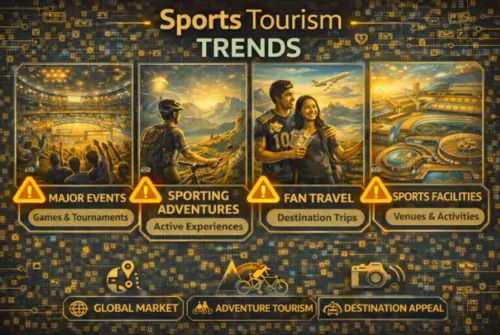
Sports tourism has become one of the fastest-growing segments of the global travel industry. Instead of traveling only for leisure or business, millions of people now plan trips around sporting events, competitions, and athletic experiences.
From international tournaments and marathons to surfing destinations and esports championships, sports tourism is transforming how people explore the world.
In recent years, the sports tourism market has expanded rapidly as travel becomes more accessible and global sporting events attract fans from every continent. Reports suggest the global sports tourism market could exceed $1 trillion by the early 2030s, driven by rising international travel and increasing interest in live sporting experiences.
In 2026, sports tourism is no longer limited to major global events like the Olympics or FIFA World Cup. It includes amateur competitions, adventure sports destinations, and fan travel experiences that combine tourism with athletic passion.
What Is Sports Tourism?
Sports tourism refers to traveling to participate in, watch, or experience sports activities away from home.
There are three main types of sports tourism:
Event-based sports tourism
This includes traveling to watch major sporting events such as:
- Olympic Games
- FIFA World Cup
- Super Bowl
- Formula 1 races
- international tennis tournaments
These events attract millions of visitors and generate large economic impacts for host cities.
Participatory sports tourism
Some travelers participate directly in sports competitions or activities during their trips.
Examples include:
- international marathons
- cycling tours
- golf vacations
- triathlons
- amateur football tournaments
Athletes and enthusiasts travel specifically to compete or train.
Nostalgia or heritage sports tourism
This type focuses on visiting sports landmarks and historical venues.
Examples include:
- famous stadium tours
- sports museums
- historic arenas
- halls of fame
Fans travel to connect with the history of their favorite sports teams or athletes.
Why Sports Tourism Is Growing
Several factors explain the rapid growth of sports tourism.
Global sporting events attract massive audiences
Major sporting competitions bring together fans from around the world. Events like the Olympics and the FIFA World Cup generate huge tourism inflows because fans want to experience the atmosphere in person.
These events also encourage host countries to invest in infrastructure such as transportation systems, hotels, and stadiums.
Experiential travel is becoming more popular
Modern travelers increasingly prioritize experiences rather than traditional sightseeing.
Sports tourism offers unique experiences such as:
- watching games in iconic stadiums
- participating in famous races
- training in world-class facilities
These experiences create memorable moments that typical tourism activities may not provide.
Social media amplifies sporting experiences
Social media platforms allow fans to share their experiences instantly. Images and videos from sporting events inspire others to travel and attend similar events.
This visibility increases demand for sports-related travel.
Key Sports Tourism Trends in 2026
Several emerging trends are shaping the sports tourism industry.
Mega sporting events driving tourism
Mega events remain the largest drivers of sports tourism. Host cities benefit from increased visitor numbers, media exposure, and international recognition.
For example, global tournaments often generate billions in tourism revenue through hotel bookings, transportation, and hospitality services.
However, cities are becoming more cautious when hosting large events because of the high infrastructure costs.
Rise of amateur sports travel
Not all sports tourism revolves around professional competitions.
Amateur athletes increasingly travel internationally for events such as:
- marathon races
- cycling competitions
- swimming championships
- golf tournaments
Cities hosting these events often attract thousands of participants and spectators.
Participatory sports tourism is especially popular because it combines competition with vacation experiences.
Adventure sports tourism growth
Adventure sports are another fast-growing segment.
Popular adventure sports destinations include:
- surfing locations like Bali
- skiing destinations in Europe and North America
- mountain climbing regions such as Nepal
- scuba diving hotspots in Southeast Asia
These experiences attract travelers who want both excitement and exploration.
Esports tourism
Esports has emerged as a surprising contributor to sports tourism.
Major esports tournaments attract thousands of spectators who travel to watch professional gamers compete.
Events such as international gaming championships or esports leagues bring fans together much like traditional sports events.
Esports tourism is particularly popular among younger audiences who combine gaming culture with travel experiences.
Destination branding through sports
Many cities and countries now use sports as a strategy to promote tourism.
By hosting major sporting events, destinations gain global exposure and strengthen their brand identity.
Examples include:
- cities hosting marathons or triathlons
- countries investing in sports facilities
- tourism boards promoting sports events to international travelers
This strategy helps destinations attract both tourists and investors.
Economic Impact of Sports Tourism
Sports tourism generates substantial economic benefits for host destinations.
Increased visitor spending
Travelers attending sporting events spend money on:
- accommodation
- food and restaurants
- transportation
- local attractions
- merchandise
This spending supports local businesses and boosts the tourism economy.
Job creation
Major sporting events require staff in various sectors including hospitality, transportation, event management, and security.
These opportunities create both temporary and long-term employment.
Infrastructure development
Hosting large sporting events often leads to improvements in infrastructure such as stadiums, airports, public transport systems, and hotels.
These improvements can benefit local communities long after the event ends.
Sports Tourism in Southeast Asia
Southeast Asia has become an attractive region for sports tourism due to its diverse landscapes and growing tourism infrastructure.
Popular sports tourism activities in the region include:
- surfing in Indonesia and the Philippines
- diving in Thailand and Malaysia
- international marathons in major cities
- motorsports events
Countries in Southeast Asia are increasingly investing in sports tourism to attract international visitors.
Challenges Facing Sports Tourism
Despite its growth, sports tourism also faces several challenges.
Environmental concerns
Large sporting events can create environmental pressure through waste, energy consumption, and increased transportation emissions.
Sustainable event planning is becoming a priority.
High event hosting costs
Hosting mega events like the Olympics requires massive investments in stadiums and infrastructure. Some cities have struggled to justify these costs after the events end.
Global travel uncertainties
Factors such as economic instability, health crises, or geopolitical tensions can disrupt international travel and reduce sports tourism demand.
The Future of Sports Tourism
The future of sports tourism will likely focus on innovation and sustainability.
Key developments expected in the coming years include:
- hybrid sports events with digital fan participation
- eco-friendly stadium design
- integration of virtual reality for remote fans
- increased focus on participatory sports tourism
- expansion of esports events and gaming conventions
As travel continues to evolve, sports tourism will remain an important part of the global tourism industry.
Conclusion
Sports tourism trends show how travel and athletic experiences are becoming closely connected. Whether attending global tournaments, participating in marathons, exploring adventure sports destinations, or watching esports competitions, travelers are increasingly choosing destinations based on sports.
As the industry continues to expand, destinations that invest in sports infrastructure, sustainable event planning, and engaging fan experiences will benefit from the growing demand for sports-related travel.
Sports tourism is not only about watching games—it is about creating unforgettable experiences that connect people, cultures, and passions through sport.