

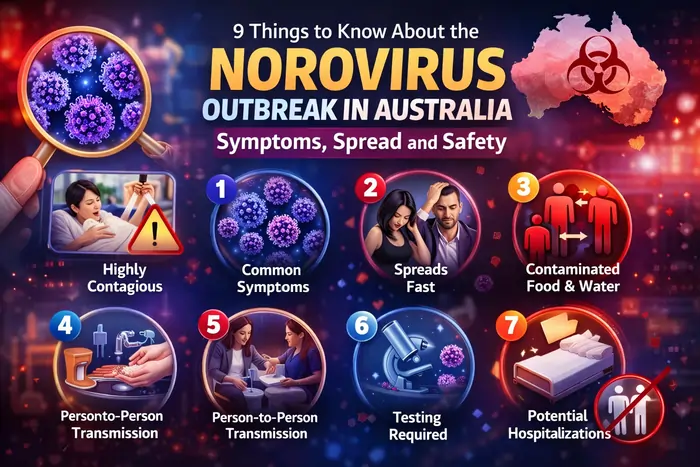
Norovirus is causing a significant spike in gastro-style illness in Australia, and understanding how it spreads and how to protect yourself is essential right now. Below are 9 key things you should know about symptoms, spread, and safety during the current norovirus surge, written for everyday readers in Australia.
1. What Norovirus Actually Is
Norovirus is a highly contagious virus that causes acute gastroenteritis — in plain terms, sudden-onset vomiting and diarrhoea. It infects the small intestine, triggering inflammation that leads to symptoms like nausea, cramps, and watery stools.
Norovirus is sometimes called the “winter vomiting bug” because it tends to surge in cooler months and in settings where people are indoors and close together. There are multiple strains of norovirus, which is one reason people can catch it more than once across their lifetime. Unlike some other viruses, there is currently no vaccine available for norovirus.
If you want a technical deep dive on what norovirus is and how it works, check out this detailed overview from the World Health Organization.
2. What’s Happening in Australia Right Now
Australia has seen repeated spikes in gastroenteritis linked to norovirus, especially in recent seasons, with outbreaks reported in childcare centres, aged care facilities, hospitals, and catered events. In some states, health departments have issued alerts about increases in gastro outbreaks and reminded the public to focus on hygiene and staying home when sick.
Outbreak investigations have highlighted that norovirus is a common cause of foodborne and person-to-person outbreaks across the country, not just a “single event”. Globally, public health data show that norovirus activity in 2024–2025 has been higher than many previous seasons, which fits what Australian clinicians are seeing on the ground. In short, norovirus isn’t new, but the recent surge means the risk of encountering it at home, work, or school is higher than usual.
For current Australian public health updates, you can follow national advice via Healthdirect’s norovirus page.
3. Symptoms You Should Watch For
Norovirus symptoms usually start suddenly, often 12–48 hours after you’re exposed. The classic signs are:
- Nausea and queasiness in the stomach
- Forceful vomiting
- Watery or loose diarrhoea
- Stomach cramps or abdominal pain
You might also notice:
- Low-grade fever, chills, and feeling generally unwell
- Headache, muscle aches, and fatigue
- Occasional loss of appetite or changes in taste
For most healthy adults, symptoms last about 1–3 days and then settle as the body clears the virus. However, in young children, older adults, or people with other medical conditions, severe or prolonged vomiting and diarrhoea can quickly lead to dehydration and may need medical assessment.
For a clear symptom checklist, see the Cleveland Clinic’s norovirus symptom guide.
4. How Norovirus Spreads So Easily
Norovirus spreads mainly through the faecal–oral route, which includes several everyday situations. Common pathways include:
- Direct contact with an infected person, such as caring for someone who is vomiting or has diarrhoea
- Touching contaminated surfaces (bathroom taps, door handles, benches) and then touching your mouth
- Eating food or drinking water contaminated with tiny amounts of stool or vomit from an infected person, often via unwashed hands or unsafe food handling
- Inhaling aerosolised particles when someone vomits nearby, which can then land on surfaces or get into your mouth.
Norovirus is incredibly contagious: it takes only a few viral particles to make someone sick, while an infected person can shed billions. You can also continue to shed the virus for days after feeling better, which is why staying home for at least 48 hours after symptoms stop is strongly recommended.
To understand the science of norovirus transmission, the NSW Health fact sheet explains modes of spread in simple language.
5. The Situation in Crowded Places: Schools, Aged Care and Events
Norovirus outbreaks thrive in environments where people are in close quarters and share facilities. High-risk settings include:
- Childcare centres and schools, where young children may struggle with rigorous handwashing and often touch shared toys and surfaces
- Residential aged care facilities, hostels, and nursing homes, where residents often share dining areas and bathrooms and are at higher risk of complications
- Hospitals and healthcare facilities, particularly wards with vulnerable patients
- Catered functions and events, when a single contaminated food handler or item can expose dozens or hundreds of guests.
Investigations in Australia have documented outbreaks linked to catered events, with hundreds of people falling ill after a single function. Public health agencies may temporarily close wards, restrict visitors, or limit activities in facilities to bring outbreaks under control.
If you work in or visit these environments, the infection-control advice from Queensland Health’s norovirus page is a practical reference for what facilities should be doing.
6. When to Seek Medical Help
Most people with norovirus can manage symptoms at home with rest and fluids, without needing specific antiviral medicines. However, you should contact a doctor, urgent care, or health service if you notice:
- Signs of dehydration, such as very dry mouth, little or no urination, dizziness, or feeling faint
- Blood in vomit or stool
- High or persistent fever that does not improve with time or simple medications
- Symptoms lasting longer than 3 days, or worsening instead of improving
- Concerning symptoms in babies, older adults, pregnant people, or anyone with chronic illness or weakened immunity.
If you cannot keep any fluids down, seek urgent care, as you may need intravenous fluids to prevent serious dehydration. In Australia, you can call health advice lines (for example, Healthdirect) or your GP for guidance on whether you need in-person assessment.
For an accessible medical overview of treatment and red-flag symptoms, see the Mayo Clinic’s norovirus guide.
7. Practical Safety Tips at Home
Stopping norovirus depends heavily on hygiene and cleaning, not on medication. Key steps you can take at home include:
- Wash your hands with soap and running water for at least 15–20 seconds, especially after using the toilet, changing nappies, cleaning up vomit, and before preparing or eating food.
- Avoid relying solely on alcohol-based hand sanitisers, because they are less effective against norovirus; soap and water is best.
- Immediately clean and disinfect areas contaminated with vomit or diarrhoea, using hot, soapy water followed by a bleach-based disinfectant.
- Flush any vomit or stool carefully and clean the surrounding toilet area.
- Wash contaminated clothing and bed linen promptly in hot water with detergent.
It’s also wise to avoid preparing food for others for at least 48 hours after your symptoms have stopped, because you may still be shedding the virus. In shared homes, giving the sick person a dedicated bathroom (if possible) and separate towels can significantly reduce spread.
For detailed cleaning steps, the Australian information on Healthdirect’s norovirus infection page is a reliable guide.
8. Food Safety and Norovirus
Foodborne norovirus outbreaks often occur when food handlers work while sick or shortly after their symptoms have resolved. High‑risk foods include ready‑to‑eat meals that are handled after cooking, shellfish like oysters, and raw fruits and vegetables that are not washed properly.
To reduce risk:
- Only handle or prepare food for others when you’ve been symptom-free for at least 48 hours.
- Wash fruits and vegetables thoroughly, and cook shellfish like oysters completely before eating.
- Ensure commercial food businesses follow strict hand hygiene policies and exclude ill staff from work until they are no longer infectious.
In documented Australian outbreaks, a single caterer or food event has been linked to illness in large groups, illustrating how easily norovirus can spread via food if controls fail. Food safety professionals can find outbreak analyses and prevention strategies through resources like Food Safety News’ report on an Australian norovirus outbreak.
9. How to Protect Your Community
Norovirus control depends not just on personal hygiene, but on collective action in families, schools, workplaces, and care facilities. You can help protect your community by:
- Staying home from work, school, or childcare until at least 48 hours after vomiting and diarrhoea have stopped.
- Informing your child’s school or daycare if they are unwell, so they can increase cleaning and watch for further cases.
- Following any visitor restrictions or infection-control instructions at hospitals and aged care facilities.
- Sharing accurate information from credible health authorities instead of rumours on social media.
Health agencies emphasise that even though norovirus is miserable, most people recover fully, and simple steps like handwashing, staying home when sick, and proper cleaning make a real difference at the population level. By acting early when symptoms start, you help break chains of transmission in your household, workplace, and local community.
Norovirus Basics
| Topic | Key points (Australia-focused) |
|---|---|
| What it is | Highly contagious virus causing acute gastroenteritis (vomiting, diarrhoea). |
| Onset of symptoms | Usually 12–48 hours after exposure. |
| Main symptoms | Nausea, vomiting, watery diarrhoea, stomach cramps, low-grade fever, aches. |
| How it spreads | Person-to-person, contaminated food, water, surfaces, and aerosolised vomit. |
| High-risk settings | Childcare, schools, aged care, hospitals, catered events. |
| Duration | Most people recover in 1–3 days. |
| Home treatment | Rest, fluids, oral rehydration, watch for dehydration. |
| Stay-home period | At least 48 hours after vomiting and diarrhoea stop. |
| Best prevention | Soap-and-water handwashing, cleaning with bleach, safe food handling. |
A norovirus outbreak can be frightening, but for most healthy Australians it remains a short‑lived infection that can be safely managed at home with rest, fluids, and strict hygiene. The real power lies in prevention: thorough handwashing with soap and water, staying home for at least 48 hours after symptoms stop, and careful cleaning of contaminated surfaces dramatically reduce the virus’s ability to rip through households, schools, aged care homes, and workplaces. By acting quickly when symptoms appear and following credible public health advice, each person plays a quiet but crucial role in protecting vulnerable community members from severe dehydration and complications.
At the same time, it is important not to dismiss ongoing or unusual bowel symptoms as “just a bug”, especially if you notice blood in your stool, persistent changes in bowel habits, unexplained weight loss, or ongoing abdominal pain. In Australia, bowel (colon) cancer is one of the most commonly diagnosed cancers, and early detection significantly improves treatment options and survival. If something doesn’t feel right or your symptoms linger beyond a typical norovirus infection, book a check‑up with your GP and ask directly about bowel cancer screening and further testing.
For a deeper dive into warning signs that go beyond a simple stomach virus, you can read this detailed guide to Colon Cancer Symptoms: Urgent Signs Australians Notice on Real CEO Stories.