

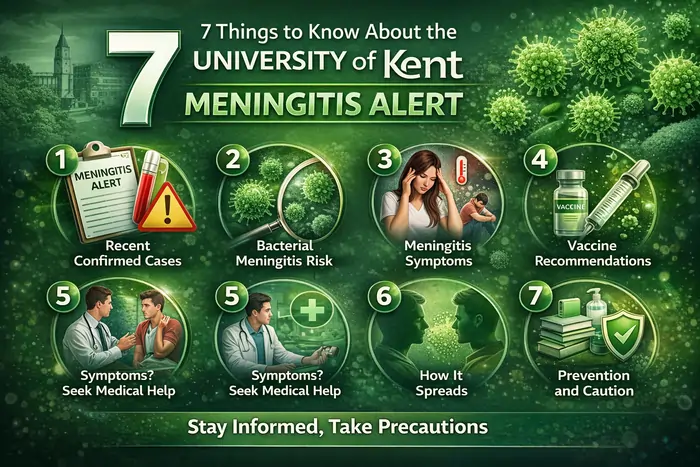
Kent Meningitis Alert has shaken students and families across the UK and beyond, and understanding what is happening – and what to do next – is critical. Below is a detailed, reader‑friendly, SEO‑optimised guide to 7 key things you need to know about the University of Kent meningitis alert, with natural external links you can follow for more information.
1. What Happened at the University of Kent?
In mid‑March 2026, public health officials confirmed an outbreak of invasive meningococcal disease linked to the Canterbury area, including the University of Kent. Two young people have tragically died – one a University of Kent student and the other a sixth‑form pupil from a nearby school – and at least 11 others are reported to be seriously ill in hospital.
The UK Health Security Agency (UKHSA) has stated that there are 13 confirmed cases of invasive meningococcal disease in this cluster, a serious infection that can cause meningitis (inflammation of the lining of the brain and spinal cord) and septicaemia (blood poisoning). Most affected individuals are aged 18–21, and several are university students who live, study, and socialise closely together – exactly the kind of conditions in which meningitis bacteria can spread.
For a clear, official statement on the situation, you can read the UK government’s update on cases of invasive meningococcal disease confirmed in Kent on the GOV.UK website.
2. Why Was a Meningitis Alert Issued?
The alert was issued because meningococcal disease can progress extremely fast and can be fatal or life‑changing even in young, otherwise healthy people. Charities such as Meningitis Now and Meningitis Research Foundation have emphasised that students and young adults are at particular risk – not only of infection, but of missing early warning signs because symptoms can look like flu, a cold, or even a bad hangover.
The outbreak in Kent comes against a backdrop of rising cases of invasive meningococcal disease across England, with around 378 confirmed cases in 2024–25, most due to the MenB strain. This upward trend is one reason experts are urging universities to take any suspected cluster seriously and to act quickly with antibiotics for close contacts, public information and, where appropriate, vaccine checks.
For background on why meningitis is such a medical emergency, the NHS provides an excellent overview of meningitis and when to get medical help on its meningitis information page.
3. How Are Students Being Protected Right Now?
In response to the outbreak, hundreds of students at the University of Kent have been queuing for precautionary antibiotics, particularly those living in specific accommodation blocks or identified as close contacts of confirmed cases. The UKHSA is working with the university, local hospitals and NHS 111 to identify at‑risk students and to provide information, support and targeted treatment.
Emails from the University of Kent have gone out to tens of thousands of students and staff, explaining the situation and signposting to health advice. UKHSA officials have stressed that antibiotics are being offered to those most likely to have had close, prolonged contact with confirmed cases – such as flatmates, intimate contacts and those sharing social spaces at specific gatherings – to reduce the risk of further spread.
If you are a student in the UK and worried about your own campus, The Conversation has a timely expert explainer, “Kent meningitis outbreak: what students need to know”, which outlines practical steps for students everywhere; you can read it on The Conversation’s website.
4. Key Meningitis Symptoms Students Must Recognise
One of the most important things to know about meningitis is that symptoms can appear suddenly and worsen very quickly. Early signs often look like common illnesses – but if you wait until the classic rash appears, it can be too late.
According to official UK guidance, symptoms to watch for include:
- Fever (high temperature), sometimes with cold hands and feet
- Severe headache that feels different or worse than usual
- Vomiting or feeling very sick
- Stiff neck
- Dislike of bright lights
- Confusion, delirium, or acting “not themselves”
- Extreme sleepiness, difficulty waking, or loss of consciousness
- A rash that does not fade when you press a glass firmly against it (the “glass test”)
- Rapid breathing, severe limb pain, pale or blotchy skin – often early signs of sepsis
Students are urged to trust their instincts if they or a friend feel very unwell, especially if symptoms are getting worse or “just don’t feel right”. The NHS advises calling 999 or going straight to A&E if you think someone might have meningitis or sepsis, without waiting for all symptoms or a rash to appear.
You can download the official “Meningitis: don’t ignore the signs and symptoms” poster, which includes a symptom checklist and glass test explanation, directly from GOV.UK.
5. What We Know About the Kent Outbreak So Far
While investigations are ongoing, early reports suggest the Kent meningitis outbreak may be linked to a specific gathering in Canterbury attended by several of the affected students. Public health teams are interviewing patients and their families to identify close contacts, determine where they might have been exposed, and decide who needs antibiotics or further monitoring.
Invasive meningococcal disease is relatively rare, but when clusters occur in student populations they are taken extremely seriously. Expert commentary notes that teenagers and young adults are already a recognised risk group, partly because of shared living spaces, parties, and social activities that bring people into close, prolonged contact.
For in‑depth expert reaction and epidemiological context, you can read the Science Media Centre’s analysis in its article “expert reaction to meningitis outbreak in Kent”, available on the Science Media Centre website.
6. Vaccination: What Protection Do Students Have?
In the UK, many teenagers are offered the MenACWY vaccine at school, which protects against four major meningococcal strains (A, C, W and Y). However, the MenB strain – currently responsible for the majority of invasive meningococcal disease cases in England – is not covered by MenACWY, and not all young adults have received MenB vaccination.
Meningitis charities point out that while vaccination is the best way to prevent certain types of meningitis, awareness of symptoms remains vital even for those who are vaccinated, because no single vaccine covers all causes. Students who are unsure about which vaccinations they have received, or who may have missed the MenACWY jab at school, are encouraged to contact their GP or university health service to check their records and discuss catch‑up vaccination.
The UK Health Security Agency offers a straightforward explainer on what meningitis is, who is at risk, and how vaccines fit into prevention; you can read it in their blog post, “What is meningitis? Symptoms, risks and how to protect yourself”, on the UKHSA blog.
7. Practical Steps for Students and Parents Right Now
Even if you are not on the Canterbury campus, the Kent meningitis alert offers important lessons for students and families across the UK and internationally. These practical steps can help you stay safer and more prepared:
- Know the symptoms and act fast
Keep a symptom list handy and treat meningitis as a “don’t wait” emergency. If in doubt, call NHS 111 or, if you suspect meningitis or sepsis, call 999 or go straight to A&E. - Look out for your friends
Experts stress that students should check on friends who feel unwell, particularly before bed, because deterioration can happen overnight. If someone seems unusually sleepy, confused or difficult to wake, seek urgent help. - Use official information, not rumours
Follow updates from the university, UKHSA and reputable news outlets instead of relying on social media speculation. The University of Kent and UKHSA regularly update their websites and email channels with verified guidance. - Check your vaccination status
If you are a student or parent, confirm whether MenACWY (and where appropriate, MenB) vaccines have been received, and ask about catch‑up options if not. - Seek support for anxiety and grief
Outbreaks like this are emotionally devastating, particularly for those close to the victims and for communities already under exam stress. Universities usually offer counselling, wellbeing services and peer support networks; reaching out is a sign of strength, not weakness.
Meningitis Now has a dedicated page about the Kent outbreak – “Two deaths from meningitis at the University of Kent” – that includes helpline information and advice for affected students and families, which you can access on the Meningitis Now website.
Conclusion: Staying Informed, Prepared and Compassionate
The University of Kent meningitis alert is a stark reminder that serious infections can strike suddenly, even in vibrant, healthy student communities. While the headlines are frightening, there is also a clear message of action: know the symptoms, trust your instincts, seek emergency help if you are worried, and follow the official advice being issued on campus and by public health authorities.
By learning about meningitis, checking vaccination status, and looking out for friends who are unwell, students and families can help prevent further tragedy and ensure that those who do fall ill receive life‑saving treatment as quickly as possible. In moments like these, accurate information, calm vigilance, and mutual support are just as vital as antibiotics and hospital care.
You can learn more in this comprehensive Real CEO Stories article on the norovirus outbreak in Australia.