

The aging brain doesn’t simply “wear out”—it actively remodels over time. As we get older, some brain regions shrink, neural connections thin, and processing speed slows, which can make it harder to recall names, multitask, or learn complex new information.
However, aging is not just decline. Many abilities actually improve with age, including vocabulary, emotional regulation, pattern recognition, and life wisdom—especially in people who remain mentally, socially, and physically active.
By understanding these changes and focusing on key habits—quality sleep, regular physical activity, healthy diet, continuous learning, and strong social connections—you can protect cognitive health, delay decline, and even build “brain reserve”, helping you stay mentally sharp for decades.
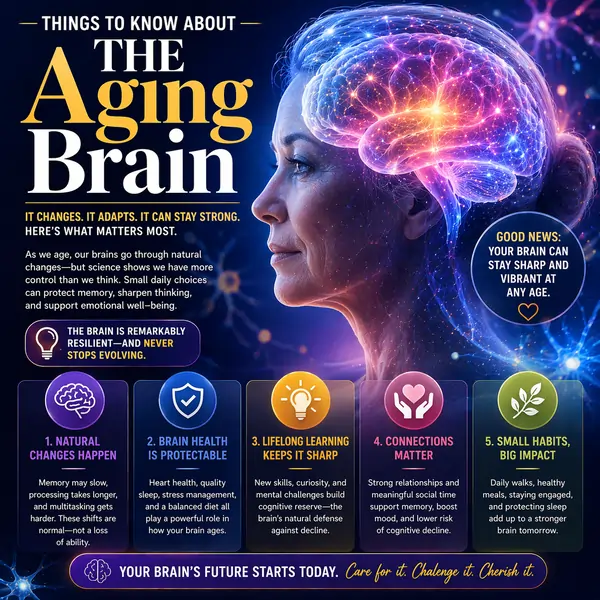
The aging brain changes in ways that can affect memory, attention, speed, and mood—but it also gains strengths like better judgment, emotional balance, and “crystallized” knowledge over time. Understanding what’s normal, what’s not, and what you can do about it is the key to staying sharp and independent as you get older.
1. The Aging Brain Changes Shape—And That’s (Mostly) Normal
As the aging brain progresses through midlife and beyond, it undergoes structural changes you can actually see on brain scans. The cerebral cortex (outer layer), hippocampus (memory hub), and frontal lobes (planning and control) gradually thin and shrink, while the white matter fibers that connect regions also lose some integrity.
Researchers have shown that overall brain volume can start to decline from around age 40, with shrinkage accelerating in the 60s and 70s. This doesn’t automatically mean dementia; it’s part of typical brain aging. You can watch a striking visual of how a healthy aging brain shrinks over decades in this time‑lapse from the U.S. National Institute of Neurological Disorders and Stroke.
For a clear explainer, the TED‑Ed video “What happens to your brain as you age” walks through how the cortex thins, white matter shrinks, and chemical messengers like dopamine decline as part of brain aging.
2. Processing Speed Slows, But Wisdom Grows
One of the most consistent findings in aging brain research is slower processing speed: it takes longer for neurons to send signals and for different brain networks to coordinate a response. That’s why older adults may feel they need more time to follow fast conversations, adapt to new tech, or switch between tasks.
However, slower isn’t the same as worse. Neuroscientists emphasize that while “fluid” abilities (speed, rapid problem‑solving) decline, “crystallized” intelligence—knowledge, vocabulary, pattern recognition—often peaks in middle age and stays robust into later decades. A BrainMind presentation on cognitive aging defines this as normal, non‑pathological change, not dementia, and highlights that older adults often compensate with better strategies and experience.
Videos like “How Your Brain Rewires at 20, 40, and 60” explain how the aging brain is continually optimizing, trading raw speed for deeper integration and synthesis of information.
3. Memory Changes: Forgetting Names vs. Dementia Red Flags
The aging brain tends to have more “tip‑of‑the‑tongue” moments, especially for names and recent events. This is strongly tied to changes in the hippocampus and frontal lobes, which are crucial for encoding new memories and retrieving them under pressure.
Normal age‑related memory changes often look like:
- Taking longer to learn new information.
- Occasionally misplacing items or forgetting why you walked into a room.
- Needing reminders for appointments but remembering them with cues.
By contrast, dementia‑related changes involve more severe, progressive problems:
- Forgetting important conversations or events repeatedly.
- Getting lost in familiar places.
- Struggling with words, decision‑making, or everyday tasks you previously handled easily.
The U.S. National Institute on Aging’s video “How Alzheimer’s Changes the Brain” shows how beta‑amyloid plaques, tau tangles, and chronic inflammation destroy neurons in memory regions like the hippocampus, causing the aging brain to shrink far beyond normal. That’s a crucial distinction: aging alone does not cause Alzheimer’s.
4. Not All Aging Brains Decline at the Same Rate
One of the most fascinating discoveries in recent years is the existence of “superagers”—people in their 80s whose memory and thinking look decades younger than their peers. A Northwestern University study found that superagers’ brains retain more youthful molecular features, including higher levels of immature neurons and neuroblasts in the hippocampus.
In these individuals, the aging brain continues to produce and integrate new neurons at a rate more like much younger adults, which may help maintain memory and resilience despite age. Similarly, other research has identified key ages—around 57, 70, and 78—when cognitive decline tends to become more noticeable on average, but lifestyle factors can dramatically shift how each person experiences those turning points.
Videos such as “Why brains of some 80‑year‑olds stay decades younger?” and “3 Key Ages Your Brain Declines Dramatically” break down how protein markers, brain connectivity, and lifestyle combine to determine your individual aging brain trajectory.
5. Lifestyle Can Slow (and Even Partly Reverse) Brain Aging
The idea that the aging brain is fixed and doomed to decline is outdated. Modern studies show that neuroplasticity—the brain’s ability to reorganize and form new connections—persists into older age.
Key protective factors include:
- Physical activity: Regular aerobic exercise increases blood flow, supports neurogenesis in the hippocampus, and is strongly linked to better memory and slower cognitive decline.
- Cognitive challenge: Learning new skills, languages, instruments, or complex games stimulates neural pathways and builds “cognitive reserve,” giving the aging brain extra capacity to cope with damage.
- Sleep quality: Deep sleep is when the brain consolidates memories and clears metabolic waste; chronic poor sleep is linked to faster brain aging and higher dementia risk.
- Social connection and purpose: Lonely or isolated older adults show faster cognitive decline; meaningful relationships and purpose‑driven activities keep brain networks engaged.
Talks like “Understanding Brain Aging: What Really Keeps Your Mind Strong” and “Can We Avoid Cognitive Decline with Age?” provide practical, science‑based strategies to support a healthier aging brain day to day.
6. Vascular Health Is Brain Health
Many age‑related cognitive changes really reflect what’s happening in your blood vessels, not just in neurons. Experts on cognitive aging point out that high blood pressure, high cholesterol, and diabetes can damage small blood vessels in the brain, reducing oxygen and nutrient delivery.
Over time, this can lead to “silent” strokes, white‑matter damage, and microbleeds that subtly erode processing speed and executive function. In other words, a healthy aging brain depends heavily on a healthy heart and vascular system.
The BrainMind “Defining Cognitive Aging” lecture highlights how controlling blood pressure, cholesterol, and blood sugar can significantly reduce the risk of vascular cognitive impairment and dementia. Similarly, clinical talks on dementia prevention emphasize that many cellular changes—oxidative stress, inflammation, and cell death—are strongly influenced by vascular risk factors you can modify.
7. Men’s and Women’s Brains May Age Differently
Recent large‑scale imaging studies suggest that male and female brains do not age in exactly the same way. One international study analyzing more than 4,700 healthy adults found greater overall shrinkage across multiple regions in men’s brains compared with women’s, implying that men’s aging brain may decline faster structurally.
However, women are still almost twice as likely to develop Alzheimer’s disease, which means brain aging and dementia aren’t the same phenomenon. Experts note that hormones, inflammation, genetics, and lifespan differences all contribute to these patterns, and that more research is needed to understand how sex and gender shape risk and resilience in the aging brain. Videos like “Do Men’s Brains Age Faster Than Women’s?” summarize this emerging science in accessible language.
In the end, understanding the aging brain is about recognizing what’s normal, what’s not, and which daily habits genuinely help you stay sharp as the years go by. And if you’re also curious about how emerging health threats intersect with neurology and long‑term wellbeing, you may want to read “7 Things to Know About the Cicada COVID Variant BA.3.2” in this in‑depth explainer on the Cicada COVID Variant BA.3.2.
Frequently Asked Questions About the Aging Brain
What is the “aging brain”?
The aging brain refers to natural changes in brain structure and function over time, including slower processing, mild memory shifts, and gradual shrinkage—distinct from diseases like Alzheimer’s disease.
At what age does the brain start to age?
Changes can begin as early as your 30s or 40s, with more noticeable effects—like volume loss and slower thinking—appearing in later decades.
Is forgetfulness normal with age?
Yes, mild forgetfulness (like misplacing items or forgetting names) is normal. Severe memory issues that disrupt daily life are not and should be evaluated.
Does everyone’s brain shrink with age?
Yes, some brain shrinkage is typical, especially in areas like the hippocampus and frontal lobes, but the rate varies based on lifestyle and health.
What’s the difference between normal aging and Alzheimer’s?
Normal aging involves mild slowing, while Alzheimer’s includes progressive brain damage, protein buildup, and loss of independence.
Can the brain still grow new cells?
Yes. The brain can still produce new neurons through neurogenesis, especially in the hippocampus, even in older age.
Why does processing speed slow down?
Aging affects neural communication, including myelin loss and weaker connections, making tasks feel slower or more effortful.
What habits help keep the brain healthy?
Key habits include:
- Regular exercise
- Quality sleep
- Healthy diet
- Mental stimulation
- Strong social connections
How does poor sleep affect the brain?
Poor sleep can accelerate cognitive decline, impair memory, and allow harmful proteins to build up in the brain.
Do men and women’s brains age differently?
Research suggests men may experience faster structural decline, but women have higher Alzheimer’s risk, showing complex differences.
Can diet protect brain health?
Yes. Diets like the Mediterranean or MIND diet support brain and heart health, lowering the risk of decline.
How do stress and mental health impact the brain?
Chronic stress and depression can shrink memory-related brain regions, increase inflammation, and harm cognitive function.
Are brain games enough?
No. Brain games help, but the best results come from a combination of physical, mental, and social activities.
When should I worry about memory issues?
Seek help if symptoms are persistent, worsening, and affecting daily life, such as getting lost or repeating questions often.
What’s the best thing I can do today for my brain?
Regular physical activity is one of the most effective ways to support brain health, along with sleep, learning, and social engagement.