

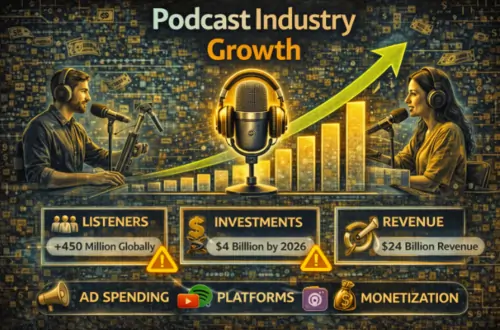
Podcast Industry Growth is no longer just about “more people listening.” In 2026, it also means how podcasts are discovered, watched, shared, and monetized—especially as video podcasts, short clips, and creator-led communities become mainstream.
If you’re a Filipino creator planning your first show, a brand looking for sponsorships, or a student trying to understand media trends, Podcast Industry Growth matters because it’s shaping where attention goes—and where marketing budgets follow.
One reason the industry keeps expanding is that podcasting has moved from niche to normal. Edison Research’s Infinite Dial 2025 reported that podcast consumption in the U.S. reached an all-time high, signaling continued mainstream adoption in one of the world’s biggest media markets.
At the same time, platforms are changing the definition of “podcast.” In early 2025, YouTube announced more than 1 billion monthly active viewers of podcast content on YouTube—showing how much podcasting is becoming a video-and-audio format, not audio-only.
What’s actually growing in podcasting
Podcast Industry Growth shows up in a few different ways:
Listening and viewing time
People don’t just “try” podcasts. They build habits around them—commute listening, workout listening, or watching video podcasts at home.
The number of shows
More creators and brands launch podcasts, which increases competition. This is good for variety, but it also means you can’t rely on “just upload episodes” anymore.
Distribution channels
Podcast discovery happens across apps, YouTube, short-form platforms, and even newsletters and communities.
Monetization options
Ads still matter, but so do memberships, affiliates, product sales, live events, and B2B partnerships.
Why Podcast Industry Growth is accelerating in 2026+
Mobile-first habits
For Filipinos, mobile-first content is normal. Podcasts fit into multitasking: commuting, chores, side hustles, gym time, and long travel.
Video podcasts became a major growth engine
The biggest shift in Podcast Industry Growth is that video is now a discovery tool. People might watch a clip first, then subscribe to the full episode later.
YouTube’s scale makes this especially important. When a platform says it has 1 billion monthly active podcast users, it’s a signal that creators and brands should treat video podcasting as a default option—not an “extra.”
Creator economy momentum
Brands increasingly treat creators as a core media channel. Podcasts benefit because they feel personal and trust-based—more like a relationship than an ad slot.
Platforms shaping Podcast Industry Growth
Spotify and Apple Podcasts still matter for audio-first audiences, but the big story in 2026 is cross-platform publishing.
YouTube
Strong discovery through search and recommendations, plus the natural advantage of video. YouTube has also been building podcast features and visibility (including charts in some regions).
Spotify and Apple Podcasts
Strong for audio habit listeners. Great for commuting and background listening. Often more “podcast-native” behavior.
Short-form platforms
TikTok, Reels, and YouTube Shorts are not podcast platforms, but they are podcast discovery machines. One clip can outperform a full episode in reach—then bring people back to the long form.
What this means: Podcast Industry Growth is now “one show, many surfaces.”
Formats that are winning right now
Interview shows with a clear promise
Not “random conversations.” Instead: “career advice for fresh grads,” “business lessons for SMEs,” “fitness for busy people,” “sports stories in PH.”
Educational explainers
Short, structured episodes that teach one thing well. This is especially strong for Filipino audiences who want practical, easy-to-follow info.
Storytelling and documentary series
Higher production, but higher loyalty when done well.
Community and niche podcasts
Sports fandom, local culture, gaming, OFW life, parenting, self-improvement—niches build stronger trust than generic topics.
Advertising and revenue trends you should know
Podcast ads are still a big driver of Podcast Industry Growth—especially in mature markets.
The IAB’s U.S. Podcast Advertising Revenue Study (prepared with PwC) projected podcast ad revenue growth to over $2B in the near term and nearly $2.6B by 2026, highlighting confidence in continued expansion.
Even if you’re building a Philippine audience, these U.S. figures matter because global ad strategy often follows U.S. measurement models first—then spreads to other regions as tools improve.
Monetization models creators can use
Podcast Industry Growth is exciting, but many creators struggle because they only think “ads.” In reality, podcasts monetize best when you build multiple income streams.
Sponsorships and brand partnerships
Host-read ads work well when the host is trusted. Brands love “native” integrations that feel like a recommendation.
Affiliate marketing
Great for creators without huge audiences yet. If your podcast is about tools, learning, gadgets, or services, affiliates can be a strong early option.
Memberships and subscriptions
Ad-free episodes, bonus Q&A, behind-the-scenes, early access, community access.
Products and services
Courses, coaching, consulting, templates, speaking gigs, workshops. For many creators, the podcast is the “trust engine” that sells the real offer.
Live events
Small meetups, ticketed recordings, workshops, community gatherings.
If you’re a Filipino creator, don’t wait for massive audience numbers before monetizing. Start by offering something clear: a service, a product, or a paid community.
What brands want from podcasts in 2026
Audience fit over “big numbers”
Brands prefer a smaller show with the right audience over a big show with weak relevance.
Trust and attention
Podcasts work because people spend long time with the host. That attention is rare in modern media.
Simple measurement
Promo codes, trackable links, landing pages, or brand lift studies. Brands don’t need perfection—they need a clear story of value.
Consistency
A podcast that posts weekly for 12 weeks looks more trustworthy than a show that posts randomly.
Brand safety
Clear positioning, predictable tone, and no “surprise controversy.”
How to win the discoverability game
Podcast Industry Growth also means competition. To get found, you need structure.
Strong positioning
One clear promise for one clear audience. Example: “money habits for Filipino first-jobbers,” not “a podcast about life.”
Episode titles that match search intent
Instead of “Episode 7: Let’s Talk,” use “How to Budget Your First Salary in the Philippines.”
Show notes that are useful
Summaries, timestamps, key takeaways, and links to resources.
Clips strategy
Turn one episode into 5–10 short clips. Your clips become your marketing.
Transcripts and SEO
If you have a website, transcripts can help you show up in search and build topical authority (especially for educational content).
Production trends making podcasting easier
Remote recording is normal
You can record with guests anywhere, which is perfect for OFWs and international guests.
AI tools speed up editing and repurposing
Creators use tools for noise cleanup, transcript generation, clip suggestions, and timestamps. This lowers the barrier to entry and supports Podcast Industry Growth because more creators can stay consistent.
Video doesn’t need a studio
A simple two-phone setup, good lighting, and clear audio can be enough to start.
The biggest non-negotiable is still audio quality
Viewers forgive average video faster than they forgive bad sound.
Podcast Industry Growth in the Philippines
The Philippines has strong conditions for podcasting growth:
Mobile-first, social-first behavior
Filipinos discover creators through clips and shares—perfect for podcast promotion.
Taglish and regional language opportunities
Local language + cultural context builds deeper trust than generic global content.
Community-driven topics
Sports, entertainment, self-help, OFW life, entrepreneurship, relationships—these are naturally discussion-heavy and podcast-friendly.
Common challenges locally
Consistency is the #1 killer. Monetization is often delayed because creators wait for big numbers. Another issue is credibility—especially in health and finance niches—where misinformation can damage trust fast.
Risks and realities to plan for
Oversupply of podcasts
More shows exist than ever. The winners are the ones with clear positioning and consistent publishing.
Platform dependence
Algorithms change. Build an email list or community so you don’t lose your audience overnight.
Creator burnout
Long-form content is demanding. Batch record, use templates, and build a repeatable format.
Legal and rights issues
Be careful with copyrighted music and unlicensed clips. Get consent from guests.
FAQs
Is the podcast industry still growing in 2026?
Yes. Major research and platform announcements show continued mainstream adoption and expanding ad projections through 2026.
Is audio-only still worth it, or should I do video?
Audio-only still works, but video improves discovery. YouTube’s podcast audience scale is a strong signal that video is now a major part of podcast consumption.
How do Filipino podcasters make money?
Common routes are sponsorships, affiliate offers, memberships, services (coaching/consulting), and live events—often combined.
How long does it take to grow an audience?
Many shows need 8–12 weeks of consistent publishing before seeing stable growth—especially if they’re also publishing clips.
What’s the best niche for a new podcast?
The best niche is one you can publish consistently for months, with a clear audience and a clear promise (not “general talk”).