

Jimmy Kimmel Key Takeaways
The latest clash involving Jimmy Kimmel and Donald Trump has reignited debate over how far late-night political comedy can go, and what responsibility broadcasters carry when a former president demands a response.
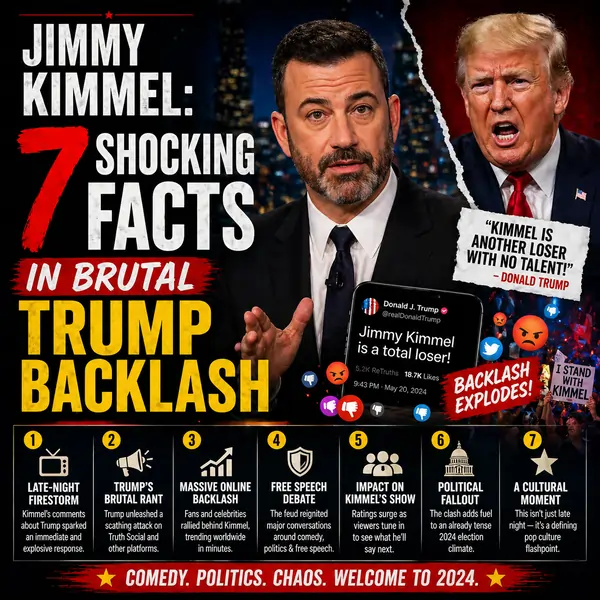
Why Jimmy Kimmel Keeps Colliding With Trump and Headlines
For nearly a decade, Jimmy Kimmel has been one of late-night’s most outspoken critics of Donald Trump. What began as occasional jokes on ABC’s “Jimmy Kimmel Live!” evolved into a recurring focus on Trump’s policies, legal troubles, and public statements. On the other side, Trump has repeatedly singled out Kimmel in interviews, rallies, and social posts, framing the host as an example of what he calls biased or “failing” media.
This long-running tension matters because it shows how a late-night host can become a political actor by default. When a former president publicly calls for a broadcaster to “do something” about a host’s jokes, it shifts the conversation from entertainment to power, regulation, and the limits of on-air criticism.
Jimmy Kimmel News Today: What Sparked the Latest Backlash
The current wave of Jimmy Kimmel news today centers on a recent monologue in which Kimmel mocked Trump over ongoing legal cases and repeated election claims. In that segment, Kimmel reportedly used pointed language about Trump’s conduct, credibility, and fitness for office, portraying him as both a punchline and a warning sign for American democracy.
In response, Trump launched a fresh attack online and during interviews, insisting that the network and parent company behind “Jimmy Kimmel Live!” respond formally. According to reporting from outlets such as The New York Times and The Hollywood Reporter, Trump’s team has framed Kimmel’s remarks as defamatory, disrespectful, and evidence of systemic bias in mainstream media.
How Trump’s Demand for a Broadcaster Response Escalated the Story
What makes this instance different from earlier clashes is the explicit pressure on the broadcaster. Rather than just insulting Kimmel personally, Trump has demanded that executives rein in or punish the host. That demand turns a late-night bit into a corporate and legal dilemma: respond and appear to validate political pressure, or ignore it and risk further escalation in the public eye.
So far, the network’s public stance has leaned toward defending editorial independence, emphasizing that late-night comedy is, by nature, opinionated and satirical. Still, internal conversations about risk, advertisers, and audience polarization are almost certainly happening behind closed doors.
Seven Shocking Facts Driving the Jimmy Kimmel Trump Feud Right Now
To understand why this episode feels more intense than a typical late-night dust-up, it helps to look at seven key facts shaping the controversy:
| # | Fact | Why It Matters |
|---|---|---|
| 1 | Trump is demanding a formal broadcaster response, not just venting on social media. | This moves the conflict from personal insults to institutional pressure on the network. |
| 2 | Kimmel’s monologue directly mocked Trump’s legal troubles and election narratives. | Jokes about ongoing cases sit closer to the line between opinion and perceived defamation. |
| 3 | The feud has been building for years, with both sides using it to energize their base. | Audiences are primed to interpret each new clash as part of a culture war, not just comedy. |
| 4 | Advertisers are increasingly cautious about aligning with overtly political content. | Network decisions may be influenced as much by brand safety as by free speech principles. |
| 5 | Late-night ratings overall have fragmented in the streaming era. | Hosts often lean into controversy to stay relevant and drive viral clips. |
| 6 | Trump frames late-night criticism as proof of media bias against conservatives. | This narrative reinforces political polarization and undercuts trust in comedy as “just jokes.” |
| 7 | Calls for Kimmel’s firing or discipline are trending in partisan spheres online. | Public pressure campaigns can spook networks, even if they do not immediately act. |
How the Jimmy Kimmel Trump Feud Shapes Late-Night TV and Free Speech
The latest late night host controversy around Kimmel highlights a broader shift in how people consume political humor. Shows that once focused on celebrity gossip and light sketches now function as nightly op-eds in primetime, with hosts like Kimmel, Stephen Colbert, and Seth Meyers dissecting news stories in real time.
As that shift accelerated during Trump’s presidency, late-night monologues began to resemble a hybrid of stand-up, cable commentary, and activism. Supporters argue that hosts are simply exercising their First Amendment rights and reflecting the anxieties of their audiences. Critics counter that the jokes increasingly punch in just one political direction, alienating viewers who do not share those views.
Free Speech vs. Broadcast Responsibility
Legally, the First Amendment protects political speech, including sharp satire and biting criticism of public figures. Courts give wide latitude to comedians, recognizing exaggeration and hyperbole as central to the genre. That is why lawsuits over jokes about politicians rarely succeed.
However, broadcast networks operate in a commercial environment shaped by advertisers, ratings, and corporate reputations. Executives must balance the creative freedom of their hosts against potential advertiser pullouts, public boycotts, and political fallout. Kimmel’s case underscores that legal rights and business realities do not always align.
Polarization and Audience Echo Chambers
Another layer to the current flare-up is the broader context of media polarization. Many viewers already treat late-night shows as an extension of their preferred news ecosystem. Fans who agree with Kimmel see his monologues as cathartic truth-telling. Trump supporters often view them as smug attacks on their identity and values.
That polarization makes it difficult for networks to occupy neutral ground. Any decision—standing by Kimmel, disciplining him, or simply staying quiet—will be read as a political statement by one part of the audience or another.
Reactions to Jimmy Kimmel Under Fire: Media, Viewers, and Commentators
With Jimmy Kimmel under fire, reactions have broken down along fairly predictable lines—but there are nuances that matter. Media outlets critical of Trump have framed the backlash as an attempt to intimidate journalists and entertainers. Conservative outlets, in contrast, highlight Kimmel’s remarks as an example of Hollywood’s alleged contempt for half the country.
On social platforms, the split is just as stark. Hashtags calling for Kimmel’s cancellation coexist with campaigns praising him for “standing up” to Trump. In this environment, measured responses are often drowned out by the loudest voices.
How Broadcasters Typically Respond in These Situations
Networks rarely want to become the story. When controversies like this erupt, their playbook usually includes three steps: acknowledge the attention without conceding wrongdoing, reaffirm support for the host’s creative freedom, and quietly remind talent and producers of internal standards and legal limits.
That kind of calibrated response allows broadcasters to avoid validating political pressure while demonstrating that they are not asleep at the wheel. It is a delicate balance that will likely shape the handling of this latest Kimmel–Trump clash as well.
A Simple Checklist for Evaluating Late-Night Controversies
When the next late night host controversy inevitably surfaces, this quick checklist can help viewers think more critically about what is happening:
- Who is applying pressure? Is criticism coming from viewers, advertisers, politicians, or advocacy groups?
- What was actually said? Did the host state facts, express opinion, or blur the line between the two?
- Is the reaction proportional? Are people calling for dialogue, an apology, or outright firing?
- How has the network responded? Look for statements about editorial independence, standards, or investigations.
- What is the broader pattern? Is this part of a long-term feud, as with the Jimmy Kimmel Trump feud, or a one-off misstep?
What This Jimmy Kimmel Controversy Means for Broadcasters and Public Discourse
The current standoff between Jimmy Kimmel and Trump is about more than two public figures trading insults. It illustrates the evolving role of entertainers as political commentators, the increasing willingness of politicians to target individual media personalities, and the pressure on networks to pick a side in the culture wars. The same globalized attention that turns a late‑night monologue into a political flashpoint is also what propels touring acts and viral moments across borders, as seen with announcements like Buffalo Traffic Jam Announce Australia and New Zealand Tour Dates that quickly become part of the wider entertainment news cycle.
For broadcasters, the takeaway is clear: clarity of standards and consistency of enforcement are crucial. For entertainers, the moment is a reminder that political comedy carries both influence and consequences. And for audiences, this controversy is an invitation to engage critically—recognizing satire as a form of commentary, while also questioning how much power we grant to our favorite hosts to shape our views.
As the Jimmy Kimmel Trump feud continues, it will keep serving as a high-profile test case for how late-night TV navigates free speech, corporate caution, and a deeply divided public square.
Useful Resources
For readers who want deeper background on the intersection of comedy, politics, and media regulation, these resources are a solid starting point:
- Pew Research Center journalism and media studies – data and analysis on public trust, polarization, and news consumption habits.
- ACLU: Free Speech resources – explanations of how the First Amendment applies to satire, media, and political speech.
Frequently Asked Questions About Jimmy Kimmel and the Trump Backlash
Why is Jimmy Kimmel under fire right now?
Jimmy Kimmel is under fire because a recent monologue sharply criticized Donald Trump’s behavior and legal troubles, prompting Trump to demand a formal response from the broadcaster behind “Jimmy Kimmel Live!”, which escalated the situation beyond routine late-night jokes.
What did Jimmy Kimmel say about Trump in his latest monologue?
In his latest controversial monologue, Kimmel mocked Trump’s ongoing legal issues and repeated election claims, portraying him as untrustworthy and dangerous for American democracy, which Trump and his supporters argue crossed a line from comedy into defamation and bias.
How did Trump respond to Jimmy Kimmel ’s comments?
Trump responded by attacking Kimmel personally in interviews and online posts, and more significantly by calling on the broadcaster and its parent company to address or discipline the host, framing the monologue as evidence of partisan media and unfair treatment.
What does it mean when Trump demands a broadcaster response?
When Trump demands a broadcaster response, he is pressuring network executives to publicly condemn, correct, or even punish the host, transforming a comedy segment into a corporate and political test of editorial independence and tolerance for critical speech.
Has Jimmy Kimmel responded to Trump’s latest criticism?
Kimmel has typically responded to Trump’s criticism with more humor, doubling down on jokes while defending his right to satirize public figures, and early indications suggest he is treating this latest backlash as another opportunity to highlight what he sees as Trump’s thin skin.
Have ABC or Disney taken any action against Jimmy Kimmel ?
As of now, no public disciplinary action has been announced, and the companies have generally stood by Kimmel’s editorial freedom, though they closely monitor such controversies because of potential legal exposure, advertiser concerns, and political pressure.
Is this the first time Jimmy Kimmel and Trump have clashed?
No, the Jimmy Kimmel Trump feud has been simmering for years, with Kimmel regularly criticizing Trump’s policies and conduct on air and Trump responding by labeling Kimmel as biased, unfunny, and part of what he calls the “fake news” media ecosystem.
Could Jimmy Kimmel be fired over his comments about Trump?
While some critics call for Kimmel’s firing, such a move is unlikely unless he clearly violates network standards or legal boundaries, because firing him purely over political jokes would raise serious concerns about artistic freedom, corporate censorship, and public backlash.
Are Jimmy Kimmel ’s jokes about Trump protected by free speech?
Yes, in general Kimmel’s jokes are protected by the First Amendment, which gives broad protection to political satire and commentary about public figures, though he and the network still have to be careful not to make knowingly false factual claims that could trigger defamation claims.
Why do late-night hosts focus so much on Trump and politics?
Late-night hosts concentrate on Trump and politics because their audiences are highly engaged with news and culture wars, and political material consistently drives ratings, viral clips, and social media discussion, even though it also risks alienating viewers who disagree.
How does this controversy affect late-night television overall?
This controversy reinforces late-night TV’s shift from light entertainment toward opinion-driven commentary, encouraging some hosts to lean further into advocacy while pressuring networks to clarify how far political jokes can go without damaging brand safety or advertiser relationships.
What are advertisers concerned about in the Jimmy Kimmel backlash?
Advertisers worry about brand safety, meaning they do not want their products associated with content that could trigger boycotts, social-media storms, or accusations of partisanship, so prolonged controversy around a show can make them reconsider where they place ads.
Does Trump have any legal way to force a broadcaster to punish Jimmy Kimmel ?
Trump has no direct legal authority to force a private broadcaster to punish Kimmel, though he can threaten lawsuits or regulatory scrutiny, but under U.S. law, networks are largely free to decide what content they air as long as they comply with Federal Communications Commission rules.
How can viewers tell if a late-night controversy is serious or just hype?
Viewers can gauge seriousness by examining whether there are concrete advertiser pullouts, investigations, or legal actions, rather than just social-media outrage, and by comparing full transcripts or videos of the segment with how partisan outlets are summarizing it.
Is Jimmy Kimmel biased against conservatives?
Many conservatives view Kimmel as biased because his political jokes more often target Republican figures like Trump, while Kimmel’s supporters argue he is criticizing behavior and policies rather than an ideology, reflecting the values of his audience and writers rather than neutral news reporting.
Do networks set limits on what late-night hosts can say?
Yes, networks have standards and legal departments that impose limits on profanity, hate speech, defamation, and certain sensitive topics, but within those guidelines late-night hosts are usually given wide latitude to express their opinions and comedic perspectives on public figures.
How has social media changed the impact of Jimmy Kimmel ’s monologues?
Social media amplifies Kimmel’s monologues far beyond the live broadcast, turning short clips into viral content that can reach millions, intensify backlash or support within hours, and keep a single joke in the news cycle much longer than in the pre-digital era.
Could the feud between Jimmy Kimmel and Trump actually help Kimmel’s ratings?
Yes, high-profile feuds can boost ratings and online views by drawing attention from both fans and critics, though relying too heavily on conflict can also fatigue audiences and reinforce perceptions that the show caters to only one side politically.
What should viewers keep in mind when watching political comedy about Trump?
Viewers should remember that political comedy is a blend of fact, opinion, and exaggeration designed to entertain, so it is wise to laugh if it resonates, but also to cross-check any serious claims with reputable news sources before treating a punchline as pure factual reporting.
Will this Jimmy Kimmel controversy change how other late-night hosts behave?
Other late-night hosts and their teams are certainly watching, and while most will not abandon political material, they may become more deliberate about wording, context, and fact-checking to minimize legal and corporate risk while still delivering sharp, relevant satire.