

Introduction
The early childhood education market has become one of the most important segments of the global education industry. As research continues to highlight the critical role of early learning in cognitive, emotional, and social development, governments, private institutions, and families are investing more resources into preschool and early childhood programs.
Early childhood education typically covers learning experiences for children from birth to around eight years old. During these formative years, children develop foundational skills that influence their academic success, behavior, and overall well-being. Because of this, early education programs are no longer viewed simply as childcare services but as essential components of long-term human development.
The growth of the early childhood education market reflects rising awareness among parents, policymakers, and educators about the importance of high-quality early learning environments.
What Is the Early Childhood Education Market?
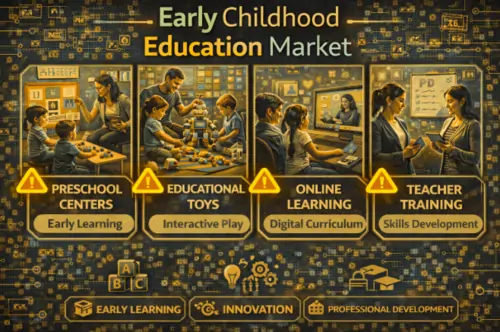
The early childhood education refers to the global industry that provides structured educational programs for young children before they enter primary school. This includes a wide range of services such as preschools, daycare centers, nursery schools, kindergarten programs, and early learning centers.
The industry includes both public and private institutions. Governments often support early childhood education through public preschool systems, subsidies, and policy initiatives. At the same time, private providers offer specialized programs that may include language immersion, Montessori education, STEM-based learning, and other developmental approaches.
In recent years, the market has expanded to include digital learning tools, early childhood educational apps, and hybrid learning platforms designed specifically for young learners.
Market Growth and Global Trends
The early childhood education has experienced steady growth across many regions. Increasing awareness of early brain development and the long-term benefits of early education has led to stronger demand for structured learning programs.
Several global trends are driving this growth.
Rising Awareness of Early Learning Benefits
Studies in child development have consistently shown that high-quality early education can improve literacy, numeracy, and social skills while reducing long-term learning gaps. As a result, more parents and governments are prioritizing access to early education programs.
Increased Workforce Participation
As more parents participate in the workforce, particularly in dual-income households, demand for reliable childcare and early learning services continues to grow. Early childhood education centers often provide both care and structured educational experiences for young children.
Government Investment and Policy Support
Many governments around the world are expanding funding for preschool education. Public initiatives often aim to increase access to affordable early learning programs, improve teacher training, and enhance curriculum quality.
Government support plays a major role in the expansion of the early childhood education.
Technology and Innovation in Early Childhood Education
Technology is also influencing the development of the early childhood education. Digital tools are increasingly used to support both classroom learning and home-based education.
Educational apps, interactive learning platforms, and digital storytelling tools can help children develop language, problem-solving, and creative thinking skills. These tools are often designed to encourage exploration and engagement rather than passive screen time.
Teachers and administrators also use technology for classroom management, progress tracking, and communication with parents. While technology should never replace human interaction in early education, it can serve as a useful supplement to traditional teaching methods.
Types of Early Childhood Education Programs
The early childhood education market includes several types of programs designed to support child development.
Preschool Programs
Preschool programs introduce children to basic academic concepts such as numbers, letters, shapes, and early reading skills. They also emphasize social development, communication, and teamwork.
Daycare and Childcare Centers
Many childcare centers combine supervision with educational activities. These centers provide safe environments where children can learn through play, exploration, and guided instruction.
Montessori and Alternative Learning Models
Alternative educational models such as Montessori, Reggio Emilia, and Waldorf emphasize child-led learning, creativity, and hands-on exploration. These approaches have gained popularity among parents seeking more personalized early education experiences.
Early Learning Franchises
The expansion of global education brands has contributed to the commercialization of the early childhood education market. Franchise-based preschool systems offer standardized programs and learning environments across multiple locations.
Challenges in the Early Childhood Education Market
Despite strong growth potential, the early childhood education also faces several challenges.
Affordability
Quality early education programs can be expensive for many families. High tuition costs may limit access, especially in regions where government subsidies are limited.
Teacher Shortages
The industry often struggles with recruiting and retaining qualified early childhood educators. Teaching young children requires specialized training, patience, and professional development.
Quality and Regulation
Maintaining consistent quality standards across institutions is another challenge. Governments and regulatory bodies must ensure that education providers meet safety, curriculum, and staffing requirements.
Addressing these challenges will be essential for the sustainable growth of the early childhood education.
Opportunities for Future Growth
The long-term outlook for the early childhood education remains positive. Several emerging opportunities are shaping the future of the industry.
Expansion in Emerging Economies
As middle-class populations grow in developing countries, demand for preschool education and childcare services is increasing.
Digital Learning Tools
New educational technologies designed for young learners are creating opportunities for innovation in early education.
Public-Private Partnerships
Collaborations between governments and private education providers can expand access to high-quality programs while maintaining affordability.
These developments indicate that early childhood education will continue to play a central role in global education systems.
Conclusion
The early childhood education market is growing rapidly as societies recognize the importance of investing in children’s earliest learning experiences. From preschool programs and daycare services to innovative digital learning tools, the industry continues to evolve in response to changing social and economic needs.
While challenges such as affordability and teacher shortages remain, the increasing global focus on early learning suggests that the market will continue expanding in the coming years.
By strengthening early education systems, societies can support healthier child development, improve educational outcomes, and build stronger foundations for future generations.
FAQ
What is the early childhood education market?
The early childhood education market refers to the global industry that provides educational services and structured learning programs for children typically from birth to eight years old.
Why is early childhood education important?
Early childhood education is important because it supports cognitive, emotional, and social development during the most critical stages of a child’s growth.
What factors drive the growth of the early childhood education market?
Key growth drivers include rising awareness of early learning benefits, increased workforce participation among parents, government investment in preschool programs, and expanding private education services.
What challenges affect the early childhood education market?
Challenges include affordability, shortages of qualified teachers, regulatory requirements, and maintaining consistent quality standards across education providers.
What is the future of the early childhood education market?
The future of the early childhood education market includes greater use of digital learning tools, expanded access to preschool programs, and stronger government support for early childhood development.