

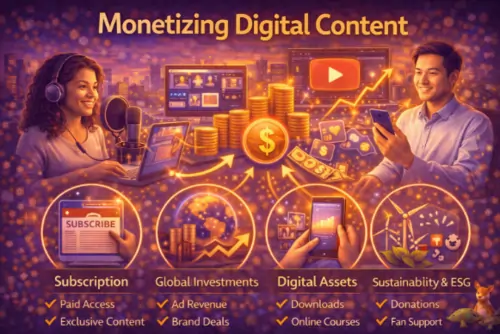
Monetizing Digital Content in 2026: A Complete Guide for Content Creators
Monetizing digital content in 2026 is no longer about chasing viral moments. It is about building systems that turn attention into income. Creators who understand funnels, trust-building, and diversified revenue streams are the ones who succeed.
Whether you are just starting or already growing an audience, Monetizing digital content requires strategy, patience, and clarity.
If you want realistic guidance on how to turn your content into income, this guide breaks down everything you need to know.
What Monetizing Digital Content Really Means
At its core, Monetizing digital content means converting your audience’s attention into revenue. But attention alone does not create income. Revenue happens when you:
- Solve real problems
- Build trust
- Offer value consistently
- Present clear offers
Many creators believe views equal money. That is not true. Monetizing digital content depends more on conversion than on follower count.
You can have 2,000 loyal followers and earn more than someone with 200,000 passive viewers. The difference is strategy.
Build Before You Sell
Before Monetizing digital content, you must build foundations.
1. Clear Niche
General content is hard to monetize.
Specific content converts better.
Instead of broad topics, focus on:
- Budget travel for remote workers
- Beginner fitness programs
- AI tools for freelancers
- Personal finance for young adults
Clarity simplifies Monetizing digital content because your audience knows exactly why they follow you.
2. Solve a Specific Problem
Every successful creator who masters Monetizing digital content solves a problem.
Ask:
- What is my audience struggling with?
- What outcome do they want?
- What shortcuts can I provide?
Money flows toward solutions.
3. Build Trust Through Consistency
Consistency builds authority. Authority makes Monetizing digital content easier.
Trust grows when you:
- Show up regularly
- Share honest insights
- Provide proof of experience
- Recommend responsibly
Without trust, monetization feels forced.
The 7 Core Ways of Monetizing Digital Content
1. Advertising Revenue
This includes:
- YouTube AdSense
- Blog display ads
- Creator funds
Ads are often the first method people try when Monetizing digital content.
However, ads require large traffic volumes. For smaller creators, ad income is usually limited.
Ads work best as one part of a larger monetization system.
2. Affiliate Marketing
Affiliate marketing is one of the most practical approaches to Monetizing digital content.
You:
- Recommend a product
- Share a tracking link
- Earn commission when someone buys
It works best when:
- You genuinely use the product
- You teach how to use it
- You build trust first
Affiliate marketing is powerful because it does not require creating your own product.
3. Sponsored Content
Brands pay creators to promote products.
For many creators, sponsored posts become a major part of Monetizing digital content once they reach consistent engagement.
You do not need millions of followers. Micro-creators often succeed if their niche is targeted.
Professional presentation matters:
- Media kit
- Audience analytics
- Clear positioning
4. Selling Digital Products
Selling digital products is one of the most scalable strategies for Monetizing digital content.
Examples:
- eBooks
- Templates
- Notion planners
- AI prompts
- Online guides
Digital products have:
- No inventory
- No shipping
- High margins
Even with a small audience, digital products can outperform ad revenue.
5. Online Courses and Coaching
If you have skill or expertise, turning it into structured learning is another method of Monetizing digital content.
Courses and coaching allow:
- Higher price points
- Premium positioning
- Authority building
This model works best when your content already demonstrates credibility.
6. Memberships and Subscriptions
Recurring income strengthens long-term stability when Monetizing digital content.
Examples:
- Paid newsletters
- Exclusive communities
- Private video content
Recurring revenue reduces reliance on unpredictable ad income.
7. Freelance Services
Service-based income is often the fastest way to start Monetizing digital content.
Your content builds credibility. That credibility leads to:
- Consulting
- Copywriting
- SEO services
- Editing
- Strategy sessions
For small creators, services often generate income faster than sponsorships.
Monetizing Digital Content Based on Audience Size
Under 1,000 Followers
Focus on:
- Affiliate marketing
- Services
- Small digital products
You do not need viral growth to start Monete digital content.
1,000–10,000 Followers
This is where structured Monetize digital content begins.
You can:
- Test brand deals
- Build email lists
- Launch low-ticket offers
Email lists become essential here.
10,000+ Followers
At this stage, Monetize digital content becomes scalable.
You can:
- Launch premium courses
- Build membership programs
- Secure recurring brand partnerships
Monetization shifts from experimentation to optimization.
The Monetization Funnel
Successful Monetize digital content follows a structure:
- Free content (awareness)
- Trust-building content
- Email capture
- Offer presentation
- Upsell or subscription
Without a funnel, monetization feels random. With a funnel, income becomes predictable.
Common Mistakes When Monetizing Digital Content
- Monetizing before building trust
- Relying only on ads
- Ignoring email list growth
- Having unclear niche positioning
- Chasing trends without strategy
- Failing to diversify income streams
Avoiding these mistakes makes Monetize digital content more sustainable.
Realistic Income Timeline
Month 0–3:
- Focus on content consistency
- Learn audience behavior
Month 3–6:
- Affiliate sales begin
- Small service income possible
Month 6–12:
- Launch digital products
- Secure sponsorships
- Build recurring revenue
Over time, Monetize digital content compounds.
2026 Trends in Monetizing Digital Content
AI-Assisted Scaling
AI tools now help with:
- Research
- Content drafting
- SEO optimization
- Repurposing
AI increases productivity but does not replace authenticity.
Micro-Niche Authority
General creators struggle.
Focused creators thrive.
Micro-niche positioning makes Monetize digital content more predictable.
Community-Driven Revenue
Engaged communities outperform large passive audiences.
Smaller, loyal groups generate stronger conversions.
Final Thoughts
Monetizing digital content in 2026 is not about chasing algorithms.
It is about:
- Building trust
- Solving problems
- Diversifying income
- Owning your audience
- Thinking long-term
Creators who treat their platform like a business see results.
Those who treat it like a hobby often struggle.
If you approach Monetize digital content with structure and patience, income becomes a natural outcome rather than a lucky accident.