

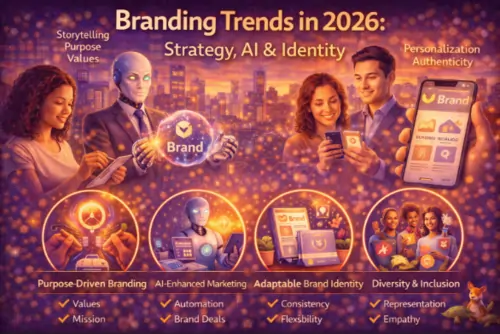
Branding Trends in 2026: The Complete Guide to Staying Relevant
Branding trends in 2026 are shaped by AI-powered personalization, founder-led visibility, community-first growth, adaptive visual identity, sustainability, and data-driven decision-making. Businesses that win are those that combine technology with authenticity and build long-term emotional connection with their audience.
If you are a startup founder, content creator, marketing professional, or entrepreneur, understanding Branding trends today is essential for long-term growth.
Why Branding Matters More in 2026
Markets are more crowded than ever. Consumers are exposed to thousands of ads daily. Attention spans are shorter. Trust is harder to earn.
Because of this shift, Branding trends are no longer just about design. They are about perception, experience, and trust.
In 2026:
- Customers research before buying.
- Reviews influence decisions.
- Communities shape brand reputation.
- Social proof builds credibility.
Branding is now the foundation of marketing success. Without a clear identity, even strong advertising struggles to convert.
1. AI-Powered Personalization Is Now Expected
One of the most powerful Branding trends in 2026 is AI-driven personalization.
Brands now use AI to:
- Analyze customer behavior
- Customize email campaigns
- Deliver dynamic website content
- Predict buying intent
- Automate audience segmentation
Consumers expect relevant messaging. Generic campaigns feel outdated.
However, successful Branding trends show that AI should enhance human communication, not replace it. Over-automation feels robotic. The winning brands combine smart technology with human tone.
2. Authenticity Over Perfection
As technology advances, authenticity becomes more valuable.
Modern Branding trends emphasize:
- Transparent messaging
- Real founder stories
- Behind-the-scenes content
- Honest communication
Consumers can quickly detect insincerity. Highly polished but empty branding no longer works.
Brands that share real journeys—successes and struggles—create stronger emotional bonds.
In 2026, authenticity is not a marketing tactic. It is a brand requirement.
3. Founder-Led and Personal Branding Growth
Another dominant shift in Branding trends is the rise of founder visibility.
People trust people more than logos.
Brands increasingly showcase:
- Active CEOs on LinkedIn
- Thought leaders sharing insights
- Creators building businesses around their names
Founder-driven branding humanizes companies. It builds trust faster than corporate messaging alone.
Personal branding has become one of the most influential Branding trends because it merges expertise with relatability.
4. Community-Driven Loyalty
Brand communities are replacing traditional marketing funnels.
Successful Branding trends focus on:
- Private online groups
- Membership communities
- Loyal customer ecosystems
- Interactive platforms
Communities provide:
- Higher retention
- Organic referrals
- Stronger emotional attachment
In 2026, owning your audience through email lists and community platforms is more important than chasing follower counts.
Community-first strategy is one of the most sustainable Branding trends today.
5. Hyper-Niche Positioning
Broad positioning is fading.
Modern Branding trends reward specificity.
Instead of:
“Digital Marketing Agency”
Brands now say:
“AI-driven SEO agency for fintech startups.”
Clear positioning improves:
- Memorability
- Authority
- Conversion rates
Specific messaging reduces competition. Niche clarity strengthens branding power.
6. Experience-Based Branding
Branding in 2026 extends beyond logos and visuals.
Branding trends now include:
- Website performance
- Customer service tone
- Onboarding flows
- Packaging design
- Post-purchase follow-ups
Every touchpoint influences perception.
Branding is no longer just about visuals—it is about experience.
Businesses that align operations with branding build stronger trust.
7. Adaptive Visual Identity
Visual branding continues evolving.
Current Branding trends include:
- Flexible logo systems
- Motion graphics
- Responsive typography
- Video-first identity
- Interactive design
Static branding systems struggle in digital-first environments.
Brands must adapt across:
- Social platforms
- Mobile screens
- Video formats
- Emerging digital experiences
Flexibility is now part of visual identity.
8. Sustainability and Ethical Alignment
Consumers increasingly evaluate brands based on values.
Modern Branding trends show rising importance in:
- Environmental responsibility
- Ethical sourcing
- Transparent operations
- Social impact
Greenwashing damages trust.
Authentic action strengthens brand credibility.
Brands must demonstrate measurable commitments—not just slogans.
9. Data-Driven Brand Strategy
Creative branding remains important—but intuition alone is no longer enough.
Branding trends in 2026 emphasize analytics-driven decisions.
Brands track:
- Audience sentiment
- Engagement depth
- Retention behavior
- Funnel performance
- Community growth
Data guides creative direction.
Branding becomes a measurable growth system rather than guesswork.
10. Short-Form Video Dominance
Video is central to modern Branding trends.
Short-form video allows brands to:
- Educate
- Entertain
- Build authority
- Humanize messaging
Video builds familiarity quickly.
In 2026, static content alone limits brand reach. Brands that integrate video storytelling gain stronger digital presence.
The Psychology Behind Modern Branding
Branding trends reflect a deeper shift in consumer psychology.
People no longer buy products. They buy:
- Identity
- Alignment
- Belonging
Brands must answer:
- Who are we for?
- What do we stand for?
- Why do we matter?
Clear identity builds emotional connection.
Emotional connection drives loyalty.
Branding Mistakes to Avoid in 2026
- Overusing AI without personality
- Copying competitor branding
- Ignoring community engagement
- Being too broad in positioning
- Focusing only on aesthetics
- Inconsistent messaging
- Ignoring performance data
Understanding Branding trend helps avoid these common mistakes.
How to Apply Branding Trends to Your Business
To adapt successfully:
- Define your niche clearly
- Develop a consistent voice
- Show your face or leadership
- Build a community platform
- Use AI strategically
- Track branding metrics
- Align operations with brand identity
Branding is not a one-time project. It is an evolving system.
Who Should Pay Attention to Branding Trends?
Branding trends matter for:
- Startups building identity
- Content creators growing authority
- Agencies positioning themselves
- Corporate brands modernizing presence
- Entrepreneurs entering competitive markets
If your business operates online, branding directly impacts growth.
Final Thoughts
Branding trend in 2026 show a clear pattern:
Technology improves efficiency.
Authenticity builds trust.
Community drives loyalty.
Data sharpens strategy.
Personal identity strengthens influence.
The brands that succeed are not the loudest—they are the clearest, most consistent, and most aligned with their audience.
Ignoring Branding trends means falling behind.
Adapting to Branding trends means building long-term competitive advantage.