

Introduction
Many successful companies and profitable ventures began as simple ideas pursued during evenings, weekends, or spare time. Side business success stories often start with individuals who wanted to earn extra income, explore a passion, or test a business concept without immediately leaving their primary job.
Side businesses provide an opportunity to experiment with entrepreneurship while maintaining financial stability. Over time, some of these projects grow beyond expectations, turning into full-time careers or even thriving companies.
These stories show that building a successful business does not always require massive funding or immediate full-time commitment. Often, it begins with a small idea, consistent effort, and a willingness to learn along the way.
In this article, we explore several side business success stories, the lessons they offer, and how aspiring entrepreneurs can apply similar strategies to their own ventures.
Why Side Businesses Are Becoming More Popular
Side businesses have grown increasingly common as people look for ways to diversify their income and pursue personal interests. Technology, digital platforms, and online marketplaces have made it easier than ever to start a business with minimal resources.
Several factors contribute to the rise of side entrepreneurship.
First, many professionals want financial security beyond a single salary. Having an additional income stream can help reduce financial stress and support long-term goals.
Second, side businesses allow individuals to explore creative or professional interests that may not be part of their primary career. Someone working in a corporate environment, for example, may start a photography business, online store, or consulting service on the side.
Third, digital tools have lowered the barriers to entry for entrepreneurship. Platforms such as online marketplaces, social media, and e-commerce websites make it possible to reach customers around the world.
Because of these factors, side business success stories are becoming more common across many industries.
Story 1: From Handmade Crafts to a Global Brand
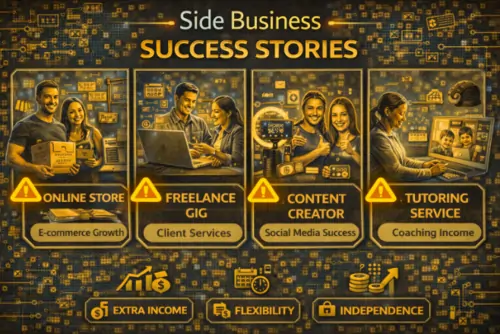
One well-known type of side business success story involves creators who begin selling handmade products online.
Many artisans start by making products such as jewelry, candles, home décor, or artwork as a hobby. At first, they may sell items to friends or through small online marketplaces. As demand grows, the hobby gradually becomes a structured business.
Through consistent quality, branding, and customer engagement, some creators build loyal customer bases. Eventually, they expand their product lines, improve packaging, and establish online stores or partnerships with retailers.
These businesses often begin with small production runs created in a home workspace but can evolve into internationally recognized brands.
Story 2: A Blog That Became a Media Business
Another common example of side business success stories involves content creators who start blogs or websites as passion projects.
A person interested in travel, finance, fitness, or cooking may begin writing articles in their spare time. At first, the blog may attract only a small audience. However, as the creator continues publishing helpful and engaging content, traffic gradually increases.
With consistent growth, blogs can generate income through advertising, affiliate partnerships, digital products, or sponsored collaborations.
Many successful bloggers began writing simply to share knowledge or experiences. Over time, their platforms evolved into full businesses supported by global audiences.
Story 3: Freelance Skills Turned Into Agencies
Freelancing is another pathway featured in many side business success stories.
Professionals with skills in design, writing, marketing, programming, or consulting may begin offering services to clients outside their primary jobs. Initially, these projects may be small and occasional.
As experience grows, freelancers gain stronger portfolios and attract larger clients. Some eventually transition into running agencies that hire additional team members and manage multiple projects.
This approach allows individuals to test business ownership gradually while continuing to develop professional expertise.
Story 4: E-Commerce Stores Built from Simple Ideas
E-commerce has created many opportunities for side businesses to grow quickly.
Some entrepreneurs begin by selling products through online marketplaces or building small online stores. These products might include custom clothing, specialty foods, niche hobby supplies, or curated lifestyle goods.
Through careful product selection, branding, and digital marketing, these businesses can scale rapidly.
Many side business success stories in e-commerce involve entrepreneurs who started with a small inventory stored in their homes and eventually built brands that ship products internationally.
Lessons from Side Business Success Stories
While each entrepreneurial journey is unique, successful side businesses often share similar characteristics.
Consistency Is More Important Than Speed
Most successful side businesses grow gradually rather than suddenly. Entrepreneurs who dedicate consistent time and effort to improving their products, services, or content often see the best long-term results.
Start Small and Test Ideas
Side businesses allow entrepreneurs to experiment without taking major financial risks. Testing ideas on a small scale helps identify what works before expanding operations.
Focus on Solving Problems
Many successful businesses start by addressing a specific need. Whether offering a useful product, sharing valuable information, or providing professional services, businesses that solve real problems tend to attract loyal customers.
Build an Audience or Community
Entrepreneurs who engage with customers and audiences build stronger relationships and trust. This often leads to repeat business and word-of-mouth growth.
These lessons appear repeatedly across many side business success stories.
Challenges of Running a Side Business
While the benefits are appealing, running a side business also presents challenges.
One common difficulty is time management. Balancing a full-time job, personal responsibilities, and a growing business requires discipline and organization.
Another challenge is maintaining motivation during the early stages when income may be minimal. Many entrepreneurs work for months or years before seeing significant results.
Financial management can also be complex. Entrepreneurs must carefully track expenses, manage taxes, and reinvest profits to support growth.
Despite these challenges, the long-term rewards can make the effort worthwhile.
How to Start Your Own Side Business
For those inspired by side business success stories, starting a side venture often begins with identifying skills, interests, or opportunities that can create value for others.
A useful starting point includes evaluating personal strengths and market demand. Someone skilled in graphic design might offer freelance services, while someone passionate about cooking might create recipe content or food products.
The next step involves building a simple plan. This may include defining the target audience, selecting a platform for selling or marketing, and setting realistic goals for growth.
Finally, consistency and patience are essential. Even small steps taken regularly can gradually transform a side project into a meaningful business.
Conclusion
Side business success stories demonstrate that entrepreneurship does not always require immediate full-time commitment or large investments. Many thriving businesses began as small projects developed during spare hours.
These stories highlight the importance of persistence, creativity, and strategic thinking. By starting small, focusing on value, and remaining consistent, individuals can gradually transform side ventures into profitable opportunities.
For aspiring entrepreneurs, the message is clear: a simple idea pursued with dedication can lead to unexpected success.
FAQ
What is a side business?
A side business is a venture that someone operates alongside their primary job or main source of income.
Can a side business become a full-time career?
Yes. Many successful companies started as side projects before growing into full-time businesses.
What are common types of side businesses?
Common examples include freelance services, e-commerce stores, digital products, consulting, and online content platforms.
How long does it take for a side business to succeed?
Success timelines vary. Some businesses grow quickly, while others may take years of consistent effort to become profitable.
Why are side businesses becoming more popular?
Side businesses offer financial flexibility, creative opportunities, and the potential to build independent income streams.