

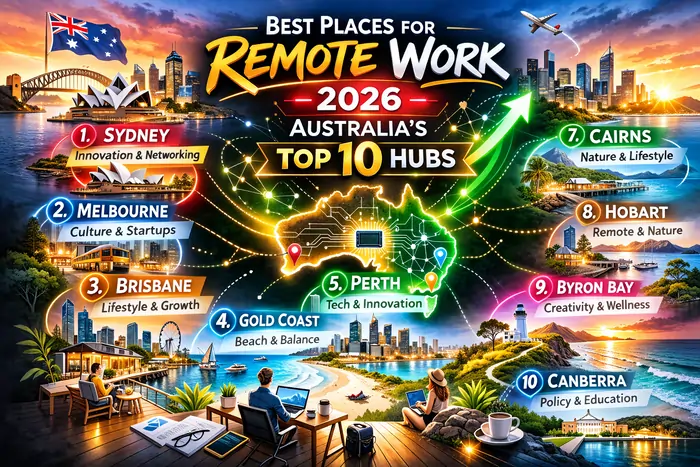
Remote Work Hubs Australia have become some of the most attractive bases for digital nomads, freelancers, and location‑flexible employees in 2026, offering a mix of strong infrastructure, lifestyle variety, and access to global work opportunities. Australia is one of the strongest bases for remote workers in 2026, and the right city for you depends on your budget, work style, and lifestyle priorities.
Australia is one of the strongest bases for remote workers in 2026, and the right city for you depends on your budget, work style, and lifestyle priorities. For many professionals, this shift is also opening the door to Working While Traveling | Earn Anywhere, Live Freely, where you earn from anywhere while designing a lifestyle around beaches, cities, or nature rather than a fixed office.
Top 10 Best Places for Remote Work Hubs Australia
Remote work is no longer a fringe perk in Australia, with hybrid and work‑from‑home arrangements now a mainstream part of employment across major cities, as outlined in Current & Future Working From Home Trends in Australia (2026). For remote employees, freelancers, and digital nomads, that shift has turned Australia into a high‑quality, English‑speaking base with strong infrastructure, diverse lifestyles, and globally competitive work opportunities. This guide walks through Australia’s top 10 hubs for remote work in 2026 and helps you choose the city that actually matches how you like to live and work.
Why Australia Is a Remote Work Powerhouse in 2026
Remote work in Australia has matured from emergency response to structured practice, with employers investing in technology, home‑office support, and clearer hybrid policies, a trend captured in What Is Remote Work? Your Complete Guide in 2026. For remote workers, that means more flexibility, better tools, and a wider range of fully remote roles, especially in tech, professional services, and digital‑first companies.
Remote and hybrid work trends reshaping Australian cities
Several trends define the 2026 landscape:
- Many businesses now blend office and home arrangements through stable hybrid models rather than ad‑hoc experiments.
- Worker flexibility expectations are rising, with more people prioritising roles that allow them to live where they want and travel more often, as highlighted in Current & Future Working From Home Trends in Australia.
- Remote‑first and hybrid‑friendly employers across Sydney, Melbourne, Brisbane, and Perth are normalising distributed teams and asynchronous work.
These shifts have pushed demand for coworking spaces, better suburban internet, and “liveable” neighbourhoods close to cafes, parks, and transport, reshaping how people use cities day‑to‑day.
What remote workers typically look for in a city
When remote workers choose an Australian hub, they tend to weigh a mix of practical and lifestyle factors:
- Reliable, fast internet and strong mobile coverage
- Availability of coworking spaces, shared offices, and laptop‑friendly cafes
- Reasonable cost of living relative to income, especially rent and everyday expenses
- Safety, walkability, public transport, and proximity to nature or beaches
- Existing digital nomad or remote‑worker communities, meetups, and professional networks
If you are exploring a more flexible, location‑independent lifestyle, guides like Working While Traveling | Earn Anywhere, Live Freely can help you think through whether a multi‑city work‑and‑travel setup across Australia actually suits you.
How this top 10 list was curated
This top‑10 hub list is built around four main criteria:
- Remote‑work readiness: internet quality, coworking density, remote‑friendly employers, and services
- Affordability and ease of living: rent, transport, and daily costs
- Lifestyle fit: culture, food, nightlife, access to beaches or nature, and overall liveability
- Community and growth potential: current remote‑worker presence and signs a city is becoming more remote‑friendly over time
To compare hubs using real data, tools like Best Digital Nomad Cities in Australia 2026 | Novad let you assess cost of living, internet, and “nomad scores” across Australian cities.
How to Choose Your Ideal Australian Remote Work Hub
The “best” city is relative; your perfect hub is where your budget, work schedule, and lifestyle intersect cleanly. A structured decision process helps you avoid choosing purely on hype or aesthetics.
Cost of living, rent, and everyday expenses
Sydney and Melbourne tend to sit at the higher end of the cost spectrum, while Adelaide, Hobart, and some regional hubs offer more manageable rents and day‑to‑day expenses. Consider:
- Median rent for a studio or one‑bedroom place in your target suburbs
- Transport costs (public transport vs car)
- Food, utilities, and coworking or café spend
To sanity‑check your earning power against city costs, 12 Best Work From Home Careers in Australia for 2026 outlines common remote‑friendly roles and pay ranges that can support different hubs. If you are planning to move between several hubs rather than stay in one place, building a rolling budget is essential so your “earn anywhere” plan is sustainable over a full year.
Internet reliability, coworking density, and infrastructure
Australia’s main cities generally offer solid broadband and 4G/5G coverage, but coworking availability and speeds can vary once you move into smaller coastal towns or regional centres. Check:
- Typical home‑internet speeds in the neighbourhoods you are considering
- Number and quality of coworking spaces within a 30‑minute radius
- Laptop‑friendly cafes, libraries, and public spaces
If coworking access is non‑negotiable, check spaces in your target neighbourhood using Nomad Stays’ coworking locations in Australia and the WeWork coworking and shared offices in Australia directory. This is where it helps to test a city for a few weeks before signing a long lease or fully relocating.
Lifestyle filters: beach, food, culture, nightlife, or quiet
Australia’s remote work hubs fall into a few broad lifestyle archetypes:
- Culture and food focused: Melbourne and Adelaide
- Beach and surf oriented: Sydney, Gold Coast, Brisbane, Byron Bay, Port Douglas
- Nature‑heavy and quieter: Hobart, Launceston, Darwin, and some regional centres
If you are experimenting with working while traveling, you can intentionally plan a route that lets you sample each type: a few months in an artsy city, a season by the beach, then a nature‑heavy stint in Tasmania or the Top End.
Visa, tax, and employment considerations for locals and internationals (high level)
If you are an Australian resident, your main considerations are employer policies, workplace rights, and how working from different states affects your tax and super. For foreign digital nomads or remote workers:
- Make sure you understand which visa you are entering on and what work it actually allows.
- Learn the basics of Australian tax residency and the implications of long stays.
- Confirm any restrictions your employer has on where you are allowed to work from.
The Australia Digital Nomad Requirements: Visa, Tax and More guide walks through key visa options and tax rules, while Australia digital nomad visa: complete guide provides a step‑by‑step overview for individuals. For employers and HR teams, the Remote work in Australia Guide and Work From Anywhere and Remote Hiring Policy HR Guide for Australia outline compliance risks, contracts, and payroll obligations.
For long‑term, multi‑country travel, pairing city research with a mindset and planning resource like Working While Traveling | Earn Anywhere, Live Freely will help you think beyond visas and focus on building a sustainable lifestyle.
Melbourne: Creative Capital for Remote Professionals
Melbourne consistently ranks as one of the most attractive Australian cities for remote workers thanks to its mix of strong infrastructure, rich café culture, and year‑round events. Its neighbourhoods—especially inner‑city and inner‑north areas—offer dense clusters of work‑friendly cafes, trams, bike paths, and coworking spaces, making it easy to build a sustainable remote routine.
Why Melbourne works for remote workers (culture, coffee, connectivity)
If you thrive on creative energy, Melbourne’s arts and music scene, laneway cafés, and diverse food options can help offset long stretches at the laptop. From coworking spaces in the CBD to laptop‑friendly cafes in Fitzroy and Collingwood, there is no shortage of places to plug in. For fully remote workers, the combination of good connectivity and vibrant street life becomes a big plus.
Key neighborhoods and coworking hotspots
Common bases for remote workers include:
- CBD and Docklands, for easy access to trains, trams, and corporate clients
- Fitzroy, Collingwood, and Carlton, for artsy energy and café culture
- Southbank and South Melbourne, for a mix of river views and city convenience
Look for coworking clusters around the CBD and inner north; platforms like Novad’s Melbourne profile and WeWork Australia list central spaces and help you price flexible desks vs private offices.
Pros, cons, and who Melbourne is best for
Pros:
- Rich culture and arts scene
- Strong café and coworking ecosystem
- Excellent tram network and walkability in the inner suburbs
Cons:
- Higher housing costs than many other hubs
- Cooler winters that may not suit people chasing year‑round warmth
Melbourne is typically best for remote workers who want a cosmopolitan lifestyle, care about food and culture, and do not mind paying more for a dense, walkable urban experience.
Sydney: High‑Energy Global Hub for Remote Talent

Sydney is Australia’s global postcard city and a major hub for finance, tech, and professional services, with high salaries but equally high living costs. For remote workers who want beaches, harbour views, and access to large employers or clients, Sydney can be a powerful base—provided the budget works.
Lifestyle, salary potential, and city pace
Many high‑growth companies operating out of Sydney offer remote or hybrid roles, especially within tech and digital industries. Combined with a strong professional‑services sector, that creates both job opportunities and demand for freelancers and consultants. The trade‑off is clear: intense pace and higher costs in exchange for world‑class beaches, nightlife, and networking opportunities.
Best areas for remote workers (inner city vs beach suburbs)
- Inner‑city bases such as Surry Hills, Darlinghurst, Pyrmont, and Newtown, where you are close to coworking spaces, train lines, and city‑centre cafes
- Beach suburbs like Bondi, Manly, and Coogee, where you can surf before stand‑ups but pay premium rent and sometimes trade city convenience for lifestyle
If you are planning to move frequently or mix Sydney into a broader working‑while‑travelling loop, it can make sense to use shorter stays in beach suburbs and longer leases in inner‑city areas.
Pros, cons, and ideal remote worker profile
Pros:
- Iconic beaches and harbour
- Deep corporate and startup ecosystem
- Plenty of meetups and networking
Cons:
- Some of the country’s highest housing costs
- Traffic and congestion in popular areas
Sydney suits remote workers who value income potential and global connectivity, enjoy fast‑paced environments, and see beach access as a core part of their lifestyle.
Brisbane: Sunshine City With Big Remote Potential
Brisbane combines a warm climate, a growing tech and startup scene, and relatively more affordable living than Sydney or inner‑Melbourne, making it a rising remote‑work favourite. The city’s riverfront precincts, cultural developments, and expanding coworking stock support a comfortable work‑and‑play balance.
Weather, outdoor lifestyle, and growing tech scene
With its subtropical weather and abundance of outdoor spaces, Brisbane is ideal if you want year‑round sunshine and easy access to walking paths, parks, and weekend trips to the Gold Coast or Sunshine Coast. As more employers adopt flexible or remote‑friendly policies, the local tech and professional services sectors are expanding, creating both remote roles and local client opportunities.
Coworking spaces and digital nomad communities
Brisbane offers multiple coworking options across the CBD, Fortitude Valley, and other inner suburbs, many of which cater specifically to startups and independent professionals. You will also find growing remote‑worker and digital nomad meetups, often anchored around tech hubs and creative precincts and featured in global platforms like Nomads.com.
Pros, cons, and who should pick Brisbane
Pros:
Cons:
- Hot, humid summers
- A culture and nightlife scene that some compare less favourably to Melbourne’s
Brisbane is a strong option if you want sunshine, more space, and access to coastal getaways without the top‑tier price tag of Sydney.
Gold Coast: Work‑and‑Surf Paradise
The Gold Coast is a classic workation destination, combining long beaches, surf breaks, and a laid‑back atmosphere with decent infrastructure and proximity to Brisbane. It is especially appealing to remote workers who design their days around ocean time and a slower pace.
Beach lifestyle meets remote work
If your ideal routine includes sunrise surf, mid‑morning deep work, and sunset walks, the Gold Coast offers a natural fit. It is also an ideal test bed if you are curious about Working While Traveling | Earn Anywhere, Live Freely and want to experiment with a few weeks of “earn anywhere, live freely” before committing to a permanent move.
Internet, coworking, and café work options
Internet and coworking access are strongest around popular hubs like Surfers Paradise, Broadbeach, and Burleigh Heads. While the city does not have the coworking density of Sydney or Melbourne, there is a solid roster of shared offices, hubs, and laptop‑friendly cafés. For days when you need a more corporate feel, Brisbane’s coworking ecosystem is only a train ride away.
Pros, cons, and best fit remote worker type
Pros:
- Beach‑first lifestyle with surf and outdoor activities
- Relaxed atmosphere and strong workation appeal
Cons:
- More limited public transport
- Coworking and community may be more concentrated in specific suburbs
The Gold Coast is ideal for remote workers who want to put lifestyle at the centre, are comfortable with a slightly smaller city, and do not require daily access to a large corporate ecosystem.
Perth: Gateway to Western Innovation
Perth offers a mix of beach life, economic opportunity, and some time‑zone advantages for those working with Asia, though it sits geographically apart from Australia’s eastern hubs. Its evolution from a primarily resources‑focused city to a more diversified economy has opened up new options for remote professionals and founders.
Time zones, mining‑to‑tech shift, and lifestyle
Perth’s time zone can be favourable if you work with Southeast Asia, India, or the Middle East, and many remote workers appreciate the shorter overlap with European time zones compared to the east coast. The city combines urban amenities with easy access to beaches and nature, which is attractive for active professionals.
Coworking and startup ecosystems
Coworking spaces in Perth support both corporate spill‑over and a growing startup scene, often located in or near the CBD and major commercial districts. You can locate them quickly through Novad’s Perth listing and coworking directories such as Nomad Stays.
Pros, cons, and who Perth suits best
Pros:
- Strong beach access and outdoor lifestyle
- Expanding tech/startup ecosystem
- Time‑zone advantages for Asia‑facing work
Cons:
- Physical distance from other Australian cities
- Some higher costs due to geographic isolation
Perth is a great fit if you want beaches and space without the density of Sydney or Melbourne, and if your client base or employer is oriented toward Asia or global markets.
Adelaide: Underrated Gem for Focused Work
Adelaide often flies under the radar, but its combination of affordability, livability, and emerging innovation sectors makes it attractive to remote workers who prefer calm over chaos. Wine regions, festivals, and an increasingly visible startup scene complement its reputation as a more relaxed, community‑oriented city.
Slower pace, affordability, and livability
Compared with Sydney and Melbourne, Adelaide can be significantly more affordable in terms of housing and general expenses, which reduces pressure on remote workers building up client bases or bootstrapping businesses. The slower pace and compact city footprint make it easier to maintain routines and deep‑work habits.
Spaces and communities for remote workers
While Adelaide has fewer coworking spaces than the largest capitals, it still supports a healthy ecosystem of shared offices and innovation hubs, especially around the CBD and university precincts. Over time, this is drawing more remote workers who value focus and affordability.
Pros, cons, and ideal user persona
Pros:
- More affordable and compact
- Strong food and wine culture
- Emerging innovation scene
Cons:
- Smaller expat and nomad community
- Fewer major corporate headquarters
Adelaide is best for remote workers who want quiet, affordable focus with access to culture and nature but do not need the scale of Sydney or Melbourne.
Hobart: Nature‑Rich Base in Tasmania
Hobart and greater Tasmania have become appealing to remote workers seeking cooler weather, rugged landscapes, and a slower rhythm with strong creative undertones. The trade‑off is more limited flight connections and some variability in connectivity outside built‑up areas.
Quiet, creative, and outdoorsy appeal
Hobart offers easy access to hiking, coastal scenery, and a growing food and arts scene anchored by well‑known festivals and galleries. For remote workers who recharge in nature rather than in busy bars, this can be a major draw and a good antidote to screen‑heavy weeks.
Connectivity realities and coworking options
Internet in Hobart’s central suburbs is usually adequate for typical remote work, though those moving to more rural or coastal parts of Tasmania should check coverage carefully. A small but steady group of coworking spaces provides shared offices and community, giving you alternatives to working solely from home.
Pros, cons, and who should consider Hobart
Pros:
- Outstanding natural beauty
- Cooler climate and slower pace
- Strong sense of community and creativity
Cons:
- Smaller job market and fewer flights
- Need to double‑check connectivity outside the city centre
Hobart is ideal if you prefer quiet, nature, and creative community over big‑city intensity and constant nightlife.
Byron Bay: Boutique Hub for Creatives and Founders
Byron Bay has long been a magnet for surfers, creatives, and wellness‑oriented travellers, and it now doubles as a boutique hub for remote founders, coaches, and independent professionals. Its combination of beaches, retreat centres, and small‑town feel makes it popular for workations and seasonal stays.
Workation energy, wellness, and surf culture
You will find yoga studios, wellness retreats, and surf breaks all within short distances, which suits remote workers who prioritise health and balance. For many, a season in Byron is part of a broader Working While Traveling | Earn Anywhere, Live Freely journey that strings together multiple Australian hubs into one flexible, lifestyle‑driven route.
Remote‑friendly cafés and shared workspaces
Shared workspaces and laptop‑friendly cafés make it plausible to work from Byron Bay for sustained periods, though capacity is naturally more limited than in metropolitan hubs. As with smaller cities, it pays to scout out spaces early in your stay, especially in peak season.
Pros, cons, and best‑fit profile
Pros:
- Strong lifestyle and wellness focus
- Close‑knit community feel
- Access to beaches and national parks
Cons:
- Relatively high accommodation costs for a small town
- Limited big‑city infrastructure and fewer formal coworking options
Byron Bay is best for creatives, coaches, and founders who already have location‑independent income and want to blend deep work with surf and wellness.
Darwin and Northern Adventure Hubs
Darwin and other northern hubs appeal to a niche group of remote workers who prioritise adventure, unique landscapes, and tropical climates over urban density.
Remote work on the frontier: lifestyle and climate
Darwin’s climate is hot and humid, with distinct wet and dry seasons, and its proximity to national parks like Kakadu creates weekend options very different from the southern cities. For remote workers, this “frontier” feel can be either inspiring or challenging, depending on personal preferences.
Infrastructure: what’s strong and what’s still emerging
Core urban areas provide workable internet and some coworking or shared office options, but infrastructure can thin out quickly once you move into more remote regions. Before committing, it is wise to confirm connectivity, workspace options, and access to services you rely on using tools like Novad’s Darwin profile and Nomad Stays’ coworking listings.
Pros, cons, and niche remote worker fit
Pros:
- Access to unique landscapes and outdoor experiences
- Smaller community and distinctive lifestyle
Cons:
- Climate extremes and high humidity
- Limited infrastructure outside the city centre
Darwin is best suited to adventurous remote workers who are comfortable with heat, value easy access to wilderness, and do not depend on a large local professional network.
Honorable Mentions: Other Australian Cities to Watch
Beyond the top ten, several other locations are worth watching as remote work further reshapes Australia.
Canberra, Sunshine Coast, Launceston, and regional hubs
- Canberra offers stable government and knowledge‑economy work, strong infrastructure, and good salaries, though it is more niche for global nomads.
- Sunshine Coast gives a quieter coastal alternative north of Brisbane with improving connectivity and amenities.
- Launceston in Tasmania features nature access and lower costs for those comfortable with smaller‑city life.
These cities are beginning to appear in digital nomad rankings and city‑comparison tools like Novad and Nomads.com as infrastructure and coworking offerings catch up to demand.
How to Plan Your 2026 Australian Workation or Relocation
Once you have shortlisted cities, planning your move carefully will help you avoid both logistical and compliance headaches.
Short‑term test trips vs long‑term moves
A smart approach is to treat your first stay as a 4–12 week test—what many call a “workation”—before committing to year‑long leases or complex visa arrangements. You can pair that with mindset‑level guidance from Working While Traveling | Earn Anywhere, Live Freely to design a route that fits your energy and budget, while using the Australia Digital Nomad Requirements: Visa, Tax and More and Australia digital nomad visa: complete guide to make sure your stay is compliant behind the scenes.
Budgeting, accommodation, and coworking memberships
Build a budget that includes:
- Rent or accommodation (short‑term rentals are often higher per month than leases)
- Coworking or desk memberships and day passes
- Transport, healthcare, and a buffer for lifestyle spend (cafes, events, day trips)
If you are earning in a strong currency while spending in Australia, factor in exchange‑rate movements as well.
Practical checklist before you commit to a city
Before locking in a longer stay, make sure you have:
- Verified internet speed and reliability in your exact neighbourhood and building
- Confirmed visa/entry conditions and any potential tax implications for your situation
- Checked your employer’s policies on cross‑border or interstate remote work
- Identified at least one coworking space and one community (meetup group, Slack, or WhatsApp group) to join on arrival
This preparation turns your move from a gamble into a calculated experiment.
Final Thoughts: Matching Your Work Style to the Right Hub
The best places for remote work in Australia in 2026 span everything from dense, culture‑rich cities to quiet coastal towns and wilderness gateways. The key is aligning your work requirements and lifestyle priorities with each city’s strengths instead of chasing generic “top 10” lists.
Quick decision framework (fast‑paced vs relaxed, city vs beach vs nature)
- Choose Melbourne or Sydney if you want big‑city energy, career opportunities, and plenty of coworking and networking.
- Choose Brisbane, Gold Coast, or Byron Bay if your priority is warmth, beaches, and a slower rhythm.
- Choose Adelaide, Hobart, or Darwin if you value affordability, nature, and quieter communities over scale and nightlife.
To see how your shortlist compares globally, you can cross‑check it against 10 Best Cities for Digital Nomads and Remote Work in 2026 and The best cities for digital nomads in 2026.
Suggested next steps and related guides
From here, you can:
- Shortlist two or three Australian hubs that match your work style and lifestyle non‑negotiables.
- Plan a 4–12 week test stay and use that as your experiment in Working While Traveling | Earn Anywhere, Live Freely—tuning your routine, budget, and preferences as you go.
- Iterate your route or relocate more permanently once you have real‑world data on how each city actually feels to live and work in.
Approached this way, Australia’s remote work hubs become not just places on a list, but stages in a lifestyle you design intentionally around the freedom to earn anywhere and live more freely.