

Introduction
Divorce is one of the most emotionally and personally challenging experiences a person can face. It often brings significant changes in relationships, finances, daily routines, and long-term plans.
While the end of a marriage can feel overwhelming, many individuals discover that rebuilding after divorce can lead to personal growth, independence, and new opportunities for happiness.
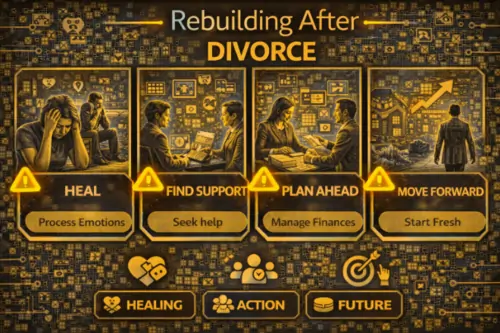
The process of starting over requires emotional healing, financial adjustments, and a renewed sense of purpose. Although the transition may be difficult at first, many people eventually find that divorce becomes a turning point for rebuilding their lives with greater clarity and strength.
Understanding how to move forward after divorce can help individuals regain confidence and build a stable and fulfilling future.
Understanding the Impact of Divorce
Divorce affects multiple aspects of life. The end of a long-term relationship can lead to emotional, financial, and social adjustments.
Some of the most common challenges people face after divorce include:
- emotional stress and grief
- changes in living arrangements
- financial restructuring
- parenting adjustments
- rebuilding social connections
These changes may feel overwhelming in the early stages, but they also create opportunities for personal development and renewed independence.
Emotional Healing After Divorce
Emotional recovery is one of the most important steps in rebuilding after divorce.
Divorce often brings feelings of sadness, anger, confusion, or loneliness. These emotions are natural and part of the healing process.
Healthy ways to support emotional recovery include:
- seeking support from family and friends
- talking with a therapist or counselor
- practicing self-care and mindfulness
- allowing time to process emotions
Healing does not happen overnight. With patience and support, individuals gradually regain emotional balance and confidence.
Rebuilding Personal Identity
During marriage, many people develop shared routines, goals, and identities with their partner. After divorce, rediscovering personal identity becomes an important step toward rebuilding life.
This stage often involves exploring personal interests, hobbies, and aspirations that may have been set aside during the relationship.
Examples include:
- pursuing new hobbies
- traveling or exploring new activities
- focusing on personal development
- reconnecting with personal goals
Rediscovering personal identity helps individuals build confidence and independence.
Managing Finances After Divorce
Financial adjustments are a common challenge following divorce. Changes in household income, living expenses, and financial responsibilities often require careful planning.
Steps that support financial recovery include:
- creating a new budget
- reviewing assets and debts
- rebuilding savings
- establishing financial goals
Financial planning helps individuals regain stability and reduce stress during the transition.
For some people, divorce becomes an opportunity to develop stronger financial discipline and independence.
Strengthening Support Systems
Support systems play an important role in emotional and personal recovery.
Friends, family members, and professional counselors can provide encouragement, perspective, and guidance.
Joining community groups or support networks can also help individuals connect with others who share similar experiences.
These connections help reduce feelings of isolation and provide reassurance during the rebuilding process.
Focusing on Personal Growth
While divorce can be painful, it can also inspire meaningful personal growth.
Many individuals use this period to:
- develop new skills
- pursue education or career advancement
- improve health and wellness
- build stronger personal boundaries
Personal growth helps transform the experience of divorce into a catalyst for positive change.
Co-Parenting After Divorce
For parents, rebuilding after divorce also involves adjusting to new parenting arrangements.
Successful co-parenting requires communication, cooperation, and a focus on the well-being of children.
Key principles for healthy co-parenting include:
- maintaining consistent routines for children
- communicating respectfully with the co-parent
- prioritizing the child’s emotional needs
- creating stable and supportive environments
When parents work together constructively, children are more likely to adapt successfully to family changes.
Building a New Future
One of the most empowering aspects of rebuilding after divorce is the opportunity to design a new future.
After the initial healing period, many individuals begin setting new goals for their personal and professional lives.
This may include:
- pursuing new career opportunities
- developing new friendships
- exploring romantic relationships when ready
- setting long-term personal goals
The process of rebuilding allows individuals to shape a future that reflects their values, interests, and aspirations.
The Importance of Patience and Resilience
Rebuilding after divorce takes time. Progress may come gradually, and there may be moments of uncertainty along the way.
Resilience plays a key role during this transition. Individuals who remain patient and focused on personal growth often emerge stronger and more confident.
Over time, many people discover that the challenges of divorce ultimately lead to greater self-awareness and independence.
Conclusion
Rebuilding after divorce is a journey that involves emotional healing, financial adjustments, and personal growth. While the end of a marriage can be difficult, it can also mark the beginning of a new chapter filled with opportunities for self-discovery and fulfillment.
By focusing on healing, strengthening support systems, and setting new goals, individuals can rebuild their lives with renewed purpose and confidence. Divorce may close one chapter, but it also creates space for new possibilities and meaningful personal transformation.
FAQ
How long does it take to rebuild after divorce?
The timeline varies for each individual. Emotional healing and life adjustments may take months or years depending on personal circumstances.
What is the first step after divorce?
The first step is focusing on emotional recovery and building a support system that provides guidance and encouragement.
Can life improve after divorce?
Yes. Many individuals find that divorce leads to personal growth, stronger independence, and new opportunities.
How can finances be managed after divorce?
Creating a new budget, reviewing assets and debts, and establishing financial goals help rebuild financial stability.
Is it possible to find happiness again after divorce?
Yes. With time, healing, and personal growth, many people build fulfilling lives and relationships after divorce.