

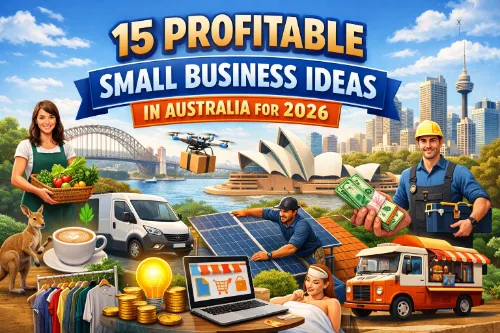
Starting a small business in Australia in 2026 doesn’t have to mean massive capital or complex tech. With consumer behaviour shifting toward digital services, sustainability and local experiences, there are more lean, profitable ideas than ever—especially if you understand where demand is headed. The real challenge is choosing a model that fits your skills, budget and lifestyle.
1. Niche Ecommerce Store
Running a niche ecommerce store is one of the most accessible ways to build a profitable small business in Australia. You focus on a tightly defined product category—such as eco‑friendly homeware, pet care, specialty foods or fitness accessories—and sell through your own site or marketplaces. This helps you stand out from generic retailers and build a recognisable brand.
Appinventiv’s guide to profitable ecommerce business ideas in Australia highlights winning niches like pet care, sustainable fashion and home fitness, noting that success comes from understanding specific customer pain points and using technology to serve them well. For broader inspiration, Xero and others showcase ecommerce in their lists of small business ideas that are performing well in 2026.
To get the foundations right—structure, ABN, registrations and licences—use the Australian Government’s official Guide to starting a business, which walks you through each step.
2. Eco‑Friendly Product Business
Sustainability is no longer a niche trend; it’s a mainstream buying driver. Small businesses that create or curate eco‑friendly products—like reusable household items, low‑waste personal care, sustainable fashion or zero‑waste kits—can tap into a rapidly growing customer base. The key is authentic sourcing and clear communication of your environmental impact.
StudyNext’s article on 15 profitable small business ideas to explore in 2026 specifically calls out eco‑friendly products as a promising product‑based business, suggesting items like reusable shopping bags, beeswax wraps and bamboo toothbrushes. They also recommend considering certifications from bodies like B Corp or Fair Trade to enhance credibility.
Use the business.gov.au guide to understand product safety, labelling and any licences or permits you might need, especially if you’re importing goods or making cosmetics.
3. Handmade Fashion and Accessories
If you’re creative and enjoy working with your hands, handmade fashion items—such as clothing, bags, jewellery or accessories—can become a profitable small business. You can start with small collections sold via markets, pop‑up stores and online platforms, then expand into wholesale or your own ecommerce store as demand grows.
StudyNext outlines handmade fashion items as a viable product‑based business, emphasising the need for strong design and sewing skills, proper equipment, and a dedicated workspace. Uptime Web Hosting’s article on small business ideas from home for Aussies also lists handmade products as a practical home‑based business that can be scaled.
To protect your designs and brand, review business.gov.au’s resources on trademarks and intellectual property when you’re choosing a business name and logo.
4. Artisanal Food and Beverage Products
Australians have a strong appetite for artisanal food and drink, from small‑batch sauces and preserves to craft beverages, baked goods and specialty snacks. If you love working in the kitchen, you can start small at farmers’ markets, local retailers and events, then scale into a broader brand.
StudyNext lists artisanal food and beverage products as a profitable idea and recommends exploring routes like farmers’ markets, food trucks, specialty retailers and online sales, along with gift boxes and seasonal releases. Tax Window’s discussion of profitable small businesses in Australia points out that food businesses—from bakeries to food trucks—can be highly lucrative with the right location and cost control.
Food‑related ventures often require more specific licences and permits, so use ABLIS through the Guide to starting a business to find your state’s food safety requirements.
5. Fitness and Wellness Services
The wellness trend continues to grow, and many Australians are willing to invest in fitness, mental health and holistic wellbeing. This creates room for small businesses that offer personal training, yoga and Pilates classes, small group training, online coaching, or niche services like workplace wellness programs.
StudyNext notes that fitness services can start from home as a micro‑studio, with classes delivered in person or online and expanded later through recorded sessions or subscription‑based programs. Global small‑business idea lists for 2026, such as those from Wolters Kluwer, also highlight wellness and fitness businesses as strong opportunities thanks to recurring revenue and high customer engagement.
Check relevant state and territory guidelines on health and fitness services, insurance and working with clients in person, using business.gov.au and your local business portal.
6. Home‑Based Service Business
Home‑based businesses remain popular in Australia because they have low overheads and can be started part‑time. Common examples include cleaning, lawn care, pet sitting, mobile car detailing, home organisation and handyman services. These businesses can generate reliable income once you establish a local client base.
Uptime Web Hosting’s guide to profitable small business ideas from home showcases ideas like cleaning services, lawn maintenance, and dog walking as realistic, low‑cost paths into self‑employment. FutureLearn’s overview of business ideas in Australia similarly points to services like babysitting, local food production and laundromats as evergreen models when executed well.
Use business.gov.au’s checklist to understand how running a business from home affects legal, tax and insurance obligations.
7. Online Coaching and Consulting
If you have strong experience in an area such as marketing, finance, HR, fitness, or career development, you can package that knowledge into an online coaching or consulting business. This model is highly scalable because you’re selling expertise rather than physical products.
Wolters Kluwer’s article on top small business ideas for 2026 highlights consulting and coaching as high‑margin, low‑overhead options that work well in a digital environment. Sleek’s guide to profitable online business ideas in Australia backs this up, showing how service‑based businesses can be delivered fully online via Zoom and digital products.
To turn your expertise into a business, develop a simple plan using business.gov.au’s resource on developing your business plan.
8. Digital Products and Online Courses
Digital products—like ebooks, templates, online courses, Notion dashboards, photography presets and toolkits—are attractive because you create them once and sell them repeatedly with minimal marginal cost. They’re especially powerful when combined with content marketing or a personal brand.
StudyNext specifically identifies online courses as a strong business model, noting their passive income potential but also the upfront work required to produce high‑quality content. Sleek’s article on online business ideas in Australia reinforces this, showing examples of digital product businesses in niches like education, marketing and productivity.
As your digital product revenue grows, treat it as a proper business with clear structures, tax registrations and IP protection using the government’s Guide to starting a business.
9. Freelancing and Micro‑Agency Services
Freelancing allows you to sell skills like writing, design, development, bookkeeping, social media management or admin support directly to clients. It’s one of the fastest ways to transition from employment to business ownership, with low startup costs and the potential to evolve into a micro‑agency.
Salesforce’s list of small business ideas for 2026 highlights solution‑based and niche service businesses—such as AI implementation, marketing automation and customer experience consulting—as high‑value opportunities. Sleek’s guide to profitable online business ideas also showcases freelancing as a gateway to more scalable models.
Use the Australian Business Registration Service (linked from business.gov.au) to obtain an ABN and register a business name so you can invoice professionally and manage your finances cleanly.
10. Local Tourism and Experience‑Based Businesses
Australia’s tourism market is shifting toward authentic, experience‑based offerings. Small businesses that provide walking tours, food and wine experiences, outdoor adventures, cultural experiences or photography tours can attract both domestic and international travellers.
FutureLearn’s overview of business ideas in Australia notes that local market stalls, food experiences and farm‑based micro‑ventures like honey or egg production can turn into sustainable businesses in the right locations. For bigger‑picture inspiration, you can also explore videos and guides showcasing high‑demand business ideas for Australia, including eco‑tourism, vertical farming and EV infrastructure.
Tourism and outdoor experiences may require permits and specific insurance, so always check licences through the ABLIS tool referenced in the Guide to starting a business.
11. Retail and Convenience‑Focused Businesses
Despite the growth of ecommerce, physical retail can still be profitable when done strategically. Convenience stores, small groceries, bakeries, newsagents, pharmacies and specialty retail continue to feature among Australia’s most successful small business types.
Tax Window’s article on Australia’s most profitable small businesses emphasises that retail trade—particularly convenience stores and bakeries—can generate strong returns when location, product mix and hours are optimised. Laundromats and service‑driven outlets that emphasise convenience also remain attractive because they require relatively low staffing and can offer stable, recurring revenue.
Because retail and premises‑based businesses involve leases and more complex compliance, carefully follow business.gov.au’s steps on choosing a location and understanding your legal and insurance obligations.
12. AI, SaaS and Tech‑Enabled Startups
For entrepreneurs with technical or product skills, technology‑enabled businesses in areas like artificial intelligence, software‑as‑a‑service (SaaS), and climate tech have strong growth and funding potential. While these ideas generally require more capital and expertise, they can scale far beyond traditional small‑business limits.
Appinventiv’s guide to profitable startup business ideas in Australia notes that AI, SaaS and climate tech are attracting investor interest due to global scalability and alignment with long‑term trends. They highlight sectors like AgriTech, smart farming platforms and digital health as areas where Australian startups can thrive.
If you’re considering a tech startup, combine the government’s basic Guide to starting a business with specialist startup and innovation programs in your state or territory.
13. Side Hustle–to–Business Transitions
Many profitable small businesses in 2026 will start as side hustles before becoming full‑time ventures. Popular side hustle ideas in Australia include dog walking, indoor plant styling, digital skills training, and content creation. These can often be tested on a small scale before you commit fully.
PracSkills’ guide to profitable side hustle ideas in Australia provides step‑by‑step suggestions for turning dog walking, plant styling and online tutoring into structured businesses. MyBudget’s list of best side hustles for Australians similarly shows how simple part‑time gigs can grow into substantial income.
When your side hustle income becomes consistent, use business.gov.au’s article on starting a business: dos and don’ts to formalise operations and avoid common mistakes.
14. AI‑Powered Services and Automation Consulting
As AI tools become mainstream, small and medium businesses need help integrating them into workflows. If you’re comfortable with automation platforms, AI writing tools, chatbots or analytics, you can build a consulting or implementation business around helping others use them.
Salesforce’s piece on small business ideas mentions AI‑driven services and automation as emerging opportunities where small firms can punch above their weight by solving specific operational problems. Appinventiv’s startup‑idea guide also notes that AI‑enabled solutions in areas like AgriTech and climate tech are drawing attention from investors.
Because AI and data work can involve privacy and security considerations, it’s wise to check the latest guidance on digital business and data protection via business.gov.au and seek professional advice where necessary.
15. Education, Training and Micro‑Learning Businesses
Continuous upskilling is becoming essential in many industries, creating demand for bite‑sized training and micro‑learning businesses. You can build a small business delivering workshops, bootcamps, online micro‑courses or in‑house training for organisations in areas like digital tools, compliance, leadership or industry‑specific skills.
StudyNext highlights education businesses—particularly online courses and digital‑skills training—as attractive models for 2026. Salesforce’s small‑business idea guide similarly points to solution‑based and community‑based businesses that help people learn and connect as strong contenders.
Use the Guide to starting a business and registration resources like TTS Associates’ Australian Business Registration Guide to set up your training venture correctly, including ABN, structure and insurance.
Setting Up Your Small Business the Right Way
Whichever idea you pursue, getting the basics right from the start will save you time and stress later. The Australian Government’s Guide to starting a business walks you through deciding on a structure, researching your market, registering for an ABN, setting up finances and getting licences. Complement this with their “dos and don’ts” article on starting a business to avoid common pitfalls.
When you’re ready to complete registrations, resources like TTS Associates’ business registration guide explain ABNs, business names, structures and insurance in plain language. Combine these with niche‑specific idea lists—like StudyNext’s 15 profitable small business ideas or Salesforce’s small business ideas for 2026—to choose a model that aligns with your skills and goals.