

AI‑powered portrait photography Phnom Penh tips 2026 isn’t just for influencers anymore. As a small‑business owner, founder, or professional, you can use smart planning, simple posing techniques, and the right studio or location to look confident and approachable on every platform.
This guide shares practical portrait photography tips tailored to Phnom Penh—from choosing outfits and angles to working with studios like Lefty Studio—so you can walk into your next photoshoot knowing exactly what to do in front of the camera.
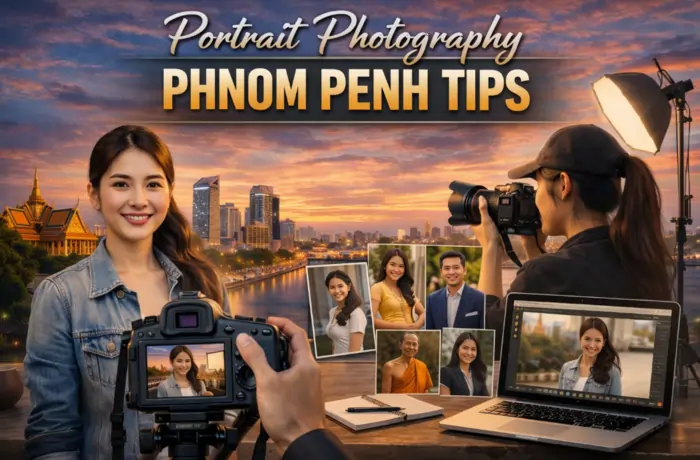
Great portraits are no longer optional if you run a small business in Phnom Penh. Your face shows up on your website, your Google Business profile, your LinkedIn, and social media. People decide whether they trust you—often in seconds—based on your photo.
This guide focuses on portrait photography tips specifically for Phnom Penh in 2026. You’ll learn how to prepare, how to pose, what to wear, and how to work with both studios and on‑location photographers:
- Best Photography Studio Phnom Penh
- Professional Photography Phnom Penh Guide
- Branding Photography Phnom Penh for Businesses
Studio vs Outdoor Portraits in Phnom Penh
Before you plan poses and outfits, decide where you’ll shoot.
Studio portraits
A studio (especially a business‑focused one like Lefty Studio) is ideal when you want:
- Clean, distraction‑free backgrounds
- Consistent lighting for you and your team
- Privacy and air‑conditioning (helpful in Phnom Penh’s heat)
For studio selection and preparation, check your Best Photography Studio Phnom Penh and How to Choose a Photography Studio Phnom Penh guides.
Outdoor and on‑location portraits
Outdoor or on‑location portraits work best when you want:
- Your workplace, café, or shop in the background
- City context—riverside, parks, streets, or rooftops
- A more casual, lifestyle feel
For specific locations and ideas, open your Best Places for Photoshoot Phnom Penh article alongside this one.
Portrait Photography Tips: Before the Shoot
Define your portrait purpose
Ask yourself:
- Where will I use this portrait first? (LinkedIn, website, social, press)
- What do I want people to feel when they see it? (trust, energy, calm, authority)
- Do I want a formal, semi‑formal, or casual look?
If your portrait is part of a bigger brand story, align it with your Branding Photography Phnom Penh for Businesses plan.
Choose the right photographer or studio
For portraits with real impact, look for:
- Experience with corporate, branding, or commercial portraits
- Portfolios with founders, professionals, and small‑business teams
- Comfort shooting in both studios and real‑world locations
Your Professional Photography Phnom Penh Guide walks through how to shortlist and compare these options.
What to Wear for Portrait Photography in Phnom Penh
Outfit tips for men and women
- Match your brand: use your company colors as accents (tie, scarf, blazer, top).
- Keep it simple: avoid busy patterns and big, non‑brand logos.
- Choose solid, mid‑tone colors: navy, charcoal, soft blues, greens, and earth tones usually photograph well.
- Fit matters: slightly tailored clothing looks better than oversized or very tight outfits.
Bring at least one backup outfit so your photographer can choose what looks best on camera.
Phnom Penh‑specific considerations
- Think about heat: breathable fabrics and layers you can remove between shots.
- Bring blotting paper or a small towel to manage shine, especially outdoors.
- For outdoor shoots, comfortable shoes you can walk in are essential—even if you switch to dress shoes for key shots.
If your portraits are part of a broader branding shoot, coordinate outfits with your planned looks in Branding Photography Phnom Penh for Businesses.
Posing Tips for Natural‑Looking Portraits
You don’t need to be a model; you just need a few simple rules.
Body and posture
- Stand or sit tall: imagine a string gently pulling you up from the top of your head.
- Angle your body: turn your shoulders about 30 degrees away from the camera, then turn your head back toward the lens.
- Shift your weight: put more weight on your back leg if standing; it relaxes your posture.
Face and expression
- Relax your jaw: exhale gently through your mouth before the shot.
- Think “soft smile” instead of forced grin; imagine talking to your favorite client.
- Try a few micro‑variations: serious, slight smile, bigger smile—your photographer can help you choose.
If you’re working with a studio like Lefty Studio, let them guide you—they’re used to helping non‑models look relaxed and confident.
Simple Portrait Composition and Lighting Tips
You don’t need to know all the technical details, but a few basics help.
Composition ideas
- Head‑and‑shoulders: classic for LinkedIn and websites.
- Three‑quarter: mid‑thigh or waist‑up; good for About pages and content.
- Environmental: you + part of your environment (desk, shop, café, city).
Ask your photographer to shoot horizontally and vertically so you have options for banners and profile photos.
Lighting basics
- Soft natural light near a window works well for indoor portraits.
- Avoid harsh midday sun outdoors—aim for early morning or late afternoon.
- In studios, ask for soft, flattering light rather than harsh, dramatic shadows (unless drama fits your brand).
Your Professional Photography Phnom Penh Guide can help you talk through these choices with your photographer.
Portrait Tips for Different Use Cases
Portraits for LinkedIn and professional profiles
- Aim for head‑and‑shoulders, clean background, and a confident but friendly expression.
- Dress slightly more formal than your day‑to‑day, especially if you work with corporate clients.
- Make sure the photo still looks sharp and clear as a small profile circle.
Portraits for websites, brochures, and media
- Get a mix: one strong close portrait and several mid‑shots and environmental images.
- Pose near elements related to your work—books, tools, menus, computers, or products.
- Leave some “empty” space in the frame where designers can place text or logos.
These images fit naturally into your broader visual plan from Branding Photography Phnom Penh for Businesses.
Portraits for social media and content
- Capture more relaxed, candid‑style shots: walking, talking, working, laughing.
- Use both studio and city locations for variety.
- Ask for close‑ups of details: hands, tools, coffee cups, notebooks—great for quotes and captions.
For ongoing content, consider pairing your portrait sessions with ideas from Commercial Photography Phnom Penh Services Explained.
How Much Should You Spend on Portrait Photography?
Portrait costs depend on photographer, studio, and scope, but you should think in terms of value, not just price.
Basic portrait sessions
- Shorter sessions (30–60 minutes) with one outfit and one location.
- Good for quick LinkedIn updates or single‑use profile pictures.
Branding‑level portrait sessions
- Longer sessions with multiple outfits and backgrounds.
- Designed to create a small library of images you can use across platforms.
For a deeper look at how time, locations, and deliverables affect cost, review your Studio Photoshoot Phnom Penh Price Breakdown.
Working with a Studio Like Lefty Studio for Portraits
A modern commercial space like Lefty Studio can simplify portrait photography for small‑business owners and teams:
- Controlled lighting and backgrounds mean fewer retakes and more usable shots.
- They can handle both solo and team portraits in one session.
- Many can add short video snippets or behind‑the‑scenes clips to your shoot.
If portraits are part of a larger content push, combining a session at Lefty Studio with a city or office session gives you maximum flexibility. Use your Best Photography Studio Phnom Penh and How to Choose a Photography Studio Phnom Penh pages as decision tools.
FAQs
1. How should I prepare for a portrait photoshoot in Phnom Penh?
Clarify where you’ll use the photos, choose 1–2 outfits that match your brand, and share a few reference images with your photographer so they understand your preferred style.
2. What is the best time of day for outdoor portraits in Phnom Penh?
Early morning and late afternoon (golden hour) usually provide softer, more flattering light and lower heat compared to midday sun.
3. Should I choose a studio or outdoor location for my portraits?
Studios are best for clean, controlled portraits, while outdoor locations give more lifestyle context. Many professionals combine both for variety.
4. What colors work best for portrait photography?
Solid, mid‑tone colors like navy, charcoal, soft blue, and earth tones photograph well and keep attention on your face rather than your clothes.
5. How can I look more natural in my photos?
Practice a few expressions in the mirror, think about people you enjoy talking to, and let your photographer guide you through small adjustments in posture and angle.
6. What should I avoid wearing for portraits?
Avoid busy patterns, large logos (unless they’re your own brand), extremely bright neon colors, and items that don’t fit well or make you feel uncomfortable.
7. Can I bring props to my portrait session?
Yes. Props like laptops, notebooks, menus, tools, or product samples can help tell your story and give you something natural to do with your hands.
8. How many final portraits should I expect from a session?
It depends on your package, but many portrait sessions deliver a curated set of edited images (for example, 5–20) rather than hundreds of similar shots.
9. How often should I update my portrait photos?
Aim to refresh your portraits every 12–24 months, or sooner if you change your look significantly, rebrand, or shift your core business focus.
10. Can I use the same portrait for LinkedIn and other platforms?
Yes, but consider cropping and adjusting versions for each platform so they fit well in circles, squares, and banner layouts.
11. How can I reduce shine or sweat during a shoot in Phnom Penh?
Use blotting paper, powder (for all genders), and take short breaks. In studios, air‑conditioning helps; outdoors, schedule during cooler times of day.
12. Should I hire a makeup artist for my portrait session?
If the portraits are important for your brand or website, hiring a professional makeup artist can help you look polished without overdoing it.
13. What lens or focal length is best for portraits?
Most photographers will choose normal to short‑telephoto lenses (around 50–85mm full‑frame equivalent) because they flatter faces and separate you from the background.
14. Can we shoot both individual and team portraits in one session?
Yes. Many small‑business clients book a combined session for founder portraits plus team or department photos in one studio or office visit.
15. How do I choose the right background for my portraits?
For professional use, simple, uncluttered backgrounds—solid colors, soft textures, or subtle office settings—usually work best and keep focus on you.
16. Can I combine portraits with product photos in the same shoot?
Yes. Many small businesses in Phnom Penh combine founder portraits with product shots so all visuals share the same lighting and style.
17. How long does a typical portrait session take?
Basic sessions may take 30–60 minutes; more complete, branding‑style portrait sessions can run 2–3 hours, especially with outfit and background changes.
18. What if I feel very uncomfortable in front of the camera?
Tell your photographer honestly. A good portrait photographer will move slowly, show you previews, and guide you into poses that feel natural and flattering.
19. Can I do a portrait session as part of a bigger branding shoot?
Absolutely. Portraits are often the foundation of a full branding session, which may also include workspace shots, product photos, and lifestyle images.
20. What is the easiest way to start with portrait photography in Phnom Penh?
Start with a focused session—either in a studio like Lefty Studio or at a favorite location—aimed at updating your LinkedIn and website, then expand into branding and commercial shoots as your needs grow.