

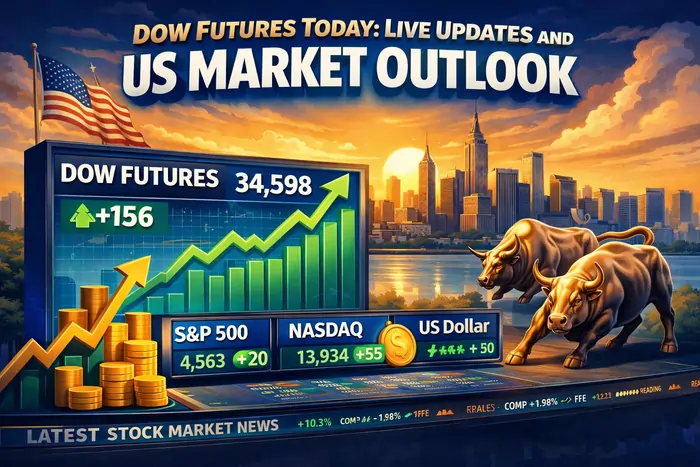
Dow futures today are one of the most closely watched indicators in global finance, offering real-time insight into how the US stock market is expected to open. These futures track anticipated movements in the Dow Jones Industrial Average, a benchmark index representing 30 major publicly traded US companies.
What Are Dow Futures and Why They Matter
Dow futures are financial derivative contracts that allow traders to speculate on or hedge against the future value of the Dow Jones Industrial Average. These contracts are traded nearly 24 hours a day, making them especially useful for reacting to global developments outside standard US trading hours.
Unlike the stock market, which operates during set hours, futures markets provide continuous updates. This means that events happening overnight—such as geopolitical developments, central bank decisions, or earnings releases—are immediately reflected in futures pricing.
For investors, this makes Dow futures essential for:
- Understanding pre-market sentiment
- Identifying potential gaps between yesterday’s close and today’s open
- Adjusting trading strategies based on new information
If you want to track real-time futures data, platforms like TradingView and CNBC Pre-Market Data provide live charts and analysis.
Dow Futures Today: Key Market Drivers
1. Inflation and Interest Rate Outlook
Inflation remains one of the most powerful drivers of Dow futures movements. When inflation rises above expectations, markets often anticipate that the Federal Reserve will take a more aggressive stance on interest rates.
Higher interest rates typically:
- Increase borrowing costs
- Reduce consumer spending
- Lower corporate profitability
As a result, Dow futures may decline when rate hike expectations increase.
To monitor inflation trends, investors frequently review reports such as the Consumer Price Index (CPI) published by the U.S. Bureau of Labor Statistics.
Understanding the relationship between inflation and equities is critical for interpreting daily fluctuations in futures markets.
2. Economic Data Releases
Economic indicators play a central role in shaping dow futures live updates. Some of the most influential reports include:
- Nonfarm payrolls (jobs report)
- GDP growth data
- Retail sales figures
- Manufacturing activity
These reports provide insight into the health of the US economy.
For example:
- Strong employment data may signal economic resilience, boosting futures
- Weak GDP growth could raise recession concerns, pushing futures lower
You can access official economic releases from sources like the Bureau of Economic Analysis.
3. Global Market Influence
Dow futures do not operate in isolation. Overnight movements in global markets—especially in Asia and Europe—often influence US futures before the market opens.
Key global factors include:
- Performance of major indices like the Nikkei 225 and FTSE 100
- Currency fluctuations, particularly the US dollar
- Commodity price movements, including oil and gold
Geopolitical tensions, trade developments, and central bank decisions from other countries can also drive volatility.
For global market updates, platforms like Reuters Markets provide comprehensive coverage.
4. Corporate Earnings and Sector Strength
Corporate earnings reports are another major factor influencing Dow futures.
When large companies report better-than-expected earnings, it can:
- Boost investor confidence
- Lift futures markets
- Strengthen specific sectors like technology or finance
Conversely, disappointing earnings can weigh heavily on futures.
Investors often track earnings calendars through sites like Earnings Whispers to stay ahead of major announcements.
Sectors that frequently impact Dow futures include:
- Technology
- Banking and financial services
- Energy and commodities
US Market Outlook Today
The US market outlook today depends on a combination of macroeconomic trends, corporate performance, and investor sentiment.
Bullish Scenario
A bullish outlook may emerge when:
- Inflation shows signs of cooling
- Interest rates stabilize or decline
- Corporate earnings exceed expectations
In such conditions, Dow futures typically trend upward, signaling a strong market open.
Bearish Scenario
A bearish scenario may develop if:
- Inflation remains persistently high
- The Federal Reserve adopts a hawkish stance
- Economic growth slows
This environment can lead to declining futures and increased market volatility.
Neutral Scenario
Markets may also move sideways when:
- Economic signals are mixed
- Investors remain uncertain
- No major catalysts are present
In these cases, Dow futures may fluctuate within a narrow range.
Why Traders Watch Dow Futures Closely
Dow futures are a critical tool for traders because they provide early insights into market direction.
Key benefits include:
- Real-time visibility into market sentiment
- Ability to respond quickly to breaking news
- Improved timing for entry and exit strategies
Institutional investors, hedge funds, and professional traders closely monitor futures markets to gain a competitive edge.
Platforms like Bloomberg Markets offer advanced tools and data for analyzing futures movements.
Live Trends: What to Watch Today
To understand dow futures today live, traders should monitor several key indicators:
Federal Reserve Signals
Statements, speeches, and meeting minutes from the Federal Reserve can significantly influence market expectations.
Bond Yields
Rising US Treasury yields often signal tighter financial conditions, which can pressure equities.
You can track yields via US Treasury data.
Oil and Commodity Prices
Energy prices impact inflation and corporate costs, making them a key factor in futures movements.
Technology Sector Momentum
As a major driver of market growth, the performance of large tech companies can heavily influence futures direction.
How to Use Dow Futures for Smarter Trading
For beginners and experienced traders alike, Dow futures can be a powerful tool when used correctly.
1. Track Pre-Market Direction
Use futures to anticipate whether the market will open higher or lower.
2. Combine With Technical Analysis
Analyze charts, support/resistance levels, and indicators alongside futures data.
3. Monitor News and Events
Stay updated with real-time news from sources like the Wall Street Journal Markets.
4. Avoid Overreliance
While futures provide strong signals, they are not always accurate predictors of market behavior after the open.
Final Takeaway
Dow futures today serve as a real-time pulse of Wall Street, offering valuable insight into market direction before trading begins.
By closely monitoring:
- Inflation and interest rate trends
- Economic data releases
- Global market movements
- Corporate earnings
You can develop a clearer understanding of the US market outlook and make more informed investment decisions.
In today’s fast-moving financial environment, staying informed is essential. By leveraging trusted data sources, real-time platforms, and a strong understanding of market drivers, traders and investors can navigate volatility with greater confidence and precision.
For readers interested in applying similar real-time monitoring strategies in other sectors, you can also explore this practical guide on fuel price tracking: 7 Smart Ways to Use Fuel Watch Perth to Save Money on Petrol.