

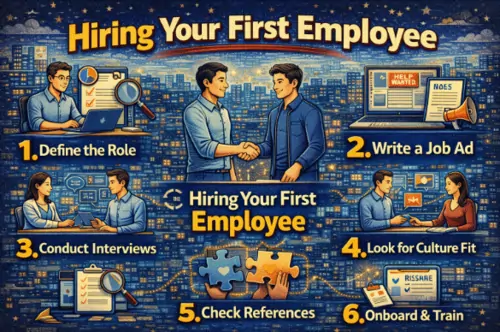
Hiring Your First Employee is one of the most important transitions a business owner will make. It marks the shift from being a solo operator to becoming a leader responsible for structure, performance, and long-term growth.
If done correctly, Hiring Your First Employee increases capacity and stability. If rushed, it creates financial pressure, unclear expectations, and operational confusion. This guide walks you through how to approach the decision strategically, especially for small businesses and Philippine-based founders.
Why Hiring Your First Employee Changes Everything
Hiring Your First Employee is not just about reducing workload. It forces you to define processes, clarify responsibilities, and think about culture.
When you work alone, decisions are fast and informal. Once you bring someone in, communication, accountability, and documentation become necessary. The way you handle Hiring Your First Employee sets the tone for every future hire.
Know When You’re Ready
Many founders consider Hiring Your First Employee because they feel overwhelmed. But stress alone is not a hiring signal.
You are more likely ready when:
- Revenue is stable and predictable
- You can cover salary and related costs for several months
- The tasks you want to delegate are repeatable
- You understand what outcomes the role should produce
Hiring Your First Employe without financial stability increases risk and pressure on both sides.
Choose the Right Role First
The smartest approach to Hiring Your First Employee is removing your biggest growth bottleneck.
Common strong first hires include:
- Operations support
- Customer support
- Sales assistance
- A specialist skill you do not possess
Before Hiring Your First Employe, ask yourself: what task, if removed from my plate, would most increase revenue or efficiency?
Clarity here prevents costly mistakes.
Understand the True Cost
Salary is only part of the investment.
When Hiring Your First Employee, you should account for:
- Employer contributions and payroll obligations
- Equipment and software tools
- Onboarding time
- Reduced productivity during the training period
Expect a ramp-up phase of at least 30 to 60 days. Planning for this makes Your First Employee financially manageable.
Define Clear Outcomes
One of the biggest mistakes during Hiring Your First Employe is writing a vague job description.
Before recruiting, define:
- The primary outcomes the role owns
- Weekly responsibilities
- Performance indicators
- What success looks like in 30, 60, and 90 days
Without defined outcomes, Hiring Your First Employe becomes guesswork instead of structured growth.
Hire for Reliability and Ownership
Skills can be improved. Accountability is harder to teach.
When Hiring Your First Employe, prioritize:
- Clear communication
- Initiative
- Problem-solving mindset
- Openness to feedback
Your first hire will influence culture and standards more than you expect.
Build Systems Before They Start
Do not bring someone into disorganized workflows.
Before Hiring Your First Employe, prepare:
- Documented processes
- A task management system
- Clear communication channels
- Basic onboarding materials
Structure ensures your new hire contributes quickly and confidently.
Onboard With Intention
The first month determines long-term success.
During the onboarding phase of Hiring Your First Employee, focus on:
- Clear expectations
- Weekly check-ins
- Immediate feedback
- Gradual responsibility increases
Strong onboarding reduces misunderstandings and improves retention.
Avoid Common First-Hire Mistakes
Be cautious of these errors when Hiring Your First Employee:
- Hiring too quickly
- Combining too many roles into one
- Avoiding performance conversations
- Ignoring compliance requirements
- Expecting immediate perfection
A professional approach to Your First Employee protects both the business and the new team member.
Think Long-Term From Day One
Even though you are starting small, think ahead.
Ask yourself:
- Could this person grow with the company?
- Do they raise performance standards?
- Would I trust them with more responsibility over time?
Hiring Your First Employee is a leadership decision, not just a staffing decision.
Final Thoughts
Hiring Your First Employee represents a major milestone in business growth. With financial preparation, clear expectations, structured onboarding, and thoughtful role design, the process becomes a powerful multiplier rather than a risk.
Approach Your First Employe with clarity and intention, and it can transform your business from a one-person operation into a scalable organization built on accountability and momentum.
Frequently Asked Questions
Should I hire for skill or attitude first?
When hiring your first employee, prioritize reliability, communication, and ownership, since skills can be trained more easily than mindset.
Is hiring your first employee risky?
Hiring your first employee carries risk if done without financial preparation or role clarity, but it becomes a growth multiplier when structured properly.
When is the right time for hiring your first employee?
The right time for hiring your first employee is when your revenue is stable, tasks are clearly defined, and you can financially support the role for several months.
What is the best role to choose when hiring your first employee?
The best role when hiring your first employee is the one that removes your biggest growth bottleneck and has measurable weekly outcomes.