

IDAHOBIT Day Key Takeaways
IDAHOBIT Day is marked across Australia to highlight discrimination against LGBTQ+ people, but an upcoming school event in Adelaide has sparked concern and protest plans among some parents.
- Understanding what IDAHOBIT Day is and is not helps put the IDAHOBIT Day event Adelaide parents protest into clearer perspective.
- Australian cultural, legal and educational frameworks already expect schools to keep all students safe, including LGBTQ+ young people.
- Constructive communication between parents, educators and students can reduce conflict and support student wellbeing better than protests alone.
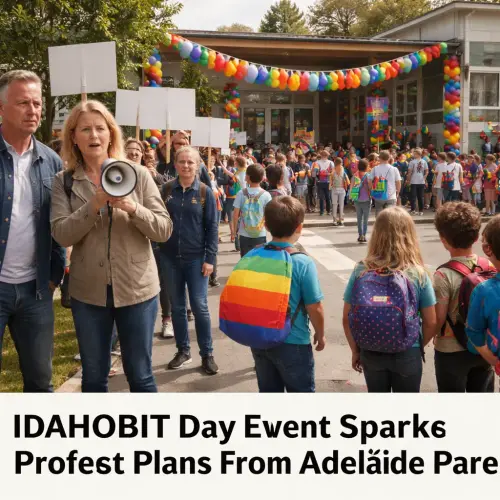
What Australians Should Know About IDAHOBIT Day and the Adelaide School Debate
An upcoming school-based IDAHOBIT Day event in Adelaide has triggered concern among some parents, with online discussions pointing to organised protests and the possibility of withdrawing children for the day. This emerging Adelaide school IDAHOBIT Day controversy reflects wider tensions in Australia about how schools talk about sexuality, gender and respect.
IDAHOBIT Day Australia is the local name for the International Day Against Homophobia, Biphobia, Interphobia and Transphobia, held each year on 17 May. Many Australian schools mark the day with low-key activities focused on bullying prevention, respectful relationships and inclusion, often under broader wellbeing or Harmony Day-style programs. For a related guide, see 9 Major Demands from the AEU That Could Change Australian Schools.
Debate around the current IDAHOBIT Day event Adelaide parents protest centres on whether the content is age-appropriate, how much explicit reference is made to sexuality and gender identity, and the extent to which parents have been given clear information or options. At the same time, many educators and LGBTQ+ advocates stress that visibility and support at school can be life-changing for vulnerable students.
How IDAHOBIT Day Australia Developed and What Typically Happens in Schools
To understand why tempers are flaring now, it helps to know how IDAHOBIT Day Australia has evolved and what most schools actually do on the day.
Origins and purpose of IDAHOBIT Day
IDAHOBIT was first recognised internationally in 2004, chosen to mark the date in 1990 when the World Health Organization removed homosexuality from its list of mental disorders. In Australia, it has gradually become part of the calendar of awareness days, alongside events like National Day of Action against Bullying and Violence and R U OK? Day.
The central aim is to draw attention to the ongoing impacts of discrimination against lesbian, gay, bisexual, transgender, intersex and queer (LGBTIQ+) people. Organisations such as Minus18 and the Australian Human Rights Commission highlight increased risks of bullying, mental ill-health and self-harm when young people feel unsafe or excluded at school.
Typical IDAHOBIT Day activities in Australian schools
Contrary to some social media claims, most IDAHOBIT Day Australia activities in schools are modest and framed within existing wellbeing programs. Common elements include:
- Wearing a splash of rainbow colour or a badge to signal support for all students.
- Short assemblies or announcements about kindness, respect and standing up to bullying.
- Lesson snippets linking to existing curriculum outcomes about diversity, rights and responsibilities.
- Posters or library displays featuring inclusive messages and role models.
- Optional student-run stalls for fundraising or awareness-raising.
In many cases, the focus is broader than sexuality or gender identity alone, linking to anti-bullying campaigns and school values such as respect, safety and responsibility.
Why some schools embrace IDAHOBIT Day
School leaders who support IDAHOBIT Day often point to three main reasons:
- Evidence that LGBTQ+ young people face higher levels of bullying and exclusion, particularly in adolescence.
- Obligations under anti-discrimination law and child safety policies to provide a safe learning environment for all students.
- Alignment with curriculum areas such as Health and Physical Education, Personal and Social Capability, and Civics and Citizenship.
For many schools, IDAHOBIT is one date within a wider strategy to reduce bullying and improve wellbeing, rather than a standalone political statement.
Why Some Adelaide Parents Plan to Protest the IDAHOBIT Day Event
The current Adelaide school IDAHOBIT Day controversy highlights concerns that have been simmering for several years in parts of Australia. Parents planning to protest typically frame their objections around three main themes: age-appropriateness, parental rights, and perceived politicisation of the classroom.
Concerns about age-appropriateness and content
Some families argue that discussions of sexuality or gender identity should be limited, especially in primary school. They worry that even mention of LGBTQ+ people is equivalent to sexual education, or that children may feel pressured to adopt particular identities or labels. For a related guide, see Kingswood Primary School Shock: 5 Risky Findings in Trusted.
In the case of the current IDAHOBIT Day event Adelaide parents protest, online posts suggest anxiety about rainbow decorations, pronoun discussions, and whether younger children will be asked to participate in activities they or their parents do not understand. Some parents say they support anti-bullying messages but object to any symbolism they associate with broader activism.
Parental consent, communication and trust
Another recurring theme is the sense that schools are not being transparent enough. Parents involved in the IDAHOBIT Day event Adelaide parents protest have raised questions such as:
- Will materials be shared in advance so parents can decide if they are comfortable?
- Are there clear opt-out options for specific activities, without singling out children?
- Is the event framed as mandatory celebration or as an optional awareness activity?
Where communication has been rushed, assumptive or heavy on slogans but light on detail, mistrust has grown. In some cases, third-party social media posts have filled the vacuum with speculation and worst-case assumptions.
Fears about politicisation and ideology
A portion of parents see IDAHOBIT Day as inherently political, tied to wider debates about gender ideology, religious freedom and parental authority. They argue schools should stick narrowly to literacy, numeracy and core curriculum, leaving values and identity issues to families and faith communities.
Others worry that students with conservative or religious beliefs may feel silenced or judged if they do not enthusiastically participate. This leads some to view protests and withdrawals as a way to register dissent and signal that there is not a single, unanimous community view.
Balancing IDAHOBIT Day Inclusion with Educator, Advocate and Student Perspectives
While parents’ concerns are important, they sit alongside the experience and responsibilities of teachers, principals, LGBTQ+ advocates and, crucially, students themselves. When considering the Adelaide school IDAHOBIT Day controversy, several countervailing perspectives are worth noting.
Educators’ duty of care and legal obligations
Australian schools operate under federal and state frameworks that prohibit discrimination on grounds including sex, sexual orientation and gender identity. Laws such as the Sex Discrimination Act 1984 (Cth) and state-based equal opportunity legislation expect schools to actively prevent harassment and bullying.
From this perspective, an IDAHOBIT Day event is one tool among many to meet that duty of care. Principals must weigh the discomfort of some families against the potential harm to LGBTQ+ students if their experiences remain invisible or trivialised.
LGBTQ+ advocates’ focus on mental health and safety
LGBTQ+ organisations in Australia regularly highlight elevated rates of depression, anxiety and self-harm among queer and questioning young people. Reports such as the national Writing Themselves In studies have consistently found that school is a key site of both harm and potential support.
Advocates argue that days like IDAHOBIT Day send a concrete message: bullying based on sexuality or gender is not acceptable, and students who feel different are not alone. Even small gestures, such as a rainbow lanyard on a trusted teacher or a poster asserting that “all families are welcome”, can make a significant difference to whether a student seeks help.
Student voices: feeling seen vs feeling pressured
Student reactions are not uniform. Some LGBTQ+ or questioning students describe IDAHOBIT activities as the first time they saw their reality acknowledged at school. They talk about feeling safer walking the corridors, or less terrified of coming out to a friend.
Others, including students from conservative or faith backgrounds, may feel ambivalent. They can support kindness while still feeling wary about rainbow symbolism or slogans they associate with politics. In well-managed programs, schools try to make space for differing views while making it clear that bullying, harassment and slurs are unacceptable.
Clearing Up Common Misconceptions About IDAHOBIT Day in Australia
Much of the heat in the Adelaide school IDAHOBIT Day controversy stems from misunderstandings or incomplete information. Clarifying what IDAHOBIT Day Australia does and does not involve can help families make informed decisions.
Myth vs reality: a quick comparison
The table below summarises several common myths about school-based IDAHOBIT events and how they typically play out in practice.
| Common belief | Typical school practice | Key takeaway |
|---|---|---|
| IDAHOBIT forces students to adopt an LGBTQ+ identity. | Activities usually focus on anti-bullying, respect and inclusion for all students. | Identity choices are not required; the focus is behaviour and safety. |
| It replaces core curriculum like maths and English. | Most events are short assemblies or brief lesson segments, integrated into existing wellbeing time. | Academic subjects continue as normal, with small adjustments. |
| Parents have no say and cannot opt out. | Many schools provide information in newsletters and allow non-participation in specific activities. | Communication varies by school; parents can request clarity and alternatives. |
| Religious or conservative students are shamed. | Well-designed programs emphasise respect for everyone, including those with different beliefs. | Firm boundaries against bullying should protect all students. |
| IDAHOBIT is party-style celebration only for LGBTQ+ students. | Events generally stress a whole-school culture of safety and inclusion. | The intended audience is the entire school community. |
Relevant Australian frameworks schools must navigate
Schools planning an IDAHOBIT Day event have to juggle a mesh of expectations, including:
- Anti-discrimination and child safeguarding laws that apply across Australia.
- State or territory education department guidelines on wellbeing, respectful relationships and diversity.
- Australian Curriculum content on personal safety, relationships, civics and ethics.
- Local school values, community expectations and, where relevant, religious ethos.
This context helps explain why some school leaders feel they would be neglecting their obligations if they ignored issues of sexuality and gender entirely, yet also why they must be attentive to how programs affect different parts of their community.
A simple checklist for parents assessing school communications
For parents watching the IDAHOBIT Day event Adelaide parents protest unfold and wondering what to do in their own context, the following checklist can be useful when a school announces an event:
- Clarity: Has the school clearly explained the aims, activities and year levels involved?
- Consent: Is it clear which elements are compulsory (e.g. assembly attendance) and which are optional (e.g. wearing colours, lunchtime stalls)?
- Curriculum link: Has the school mentioned how the event ties into wellbeing or curriculum outcomes?
- Balance: Are respect and safety framed as values that apply to everyone, including those with different beliefs?
- Feedback channel: Has the school invited questions or offered meetings for concerned families?
Where these elements are missing, parents can reasonably ask for more information before deciding their stance.
Moving Forward: Constructive Responses to IDAHOBIT Day Disagreements
Whether or not one supports IDAHOBIT Day in schools, protests alone are unlikely to resolve underlying tensions. Australian communities will need more sustainable ways to navigate difference while keeping student wellbeing at the centre.
For schools: communication and co-design
Schools can reduce the likelihood of future controversies by engaging early and consistently with families. Practical steps include:
- Sharing proposed IDAHOBIT activities well in advance, with sample resources and clear curriculum links.
- Offering information sessions or Q and A opportunities, particularly for parents new to the concept.
- Co-designing aspects of the event with student leaders and representative parent groups to reflect local values.
- Ensuring that participation in more expressive elements (e.g. rainbow dress-ups) is clearly optional.
Such approaches will not eliminate disagreement but can foster trust and reduce the appeal of confrontational protests.
For parents: engaging, not just opposing
Parents troubled by the Adelaide school IDAHOBIT Day controversy might consider complementary strategies to protest, such as:
- Requesting a meeting with school leadership to share specific concerns and listen to constraints.
- Suggesting constructive adjustments, for example age-tailored activities or alternative tasks for children who opt out.
- Talking with their children about family values in a way that still emphasises kindness and non-bullying.
- Seeking information from a range of sources, including official school documents and reputable health or education organisations.
These steps can help ensure that children are not caught in the crossfire of adult conflict and that they understand both their family’s position and the school’s obligations.
For students: knowing rights and responsibilities
Students themselves have a role in shaping the tone of an IDAHOBIT Day event. They can:
- Speak with trusted staff or student representatives if they feel excluded by the way an event is framed.
- Support peers who may be targeted for their sexuality, gender, beliefs or background.
- Participate in designing activities that emphasise shared values like respect and fairness.
Empowering students in this way can transform a one-off date in May into longer-term cultural change.
As the IDAHOBIT Day event Adelaide parents protest unfolds, it functions as a test case for how Australian communities handle disagreement about sensitive issues in schools. The challenge is to move beyond headlines and hashtags, towards informed dialogue that keeps student safety, dignity and learning at the centre. Whatever one’s personal position, understanding the purpose and practice of IDAHOBIT Day, and the legal and cultural frameworks around it, is an essential starting point.
Useful Resources
For readers wanting to explore evidence and official guidance related to IDAHOBIT Day Australia and school inclusion, these starting points are helpful:
- Minus18 – IDAHOBIT: International Day Against Homophobia, Biphobia, Interphobia and Transphobia
- Australian Human Rights Commission – LGBTI human rights
Frequently Asked Questions About IDAHOBIT Day
What is IDAHOBIT Day and why is it marked in Australian schools?
IDAHOBIT Day is the International Day Against Homophobia, Biphobia, Interphobia and Transphobia, held on 17 May each year. Australian schools mark it to highlight the impact of discrimination on LGBTQ+ people, reinforce anti-bullying messages, and support a safe learning environment for all students, including those who may be questioning their sexuality or gender.
Is IDAHOBIT Day part of the official Australian school curriculum?
IDAHOBIT Day itself is not a mandatory curriculum requirement, but the themes it covers—such as respectful relationships, diversity, and bullying prevention—are embedded in the Australian Curriculum, especially in Health and Physical Education and general capabilities like Personal and Social Capability. Schools choose whether and how to link IDAHOBIT activities to those outcomes.
Are Adelaide parents allowed to keep their children home during an IDAHOBIT Day event?
Parents in Adelaide and across South Australia generally can keep their children home, but it may be recorded as an absence according to normal attendance rules. Some schools also offer opt-out options for particular activities while encouraging attendance for the rest of the school day, so it is best to discuss options directly with the principal. For a related guide, see Australia Top Public Primary Schools List for Smart Parents.
Does IDAHOBIT Day include explicit sex education for young children?
In primary schools, IDAHOBIT Day activities are usually framed around kindness, inclusion and anti-bullying, without explicit sexual content. Discussions about sexuality are generally age-appropriate and aligned with existing health education guidelines, though parents should always feel able to ask for materials and clarify what will be covered at each year level.
Why are some Adelaide parents protesting IDAHOBIT Day at their local school?
Some Adelaide parents are protesting because they worry about age-appropriateness, feel they were not properly consulted, or believe that IDAHOBIT promotes a particular ideological stance on gender and sexuality. They argue for greater parental say in how these topics are introduced and fear that their children may be exposed to messages that conflict with family or religious values.
How do schools justify holding an IDAHOBIT Day event?
Schools typically point to their duty of care to keep all students safe from bullying and harassment, including on the basis of sexuality and gender. They also reference anti-discrimination laws, educational policies on student wellbeing, and evidence that LGBTQ+ young people are at higher risk of mental health challenges when they feel unsafe or invisible at school.
Can religious or conservative families support anti-bullying without endorsing all IDAHOBIT messages?
Yes, many families distinguish between opposing bullying of any student and embracing every aspect of LGBTQ+ activism. Parents can affirm their belief in treating everyone with dignity while also sharing their own religious or cultural perspectives at home, and they can talk with schools about ways their children can participate that align with family values.
Are students forced to wear rainbow colours or join specific IDAHOBIT activities?
In most Australian schools, participation in visible IDAHOBIT symbols—such as wearing rainbow colours, badges or face paint—is voluntary. Assemblies or general classroom discussions may be part of normal school programming, but students are not typically compelled to take part in expressive activities that make them uncomfortable.
What evidence is there that IDAHOBIT Day helps LGBTQ+ students?
Research on school climate consistently shows that visible support for LGBTQ+ students, such as inclusive posters, staff allies and dedicated awareness days, is associated with lower levels of bullying and better mental health outcomes. While IDAHOBIT Day alone is no cure-all, it can be a useful focal point within broader, sustained efforts to improve school safety and inclusion.
Could IDAHOBIT Day make some students feel excluded or silenced?
Yes, if an event is framed in a way that assumes everyone shares the same beliefs, students with different religious, cultural or personal views may feel sidelined. Good practice is to emphasise respect and safety for all, encourage thoughtful questions, and avoid labelling or shaming any group of students for their beliefs or identities.
How can parents raise concerns about an upcoming IDAHOBIT Day event constructively?
Parents can start by calmly asking the school for detailed information on aims, activities and materials. They may then request a meeting with leadership, share specific concerns rather than broad accusations, and suggest practical adjustments such as age-appropriate modifications, opt-out options or clearer messaging about voluntary participation.
What responsibilities do schools have towards students questioning their sexuality or gender?
Schools have a responsibility to protect any student from bullying, provide access to appropriate support services such as counsellors, and ensure that staff follow policies on confidentiality and respect. For students questioning their sexuality or gender, this includes creating spaces where they can seek help without fear of ridicule or discrimination.
Do Australian laws require schools to affirm a student’s gender identity?
Anti-discrimination laws in Australia generally prohibit unfavourable treatment based on gender identity, but specific policies on social transition at school, names, uniforms and facilities are often set by state education departments or individual schools. These policies try to balance the rights and safety of the student with practical considerations and consultation with families where appropriate.
Is IDAHOBIT Day only focused on secondary schools, or do primary schools take part too?
Both primary and secondary schools may take part, but activities are typically tailored to student age. In primary settings, IDAHOBIT-related lessons often centre on friendship, diversity in families, and standing up to teasing, while secondary schools may have more explicit discussions about sexuality, gender stereotypes and bystander behaviour.
How can schools ensure IDAHOBIT Day respects diverse cultural and religious backgrounds?
Schools can consult with parent groups and community leaders, frame messages around universal values like dignity and fairness, and avoid ridiculing or dismissing faith-based perspectives. It is also important to set clear expectations that, while beliefs can differ, bullying or harassment based on identity is never acceptable.
What role do student leaders play in shaping IDAHOBIT Day ?
Student leaders often help design posters, assemblies, lunchtime stalls and peer-education activities. When student voices are central, events are more likely to reflect the realities of the school community, feel less top-down, and encourage a culture where students hold each other to high standards of respect.
Can schools offer alternative activities for students who do not wish to join IDAHOBIT events?
Yes, some schools arrange supervised alternative spaces or tasks for students who opt out of specific IDAHOBIT activities, especially if their participation would conflict with sincere beliefs. Clear communication is crucial so that opting out does not stigmatise students or expose them to peer backlash.
How can Australian communities reduce conflict around IDAHOBIT Day in future?
Communities can focus on early, transparent communication, evidence-based information, and structured forums where parents, educators and students can discuss concerns respectfully. Moving from social media outrage to face-to-face conversation, and looking for shared goals such as student safety and kindness, can significantly lower the temperature around IDAHOBIT Day.
What should be the main priority when disagreements over IDAHOBIT Day arise?
The central priority should be student wellbeing—physical safety, emotional security and the ability to learn without fear. While adults may disagree strongly about the best way to achieve that, keeping children’s day-to-day experience in focus can guide more measured, solutions-oriented responses from both schools and families.
What is IDAHOBIT Day ?
IDAHOBIT Day is covered in the guide above with practical context, useful examples, and details readers can use to make a better decision.