

OPEC Key Takeaways
The OPEC cartel plays a central role in how much you pay for gasoline, diesel, and jet fuel by coordinating oil production among some of the world’s biggest exporters.
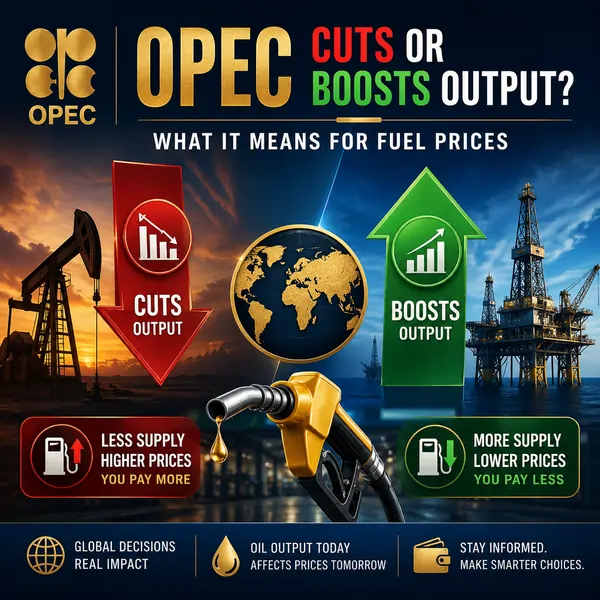
What Readers Should Know About OPEC and Today’s Fuel Prices
Every time headlines mention that Organization of the Petroleum Exporting Countries or OPEC is debating whether to cut or boost oil output, fuel markets pay attention. A decision to restrict supply can lift crude oil prices within hours, while signs of more barrels coming to market can quickly ease price pressure.
For everyday consumers, these moves often show up at the gas station weeks later. The connection between OPEC oil meetings in Vienna or Riyadh and the price on your local pump might seem distant, but it is real, trackable, and crucial for anyone watching energy costs.
OPEC Meaning: Full Form, Members, and Purpose in the Oil Market
To understand how Organization of the Petroleum Exporting Countries decisions impact gas prices, it helps to start with the basics: what the group is, who belongs to it, and why it exists.
OPEC full form and basic definition
The OPEC meaning in full is the Organization of the Petroleum Exporting Countries. It is an intergovernmental organization created in 1960 to coordinate and unify oil policies among major exporting nations.
Rather than each country acting entirely alone, OPEC members meet regularly to decide how much crude oil they collectively want to supply to the global market. Those decisions aim to support what the group calls “fair and stable prices” for both producers and consumers.
Who are the main OPEC member countries?
Membership has changed over time, but core countries are mostly in the Middle East, Africa, and Latin America. As of recent years, key members include:
- Saudi Arabia (the de facto leader and largest producer)
- United Arab Emirates
- Kuwait
- Iraq
- Iran
- Venezuela
- Nigeria
- Algeria
- Angola, Gabon, and others at various times
Alongside these, there is a wider alliance often called OPEC+, which includes non-Organization of the Petroleum Exporting Countries exporters such as Russia. While not formal OPEC members, these partners coordinate on production targets, making the alliance even more influential.
OPEC’s core objectives and role
OPEC’s founding purpose is to give oil-exporting countries more control over their natural resources and the prices they receive for them. Its main aims include:
- Coordinating production levels among members
- Preventing extreme price swings that damage both producers and consumers
- Ensuring a steady income for member states that rely heavily on oil revenue
- Trying to maintain long-term market stability and security of supply
Because OPEC members collectively account for a large share of globally traded crude, their joint output decisions can significantly influence world prices. That is why traders, refiners, and governments watch OPEC meetings so closely.
What Is OPEC and How Does It Affect Fuel Prices in Practice?
Understanding what is Organization of the Petroleum Exporting Countries and how does it affect fuel prices comes down to a simple chain: OPEC output decisions influence crude oil prices, which then feed into the cost of refined fuels like gasoline, diesel, and jet fuel. For a related guide, see Why Did Diesel Prices Drop in the Philippines? Global Oil Market Trends Explained (2026).
Step 1: OPEC sets production targets
At regular meetings, Organization of the Petroleum Exporting Countries and OPEC+ review global oil demand, economic growth, and competing supplies (for example, U.S. shale production). Based on that outlook, they set or adjust production “quotas” for each member country.
Two main scenarios draw the most attention:
- OPEC oil production cuts – Members agree to pump fewer barrels per day, tightening global supply.
- Organization of the Petroleum Exporting Countries output increases – Members raise production, adding more barrels to the market.
Step 2: Markets react, crude oil prices move
Oil traders on exchanges like ICE and NYMEX respond almost immediately to Organization of the Petroleum Exporting Countries announcements. If a cut is larger than expected, benchmark prices such as Brent crude or West Texas Intermediate (WTI) usually rise. If output is raised or cuts are smaller than anticipated, prices may fall or rise less.
These global benchmarks set the base cost of crude oil for refiners around the world. Even countries that are not OPEC members feel the impact because crude is traded globally in U.S. dollars.
Step 3: Refiners pass costs into gasoline and diesel
Refining companies turn crude oil into the fuels drivers buy. When crude becomes more expensive, refiners’ raw material costs go up. Over time, they pass much of this higher cost downstream to wholesalers and retailers.
This is where consumers start to notice. All else equal, more expensive crude means more expensive fuel products, including gasoline, diesel, heating oil, and jet fuel.
Step 4: Pump prices adjust with a lag
From a driver’s point of view, how Organization of the Petroleum Exporting Countries decisions impact gas prices is not always instantaneous. It can take days to weeks for crude price moves to filter through supply chains and show up at the pump.
Local factors also influence timing and size of changes, such as taxes, distribution costs, regional supply constraints, and currency exchange rates. But over a few weeks, major Organization of the Petroleum Exporting Countries decisions usually become visible in national average fuel prices published by agencies like the U.S. Energy Information Administration or the International Energy Agency.
| OPEC Action | Typical Effect on Crude | Likely Impact on Fuel Prices |
|---|---|---|
| Announces deeper Organization of the Petroleum Exporting Countries oil production cuts | Crude prices tend to rise | Pump prices usually increase over the following weeks |
| Signals higher output or ends cuts | Crude prices may fall or stabilize | Fuel prices often ease or rise more slowly |
| Keeps production steady but hints at future cuts | Market may price in higher future prices | Potential gradual rise, especially if demand is strong |
Recent Examples of OPEC Oil Production Cuts and Price Impacts
Fuel markets offer plenty of real-world examples of Organization of the Petroleum Exporting Countries oil production cuts moving prices. While exact numbers change with each cycle, the pattern is consistent: tighter supply tends to lift prices, looser supply tends to cool them.
Coordinated cuts during demand shocks
During periods of weak global demand—such as major economic slowdowns—Organization of the Petroleum Exporting Countries and its OPEC+ partners have often agreed on significant cuts to support prices. By removing millions of barrels per day from the market, they aim to prevent prices from collapsing.
For consumers, this can mean that fuel prices do not fall as much as they might have if producers had allowed an uncontrolled glut of oil. The result is a floor under both crude and retail fuel prices.
Output increases when demand rebounds
When global travel and industrial activity recover, Organization of the Petroleum Exporting Countries typically faces pressure to raise production to prevent shortages and keep prices from overheating. In such phases, announcements of gradual output hikes can help moderate price spikes at the pump.
Investors and analysts closely read OPEC’s monthly reports and meeting communiqués to judge whether the group is staying ahead of demand or letting the market tighten too much.
Why impacts differ by country
Even when Organization of the Petroleum Exporting Countries actions move international crude benchmarks, the final effect on pump prices varies widely by country. Key reasons include:
- Fuel taxes and duties (often a large share of the price in Europe)
- Government subsidies or price controls in some emerging markets
- Exchange rates versus the U.S. dollar
- Local refining capacity and competition
This means two countries can experience very different price changes in response to the same OPEC decision, even though they face the same underlying crude market.
How to Track OPEC Decisions and Prepare for Fuel Price Changes
For drivers, fleet managers, or small businesses, staying aware of OPEC’s signals can offer an early warning of changing fuel costs. You do not need to follow every technical detail, but a few habits help.
A simple checklist for watching OPEC and fuel prices
Use this practical checklist to connect Organization of the Petroleum Exporting Countries headlines with potential changes in your fuel budget:
- Note the date of upcoming OPEC or OPEC+ meetings (usually publicized in advance).
- After each meeting, look for keywords like “cut,” “increase,” or “maintain” in official statements.
- Track how benchmark crude prices such as Brent move in the following days.
- Compare national average gasoline or diesel prices weekly to see the lagged impact.
- For businesses, consider hedging or adjusting delivery schedules when large, sustained cuts are announced.
By linking these steps, you can better anticipate when your fuel costs are likely to trend higher or lower and plan accordingly.
Useful Resources
To go deeper into data and official communications around Organization of the Petroleum Exporting Countries and fuel markets, these two sources are especially useful:
- Official OPEC website with press releases and market reports
- International Energy Agency analysis of global oil demand and prices
Frequently Asked Questions About OPEC and Fuel Prices
What does OPEC stand for and what is its main goal?
Organization of the Petroleum Exporting Countries stands for the Organization of the Petroleum Exporting Countries, and its main goal is to coordinate oil production policies among member states to support fair and stable prices in the global oil market while ensuring a reliable supply of crude for consumers and a steady income for producers.
How does OPEC directly influence gasoline and diesel prices?
Organization of the Petroleum Exporting Countries influences gasoline and diesel prices by adjusting how much crude oil its members supply; when the group cuts production, global crude prices usually rise, raising refiners’ costs and, with a time lag, pushing pump prices higher, while higher Organization of the Petroleum Exporting Countries output can ease crude prices and slow or reverse fuel price increases. For a related guide, see Will Diesel Prices Go Down Further? Fuel Price Forecast and Fuel-Saving Tips for Filipino Motorists.
Why do markets react so strongly to OPEC meeting announcements?
Markets react strongly because Organization of the Petroleum Exporting Countries members collectively control a large share of the world’s exportable oil, so their production decisions significantly affect the balance between global supply and demand, making traders adjust price expectations immediately after each policy signal or quota change.
What is the difference between OPEC and OPEC Plus ( OPEC +)?
Organization of the Petroleum Exporting Countries is the core group of petroleum-exporting countries that formally belong to the organization, while OPEC+ refers to a broader alliance that includes Organization of the Petroleum Exporting Countries members plus major non-OPEC producers, such as Russia, that coordinate on production targets without being full members.
How long does it take for an OPEC production cut to affect pump prices?
It typically takes anywhere from a few days to several weeks for an Organization of the Petroleum Exporting Countries production cut to fully affect pump prices because changes in crude prices must move through the supply chain from oil fields to traders, refiners, wholesalers, and retailers before drivers see the impact.
Can OPEC completely control global oil prices?
Organization of the Petroleum Exporting Countries cannot completely control global oil prices because many other factors—such as non-OPEC production, demand growth, economic conditions, geopolitical events, and alternative energy sources—also shape the market, but the organization can strongly influence prices by tightening or loosening supply.
Why do some countries choose not to join OPEC ?
Some countries choose not to join Organization of the Petroleum Exporting Countries because membership involves coordinated production limits that may conflict with their desire to freely expand output, and others prefer to maintain full independence over their oil policies or face political and strategic differences with existing members.
Does OPEC ever increase production to lower prices?
Yes, Organization of the Petroleum Exporting Countries sometimes raises production—or signals future increases—when prices have risen sharply and could start to damage global demand, with the aim of preventing extreme price spikes and maintaining longer-term market stability for both producers and consumers.
How do taxes and subsidies affect the impact of OPEC on local fuel prices?
Taxes and subsidies can magnify or cushion the impact of Organization of the Petroleum Exporting Countries decisions on local fuel prices because high taxes make crude price changes a smaller share of the final pump price, while government subsidies can delay or hide the full effect of rising global oil costs from consumers. For a related guide, see 10 Critical Brent Crude Price Updates Impacting Australia Now.
Why are fuel prices different even in countries that import from the same OPEC members?
Fuel prices differ because, beyond Organization of the Petroleum Exporting Countries-supplied crude costs, each country has its own mix of fuel taxes, distribution expenses, currency exchange rates, regulatory rules, and levels of competition among fuel retailers, all of which shape the final price consumers pay.
What role do currency exchange rates play in how OPEC decisions are felt?
Currency exchange rates matter because crude oil is generally priced in U.S. dollars, so if a country’s currency weakens against the dollar, Organization of the Petroleum Exporting Countries-driven increases in oil prices become even more expensive in local terms, amplifying the effect on domestic fuel prices.
How can businesses prepare for potential OPEC -driven fuel cost increases?
Businesses can prepare by monitoring Organization of the Petroleum Exporting Countries meeting dates and outcomes, tracking crude and wholesale fuel prices, considering hedging strategies, improving fleet efficiency, and adjusting delivery schedules or fuel surcharges when significant and sustained production cuts are announced.
Are there times when OPEC decisions have little effect on fuel prices?
There are times when Organization of the Petroleum Exporting Countries decisions have limited visible impact on fuel prices, such as when markets have already priced in expected changes, when non-OPEC producers quickly offset cuts, or when demand conditions and inventories dominate price movements more than supply adjustments.
Where can I find official information about recent OPEC decisions?
You can find official information on recent Organization of the Petroleum Exporting Countries decisions on the organization’s website, which publishes press releases, meeting communiqués, and monthly oil market reports that detail production targets, market assessments, and policy directions.
How does OPEC consider environmental and climate concerns when setting policy?
OPEC increasingly references environmental and climate concerns in its reports, but its core mandate remains focused on oil market stability and member revenues; climate policies mainly affect OPEC indirectly by shaping long-term demand, investment, and the pace of transition to alternative energy.
What is the relationship between OPEC decisions and jet fuel or shipping fuel prices?
Jet fuel and marine fuels are refined from the same crude benchmarks influenced by Organization of the Petroleum Exporting Countries decisions, so when Organization of the Petroleum Exporting Countries cuts raise crude prices, airlines and shipping companies usually face higher fuel bills, which can eventually feed into ticket prices and freight costs.
Do all OPEC members always follow agreed production targets?
Not all OPEC members follow agreed targets perfectly, and history shows periods of overproduction or non-compliance, but the group publishes compliance data and uses diplomatic pressure to keep most members aligned enough to influence overall supply and market expectations.
Can rising non- OPEC oil production weaken OPEC ’s impact on prices?
Rising non-OPEC production, such as U.S. shale or offshore output, can weaken OPEC’s impact by adding competing barrels that offset some of the group’s cuts, forcing OPEC to decide whether to cut deeper, accept lower prices, or risk losing market share.
How can everyday drivers use OPEC news to plan fuel spending?
Everyday drivers can use Organization of the Petroleum Exporting Countries news as an early indicator by noting major cut or increase announcements, watching crude price trends, and then timing larger fuel purchases or trips with the expectation that pump prices may rise or fall over the following weeks.
What should consumers watch for in future OPEC announcements?
Consumers should watch for signals of deeper or extended production cuts, large production increases, shifts in demand forecasts, and changes in cooperation within OPEC+, because each of these factors can alter the direction and speed of future fuel price movements.
In summary, keeping an eye on Organization of the Petroleum Exporting Countries meetings and statements is a practical way to anticipate where fuel costs may be headed. By understanding the basic OPEC meaning and the link between its production decisions and global crude benchmarks, drivers and businesses can better navigate an energy landscape where supply shifts in one part of the world quickly shape prices everywhere.