

Recovering from head and neck cancer surgery is a gradual process that typically takes weeks to months. Hospital recovery lasts 3–14 days, followed by 2–8 weeks of early home recovery focusing on swallowing rehabilitation, speech therapy, and wound care.
Long-term recovery (3–12 months) includes returning to work, physical therapy for shoulder function, and regular surveillance scans. Swallowing exercises and speech therapy are essential after procedures like laryngectomy or tongue resection.
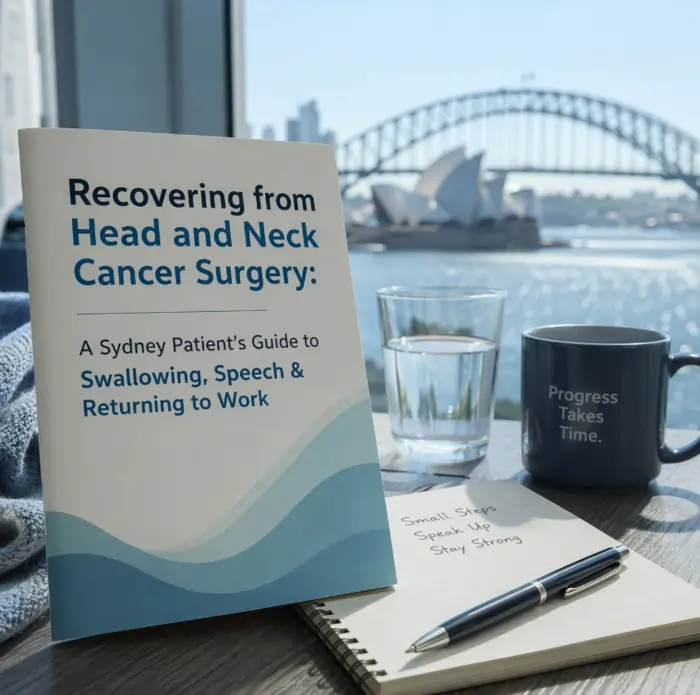
Surgery is only half the battle. Recovering from head and neck cancer surgery affects how you eat, speak, swallow, breathe, and even how you see yourself in the mirror.
No two recoveries are the same. A patient who has a small thyroidectomy may return to work in 2–3 weeks. A patient who undergoes a total laryngectomy with free flap reconstruction may face months of rehabilitation.
This guide provides a realistic, step-by-step roadmap for recovering from head and neck cancer surgery in Sydney. You will learn:
- Hospital recovery timeline (days 1–14)
- Early home recovery (weeks 2–8)
- Long-term recovery (months 3–12)
- Swallowing and speech rehabilitation
- Returning to work and daily activities
- Sydney-specific resources and support groups
⚠️ CRITICAL WARNING: Recovery is not linear. Some days will feel like progress. Others will feel like setbacks. That is normal. Be patient with yourself.
Meet Dr. Brett Leavers: Head and Neck Cancer Surgeon in Sydney (FRACS)
Before we discuss recovery, know who will guide you through it.
Dr. Brett Leavers is an Australian-trained Ear, Nose and Throat (ENT) specialist and head and neck cancer surgeon. He is a Fellow of the Royal Australasian College of Surgeons (FRACS) with over 10 years of practice across New South Wales.
Dr. Leavers treats:
- Benign and cancerous lumps of the neck, thyroid, salivary glands, skin, mouth, and throat
- Thyroid, parathyroid, and salivary gland conditions
- General ENT and paediatric ENT
He operates from two Sydney locations:
- Darlinghurst: St Vincent’s Clinic, Suite 1008, Level 10, 438 Victoria St, Darlinghurst NSW 2010
- Kogarah: (second clinic location as listed on his website)
On recovery:
Dr. Leavers provides every patient with a personalised recovery plan before surgery. He coordinates with speech pathologists, physiotherapists, dietitians, and cancer support services to ensure you have the resources you need to heal fully.
Learn more about Dr. Brett Leavers: Visit his official website →
Recovering from Head and Neck Cancer Surgery: The Complete Timeline
Recovering from head and neck cancer surgery happens in phases. Below is a general timeline. Your experience may vary based on the type and extent of surgery.
| Phase | Duration | Key Activities |
|---|---|---|
| Hospital recovery | Days 1–14 | Pain control, drainage tubes, feeding tube, early mobilisation |
| Early home recovery | Weeks 2–8 | Wound care, swallowing rehab, speech therapy, nutrition support |
| Long-term recovery | Months 3–12 | Return to work, physical therapy, surveillance scans, emotional support |
Learn more: Read the complete Head and Neck Cancer Surgeon in Sydney: Symptoms, Surgery and Recovery Guide for detailed information on procedures that lead to these recovery phases.
Hospital Recovery (Days 1–14)
Day 1–2: Intensive Care (for major surgeries)
After complex procedures like laryngectomy, free flap reconstruction, or major neck dissection, you will likely spend 1–2 days in the intensive care unit (ICU) or high-dependency unit.
What to expect:
- Pain control via IV medications
- Drainage tubes in your neck (removed when drainage is minimal)
- Feeding tube (nasogastric or PEG) if you cannot swallow safely
- Tracheostomy (breathing tube in the neck) for laryngectomy or major airway surgery
- Frequent monitoring of vital signs and flap viability (colour, temperature, capillary refill)
What you can do:
- Rest as much as possible
- Communicate using a whiteboard, phone, or speaking valve (if tracheostomy)
- Ask about early mobilisation (sitting up, moving limbs)
Day 3–7: Ward Recovery
You will be transferred to a surgical ward. Tubes and drains are gradually removed.
What to expect:
- Pain control transitions to oral medications
- Swallowing assessment by a speech pathologist (may use dye and X-ray)
- Starting oral intake (ice chips, thickened liquids, pureed foods) if safe
- Walking with assistance to prevent blood clots and pneumonia
- Speech therapy begins (for laryngectomy or tongue resection patients)
What you can do:
- Walk around the ward as tolerated
- Practice swallowing exercises as taught by your speech pathologist
- Ask about discharge planning (home care, wound care, follow-up appointments)
Day 7–14: Discharge Preparation
For smaller surgeries (thyroidectomy, parotidectomy, small neck lump excision), you may go home by day 3–7. For major resections, you may stay 10–14 days or longer.
Discharge criteria:
- Pain controlled with oral medications
- Tolerating oral intake (or stable on tube feeding)
- No signs of infection (fever, redness, pus)
- Safe to swallow (or feeding tube management taught to caregiver)
- Follow-up appointments scheduled
⚠️ CRITICAL WARNING: Do not rush discharge. Going home too early increases the risk of complications like dehydration, aspiration pneumonia, or wound infection.
Learn more: Understand the questions to ask a head and neck cancer surgeon before surgery so you know exactly what recovery will involve.
Early Home Recovery (Weeks 2–8)
Swallowing Rehabilitation
Swallowing problems (dysphagia) are common after surgery for oral cavity, throat, or laryngeal cancer.
Signs of swallowing difficulty:
- Coughing or choking while eating or drinking
- Feeling of food stuck in the throat
- Wet or gurgly voice after swallowing
- Unexplained fevers (possible aspiration pneumonia)
What helps:
- Speech pathologist (5 Medicare-subsidised sessions via Chronic Disease Management plan)
- Swallowing exercises (e.g., Masako manoeuvre, Shaker exercise, effortful swallow)
- Texture-modified diets (minced and moist, pureed, or liquid)
- Thickened fluids (nectar-thick, honey-thick, pudding-thick)
When to seek help:
- If you lose weight unintentionally
- If you develop fevers or chest congestion
- If you cannot stay hydrated
Speech Therapy
Speech changes depend on the surgery:
| Surgery | Speech Effect | Therapy Focus |
|---|---|---|
| Partial laryngectomy | Hoarse, weak voice | Voice therapy, breathing coordination |
| Total laryngectomy | No voice (stoma breathing) | Electrolarynx, tracheoesophageal puncture (TEP), oesophageal speech |
| Glossectomy (tongue) | Slurred speech (dysarthria) | Articulation exercises, communication strategies |
| Mandibulectomy (jaw) | Difficulty with certain sounds | Prosthetic devices, speech therapy |
Sydney resources:
- Speech pathologists at St Vincent’s, RPA, Prince of Wales, Liverpool hospitals
- Laryngectomy Support Groups (contact Cancer Council NSW)
Wound and Scar Care
Neck incisions typically heal in 2–3 weeks.
Do’s:
- Keep the incision clean and dry
- Gently wash with mild soap and water
- Apply sunscreen (SPF 50+) for at least 12 months to prevent darkening
- Massage the scar with silicone gel or vitamin E oil once healed (after 2–3 weeks)
Don’ts:
- Do not soak in baths, pools, or oceans until incision is fully healed (usually 4–6 weeks)
- Do not apply hydrogen peroxide or alcohol
- Do not pick at scabs or stitches
Nutrition Support
Eating enough is one of the biggest challenges during recovering from head and neck cancer surgery.
Tips:
- Eat small, frequent meals (6–8 times per day)
- Choose high-calorie, high-protein foods (eggs, yoghurt, smoothies with protein powder, avocado)
- Use a dietician (Medicare-subsidised via CDM plan)
- If tube feeding, follow your dietitian’s schedule exactly
⚠️ CRITICAL WARNING: Weight loss during recovery is common but should not be excessive. If you lose more than 5–10% of your body weight, contact your surgeon or dietitian immediately.
Learn more: Understand the difference between an ENT vs head and neck cancer surgeon to appreciate why specialist training affects recovery outcomes.
Long-Term Recovery (Months 3–12)
Returning to Work
| Job Type | Typical Time Off |
|---|---|
| Desk job (remote) | 4–8 weeks |
| Desk job (in-office) | 6–12 weeks |
| Light physical (retail, admin) | 8–12 weeks |
| Heavy physical (construction, nursing) | 3–6 months |
| Jobs requiring speaking (teacher, sales) | 3–6 months (may need speech therapy first) |
Returning to work gradually:
- Start with half-days or reduced hours
- Request temporary modifications (e.g., written instead of verbal communication)
- Use work-from-home options if available
Physical Therapy (Shoulder Rehabilitation)
After neck dissection, the spinal accessory nerve may be weakened or cut, leading to shoulder droop and weakness (frozen shoulder).
What helps:
- Physiotherapy (5 Medicare-subsidised sessions via CDM plan)
- Range-of-motion exercises (pendulums, wall climbs, theraband)
- Strengthening exercises (shrugs, rows, external rotation)
- Pain management (anti-inflammatories, heat/ice)
Timeline:
- Month 1–3: Gentle range of motion
- Month 3–6: Strengthening
- Month 6–12: Return to overhead activities
Emotional and Psychological Support
Recovering from head and neck cancer surgery affects mental health. Depression, anxiety, and post-traumatic stress are common.
Signs to watch for:
- Persistent sadness or hopelessness
- Loss of interest in activities you used to enjoy
- Trouble sleeping or sleeping too much
- Changes in appetite (not related to swallowing issues)
- Withdrawing from family and friends
Where to get help:
- Psychologist (10 Medicare-subsidised sessions via Mental Health Care Plan from your GP)
- Cancer Council NSW (free counselling and support groups)
- Laryngectomy support groups (for voice loss)
- Hospital social workers (financial and emotional support)
Regular Surveillance (Follow-Up Scans)
After completing treatment, you will need regular follow-up to monitor for recurrence.
| Time After Surgery | Typical Follow-Up |
|---|---|
| First 2 years | Every 3–6 months (physical exam, +/- imaging) |
| Years 3–5 | Every 6–12 months |
| After 5 years | Annually (or as recommended) |
What is checked:
- Clinical exam of the neck, mouth, and throat
- Imaging (ultrasound, CT, MRI, or PET) as indicated
- Voice and swallowing assessment
Learn more: Detailed breakdown of head and neck cancer surgeon cost in Sydney — including post-operative therapy costs.
Sydney-Specific Resources for Recovery
Public Hospitals with Head and Neck Cancer Services
| Hospital | Location | Services |
|---|---|---|
| St Vincent’s Hospital | Darlinghurst | Multidisciplinary team, speech pathology, laryngectomy support |
| Royal Prince Alfred Hospital | Camperdown | Comprehensive cancer centre, clinical trials |
| Prince of Wales Hospital | Randwick | Head and neck cancer unit, rehabilitation services |
| Liverpool Hospital | Liverpool | Major referral centre for South Western Sydney |
Support Organisations
- Cancer Council NSW – Free counselling, support groups, financial assistance, travel grants. Call 13 11 20. Visit their website →
- Laryngectomy Support Groups – Contact Cancer Council NSW for local group details.
- Speech Pathology Australia – Find a certified speech pathologist in Sydney.
Learn more: Why a second opinion for head and neck cancer can help you find the best recovery resources.
Frequently Asked Questions (FAQs)
1. How long does hospital recovery take after head and neck cancer surgery?
3–14 days, depending on surgery complexity. Major resections with free flaps may require 10–14 days.
2. When can I eat normally again?
For minor surgeries (thyroidectomy), you may eat normally within days. For oral or throat cancer resections, it may take weeks to months. Some patients need long-term texture-modified diets or tube feeding.
3. Will I need a feeding tube?
Possibly. Temporary feeding tubes (nasogastric) are common after major oral or throat surgery. Long-term PEG tubes are sometimes needed.
4. How long does pain last after surgery?
Acute pain improves within 1–2 weeks. Nerve-related pain (e.g., shoulder after neck dissection) may last months.
5. When can I return to work?
Desk jobs: 4–8 weeks. Physical jobs: 3–6 months. Jobs requiring speaking: 3–6 months (with speech therapy).
6. Will my voice return to normal?
Not always. Partial laryngectomy may leave a hoarse voice. Total laryngectomy requires alternative speech methods (electrolarynx, TEP).
7. What is a tracheostomy?
A breathing tube placed in the neck. Temporary tracheostomies are used after major airway surgery. Total laryngectomy results in a permanent stoma.
8. How do I care for my neck incision?
Keep it clean and dry. Apply sunscreen (SPF 50+) for 12+ months. Massage the scar after healing.
9. When can I drive after surgery?
Ask your surgeon. Typically 2–6 weeks, depending on pain, neck mobility, and medication use.
10. Does Medicare cover speech pathology after surgery?
Yes, up to 5 sessions per year via a Chronic Disease Management (CDM) plan from your GP.
11. What is aspiration?
When food or liquid enters the airway instead of the esophagus. It can cause pneumonia. Swallowing therapy reduces risk.
12. How often do I need follow-up scans?
Every 3–6 months for the first 2 years, then every 6–12 months for years 3–5, then annually.
13. Can head and neck cancer come back after surgery?
Yes. Recurrence rates depend on stage and margins. Regular surveillance is essential.
14. What exercises help with swallowing?
Examples: Masako manoeuvre (tongue-hold swallow), Shaker exercise (head lift), effortful swallow, Mendelsohn manoeuvre. Learn from a speech pathologist.
15. How do I manage dry mouth after surgery or radiation?
Drink water frequently, use saliva substitutes, chew sugar-free gum, avoid alcohol and caffeine.
16. When can I exercise again?
Light walking: within days. Full exercise (running, weights): 3–6 months with surgeon approval.
17. Will I need dental work after head and neck cancer surgery?
Yes, especially if you had radiation. See a dentist before and after treatment.
18. What is a free flap?
Taking tissue (skin, muscle, bone) from another body part (forearm, thigh, fibula) to rebuild the face, mouth, or throat.
19. How do I find a support group in Sydney?
Call Cancer Council NSW (13 11 20) or ask your hospital social worker.
20. Where can I get financial help for recovery costs?
Cancer Council NSW, hospital social workers, and your private health insurer.
Conclusion: Recover Like a CEO
Recovering from head and neck cancer surgery is a marathon, not a sprint. There will be good days and hard days. But with the right team — your surgeon, speech pathologist, physiotherapist, dietitian, and support network — you can regain function, return to work, and reclaim your life.
Dr. Brett Leavers provides every patient with a personalised recovery plan and coordinates with Sydney’s best rehabilitation services. His Darlinghurst and Kogarah clinics are your partners in healing.
For patient guides, support groups, and financial assistance programs, the Cancer Council NSW – Head and Neck Cancer page offers free, evidence-based resources for Sydney residents.
Take the next step: Book a consultation with Dr. Brett Leavers, trusted head and neck cancer surgeon in Sydney, and ask about his recovery planning. Visit his website here →
Your health is your greatest asset. Heal patiently. Recover fully. Lead like a CEO.
Disclaimer
This information is for general educational purposes only and does not constitute medical advice. Surgery and medical procedures involve risks, benefits, and potential complications. Individual results vary.
You should seek professional medical advice from a qualified healthcare provider for your specific condition. Dr. Brett Leavers is a registered medical practitioner and Fellow of the Royal Australasian College of Surgeons (FRACS). For more information, visit https://drleavers.com.au/.
Patient testimonials and before-and-after images are not used in this content in compliance with AHPRA advertising guidelines.