


Australia’s power sector has been jolted by a series of moves from Origin Energy that are reshaping expectations about prices, coal plant closures and the pace of the clean‑energy transition. The company has delivered stronger‑than‑expected earnings, extended the life of the country’s biggest coal plant and poured money into big batteries and digital platforms, triggering a mix of investor excitement and consumer anger.
At the centre of the “Origin Energy shock” is a simple question: can one company keep the lights on, grow profits and still help Australia cut emissions fast enough, all at the same time?
What Sparked The Origin Energy Shock?
Several decisions and announcements in late 2025 and early 2026 combined to create a pivotal moment for Origin and the broader energy market.
First, the company unveiled its half‑year 2026 financial results, revealing a solid profit and upgraded guidance for its core Energy Markets business, which supplies electricity and gas to millions of Australian households and businesses. Origin reported an underlying profit of A$593 million for the half year, beating analyst expectations even though profits were down compared to the previous year’s extraordinary highs.
At the same time, Origin Energy detailed a sharp improvement in cash generation, with adjusted free cash flow jumping to about A$705 million, up from A$518 million a year earlier. This extra cash gives the company more firepower to invest in batteries, digital platforms and new clean‑energy projects.
Then came the bombshell: Origin Energy confirmed that all four units at Eraring Power Station in New South Wales, Australia’s largest coal‑fired plant, will keep running until 30 April 2029, pushing out the coal exit date and rewriting assumptions about how quickly fossil capacity will leave the grid.
In the background, Origin Energy has also committed hundreds of millions of dollars to a giant battery at the Eraring site, backed a multibillion‑dollar spin‑off of the Kraken software platform, and continued to develop hydrogen and renewable projects across the country.
For readers wanting the primary documents behind these moves, Origin’s official investors & media centre hosts its latest results, Eraring announcements and strategy updates.
Strong Earnings, Softer Profits – And A Big Upgrade
On the surface, Origin’s latest profit numbers look softer than last year’s; underneath, they show a business repositioning for a more stable, long‑term future.
- For the half year to 31 December 2025 (HY26), Origin booked a statutory profit of A$557 million and an underlying profit of A$593 million, down from A$924 million a year earlier as extreme price spikes eased.
- Underlying EBITDA fell from A$1,926 million to A$1,589 million, but adjusted free cash flow rose strongly to A$705 million, helped by better cash generation and lower tax.
- The Energy Markets division delivered underlying EBITDA of around A$860 million, up by roughly A$122 million year on year, driven by higher electricity gross profits and continued cost‑cutting.
That performance allowed Origin Energy to upgrade its full‑year guidance for Energy Markets, narrowing and lifting the expected range for underlying EBITDA to A$1.55–A$1.75 billion. Analysts noted that the midpoint of this range was about 6–7 per cent higher than earlier forecasts, a key factor behind an 8 per cent jump in Origin’s share price on results day.
Independent reporting from outlets such as Reuters and The Motley Fool Australia highlights how the company beat market profit estimates and tightened guidance despite lower overall earnings.
Eraring Extension: Coal Stays On Until 2029
The most controversial part of the Origin Energy shock is the decision to extend operations at Eraring Power Station.
Originally slated for closure as early as 2027, the 2.88‑gigawatt plant on Lake Macquarie will now run all four units until April 2029, following a formal notice to the Australian Energy Market Operator (AEMO) and an agreement with the New South Wales Government. Origin says the extension is necessary to maintain reliable power as the grid navigates a turbulent transition marked by delays in new transmission and firming projects.
In announcing the move, CEO Frank Calabria argued that the company had weighed customer needs, market conditions and Eraring’s system role before deciding that the plant must stay open longer to safeguard supply. Origin has pledged not to undertake further major maintenance overhauls before closure, signalling that this is a life‑extension rather than a full rejuvenation of the asset.
At the same time, the company insists the decision will not derail its 2030 emissions reduction targets or its net‑zero‑by‑2050 ambition, pointing to offsetting investments in batteries and clean‑energy projects.
The official company announcement, “Origin Extends Eraring Power Station Operations to 2029”, sets out the rationale and regulatory context in more detail.
Super Battery On A Coal Site
While the turbines at Eraring keep turning, Origin Energy is transforming the same site into a cornerstone of the future grid. The Eraring Battery is being built in stages to deliver up to 700 megawatts of capacity and roughly 3,160 megawatt‑hours of storage once fully commissioned, equivalent to about four and a half hours of discharge at full power.
Parts of the battery began commercial operations in late 2025, with further stages due online by 2027 under a staged rollout plan supported by federal and state funding. The battery is designed to soak up cheap solar and wind power when supply is abundant, then release it as demand ramps up in the evening, helping to tame the steep “duck curve” in wholesale prices.
Origin Energy has previously flagged total capital commitments of around A$600 million for its battery portfolio, which also includes a grid‑forming project at Victoria’s Mortlake site. Grid‑forming batteries can provide system services like inertia and voltage support that have traditionally come from big spinning machines in coal and gas plants, making them crucial for a renewable‑heavy grid.
For readers wanting technical background on how these batteries work and why they matter, the Australian Renewable Energy Agency offers project case studies and explainer content via its battery storage projects page.
From Gas And Coal To Hydrogen And Renewables
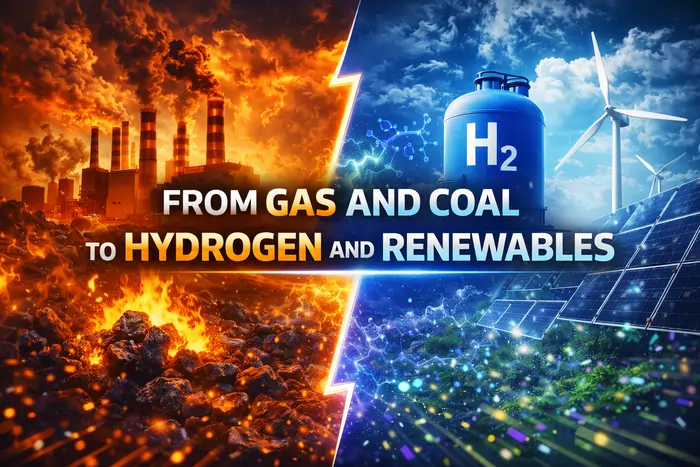
Beyond Eraring, Origin Energy is steadily reshaping its generation mix.
In its half‑year updates and investor commentary, the company outlines a pipeline of wind, solar and hydrogen projects designed to support long‑term decarbonisation. Origin has backed hydrogen hubs such as the Hunter Valley Hydrogen Hub, with federal funding aimed at scaling green hydrogen production for industrial users from around the mid‑2020s. It has also acquired or partnered on wind and solar developments, including projects connected to the Yanco Delta and Walcha Energy portfolios in New South Wales.
At the same time, Origin Energy has cancelled or deferred some solar capacity where economics or grid conditions no longer stack up, highlighting that not every proposed renewable project will be viable.
These moves reflect a more selective, staged approach to the clean‑energy build‑out: invest heavily where returns and system benefits are clear, and cut back where policy or market signals are too uncertain.
For a wider view of how hydrogen and renewables are being integrated into Australia’s planning, the federal government’s hydrogen program overview sets out national goals and funding schemes.
Kraken: The Quiet Software Revolution Behind Your Bill
Not all of Origin’s big bets are physical assets. Some of the most important changes are happening in software and data.
Origin Energy is a major backer and user of Kraken, the artificial‑intelligence‑driven platform developed by UK‑based Octopus Energy to handle billing, customer service and the orchestration of distributed energy resources. Kraken is already contracted to manage more than 70 million customer accounts globally and is expanding fast as utilities around the world look for smarter ways to run their systems.
In late 2025, Octopus Energy announced plans to spin Kraken out as an independent company valued at about US$8.65 billion, backed by around US$1 billion in fresh funding from investors including Origin. Origin has committed roughly US$140 million to the round and will hold close to 23 per cent of the standalone Kraken entity, while also giving up its exclusive rights to use Kraken in Australia in exchange for more equity.
Reports from outlets like the BBC and Nasdaq note that Kraken will operate separately from Octopus and may pursue a stock‑market listing in the medium term, opening up a new source of value for its shareholders.
In practical terms, the Kraken platform should mean more personalised offers, faster issue resolution and smarter management of rooftop solar, batteries and electric vehicles for Origin customers, as detailed in its customer‑facing explainer “Why choose Origin in 2026”.
Why The Market Is Shaken – And Divided
Reliability Versus Rapid Decarbonisation
Origin Energy experts and policymakers have long warned that Australia’s transition from coal to renewables must balance emissions cuts with reliability and affordability. Origin’s Eraring decision crystallises this tension.
The Australian Energy Market Operator has repeatedly highlighted reliability risks if big coal plants retire before enough firming capacity and transmission lines are in place, especially during the evening peak. Origin argues that keeping Eraring open until 2029 reduces these risks while batteries and new projects ramp up.
Critics counter that each extra year of coal generation locks in more emissions and could crowd out investment in cleaner alternatives. Climate and community groups say governments and companies should prioritise aggressive renewable build‑out and demand‑side measures instead of leaning on ageing coal plants.
For deeper analysis of the technical and planning aspects, AEMO’s Integrated System Plan is the key document mapping out future generation, storage and transmission needs.
Profits And “Bill Shock”
The other flashpoint is consumer power bills.
While Origin’s profits have surprised on the upside, many households are still struggling with high energy costs following years of price volatility and inflation. Consumer and climate advocates argue that energy retailers, including Origin, are benefiting from “super profits” while vulnerable customers face mounting arrears and disconnections.
In New South Wales, groups under the “Stop the Bill Shock” banner have targeted Origin over its earnings and Eraring extension, calling for stronger protections, debt relief and faster investment in low‑cost clean energy. The Nature Conservation Council’s “Stop the Bill Shock” campaign captures these concerns and documents protests aimed at the company.
Origin Energy responds that investments in batteries, digital tools and efficiency will, over time, help flatten peaks and reduce underlying price pressures, while hardship programs and tailored support remain available. But the gap between consumer experience and corporate results has become a major political and reputational issue for the company.
How Investors Are Reading The Shock
If many consumers are angry, investors are, for now, impressed.
Financial coverage from Reuters, Market Index and other outlets shows that the market has welcomed Origin’s strong Energy Markets earnings and guidance upgrade. The decision to extend Eraring while adding battery capacity is widely seen as “value‑accretive” because it keeps a cash‑generating asset online while building its replacement on the same site.
Equity‑research commentators have also pointed to Origin’s diversified portfolio—spanning domestic retail, LNG exports, batteries, hydrogen and software—as a reason it may be better positioned than more narrowly focused utilities.
For investors who want to unpack the numbers themselves, Origin’s HY26 half‑year report and related earnings call transcripts on platforms like Yahoo Finance provide segment‑by‑segment breakdowns and management commentary.
What It All Means For Households And Businesses
For ordinary Australians, the Origin Energy shock will not translate into overnight bill reductions, but it will shape how power is produced, priced and managed over the coming decade.
In the short term, customers can expect:
- Continuing price pressure, even as volatility slowly eases, as retailers and regulators adjust to new cost structures.
- More complex offers, including time‑of‑use tariffs, demand‑response programs and packages that bundle EV charging, rooftop solar or batteries with electricity supply.
- A growing emphasis on digital tools, apps and online dashboards that help customers track and shift their usage, powered behind the scenes by platforms like Kraken.
Over the medium term, as the Eraring Battery and other large‑scale storage projects come online, peak prices should moderate and the system will be better able to absorb high levels of solar and wind. But the extent to which these savings reach end users will depend heavily on regulatory decisions, competition and how aggressively companies pass through benefits.
Consumers looking to protect themselves from bill shocks can use independent comparison tools such as the Australian Energy Regulator’s Energy Made Easy website to shop around for offers and understand their options.
For homeowners trying to juggle rising power bills and steeper loan repayments, working with top mortgage brokers in Australia can be a practical way to cut interest costs and potentially save thousands over the life of a home loan.
The Road Ahead: Hybrid Transition Or Missed Opportunity?
The Origin Energy shock marks a decisive pivot in Australia’s energy story: the age of coal is not ending with a sudden cliff, but with a managed glide path that relies heavily on batteries, hydrogen and software to fill the gaps.
Supporters argue that this hybrid transition—where coal plant life is extended while its site is progressively converted into a battery and clean‑energy hub—is the most realistic way to keep power reliable and prices manageable. Critics insist it risks locking in too much pollution and delaying the shift to cheaper, cleaner renewables.
What happens next will depend on:
- How quickly Origin and others build out firming capacity, like grid‑forming batteries and pumped hydro.
- Whether major hydrogen and renewable projects secure long‑term customers and stay on schedule.
- How regulators respond to extended coal operations and rising consumer pressure over bills.
- The success of Kraken and similar platforms in turning millions of homes, EVs and batteries into flexible resources rather than passive demand.
For now, one thing is clear: Origin Energy’s latest moves have forced Australia to confront hard choices about how to balance reliability, affordability and climate action in the decade ahead.