

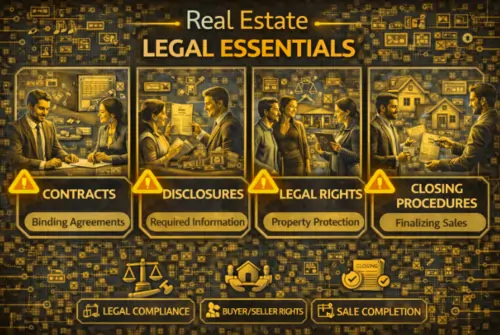
Introduction
Understanding real estate legal essentials is critical for anyone involved in property transactions. Whether someone is buying a home, selling commercial property, or investing in real estate, legal knowledge helps protect financial interests and ensures that transactions follow proper regulations.
Real estate deals involve contracts, ownership rights, financial agreements, and government regulations. Without a clear understanding of these legal components, buyers and sellers may face disputes, financial losses, or delays in closing transactions.
By learning the fundamental legal aspects of real estate, individuals can navigate property transactions more confidently and avoid costly mistakes.
Why Legal Knowledge Matters in Real Estate
Real estate transactions typically involve large financial commitments, making legal protection extremely important. Laws and regulations exist to ensure transparency, fairness, and proper documentation in property transfers.
Understanding legal requirements helps buyers verify ownership, review contract terms, and ensure that the property meets zoning and regulatory standards.
For investors, knowledge of real estate legal essentials can also reduce risk when evaluating property investments, leases, and development opportunities.
Legal awareness ensures that property transactions proceed smoothly and that all parties fulfill their obligations.
Property Ownership and Title Rights
One of the most important legal concepts in real estate is property ownership. Ownership rights determine who legally controls and benefits from a property.
A property title is a legal document that confirms ownership. Before completing a real estate transaction, buyers should verify that the title is clear and free from disputes or outstanding claims.
Title searches are commonly conducted to confirm that the property has no unresolved legal issues such as unpaid taxes, liens, or ownership conflicts.
Clear ownership is a fundamental element of real estate legal essentials, ensuring that buyers receive full legal rights to the property.
Real Estate Contracts
Contracts are central to real estate transactions. A property purchase agreement outlines the terms of the deal between the buyer and the seller.
Typical components of a real estate contract include:
- purchase price
- property description
- financing terms
- closing date
- contingencies
- obligations of both parties
Carefully reviewing contracts helps ensure that all conditions are clearly defined. Legal professionals often assist with drafting or reviewing agreements to prevent misunderstandings.
Contracts provide legal protection and establish the framework for completing the transaction.
Zoning and Land Use Regulations
Zoning laws regulate how land can be used in specific areas. Local governments establish zoning rules to control property development and maintain organized urban planning.
Common zoning categories include:
- residential
- commercial
- industrial
- mixed-use
For example, a property located in a residential zone may not legally allow commercial activities such as operating a retail store.
Understanding zoning regulations is an essential part of real estate legal essentials, particularly for investors planning development or property renovations.
Property Disclosure Requirements
In many jurisdictions, sellers are legally required to disclose known issues that may affect a property’s value or safety.
Disclosure requirements may include information about:
- structural problems
- environmental hazards
- past property damage
- legal disputes related to the property
These disclosures help protect buyers from purchasing properties with hidden defects.
Failure to provide accurate disclosures may result in legal disputes or financial penalties for the seller.
Financing and Mortgage Agreements
Many real estate purchases involve financing through mortgages or property loans. Mortgage agreements establish the terms between lenders and borrowers.
These agreements typically outline:
- loan amount
- interest rates
- repayment schedule
- borrower obligations
- consequences of default
Understanding the legal terms of financing agreements is an important aspect of real estate legal essentials, ensuring that borrowers fully understand their financial commitments.
Property Taxes and Legal Obligations
Property owners are usually required to pay annual property taxes to local governments. These taxes help fund public services such as schools, infrastructure, and emergency services.
Failure to pay property taxes can lead to penalties or even property liens.
Real estate investors must also comply with local tax regulations related to rental income, capital gains, and property transfers.
Legal compliance with tax obligations is essential for maintaining property ownership rights.
Real Estate Closing Process
The closing process is the final stage of a real estate transaction where ownership is officially transferred.
During closing, several legal steps occur, including:
- signing final documents
- transferring property title
- completing payment
- registering the property transfer
Closing procedures ensure that all legal and financial requirements have been fulfilled before the buyer takes possession of the property.
Understanding the closing process helps buyers and sellers prepare for the final stages of the transaction.
When to Seek Legal Advice
Although many property transactions proceed smoothly, some situations require professional legal assistance.
Examples include:
- complex commercial property deals
- property disputes
- unclear ownership history
- zoning conflicts
- large investment transactions
Real estate attorneys help interpret laws, review contracts, and resolve disputes.
Seeking legal advice when necessary is an important part of managing property transactions responsibly.
Conclusion
Understanding real estate legal essentials helps buyers, sellers, and investors navigate property transactions with greater confidence and security. Legal knowledge ensures that contracts are properly structured, ownership rights are verified, and regulatory requirements are followed.
From title verification and contracts to zoning laws and property taxes, legal considerations play a central role in every real estate deal.
By staying informed and consulting legal professionals when needed, individuals can protect their investments and avoid potential legal complications in the real estate market.
FAQ
What are real estate legal essentials?
Real estate legal essentials refer to the fundamental legal principles and regulations involved in property ownership, transactions, contracts, and land use.
Why are real estate contracts important?
Real estate contracts define the terms of property transactions and protect the rights and responsibilities of buyers and sellers.
What is a property title?
A property title is a legal document that confirms ownership and the right to control a property.
What are zoning laws?
Zoning laws regulate how land can be used within specific areas, such as residential, commercial, or industrial purposes.
When should someone hire a real estate lawyer?
A real estate lawyer may be necessary when handling complex property transactions, reviewing contracts, or resolving legal disputes.