

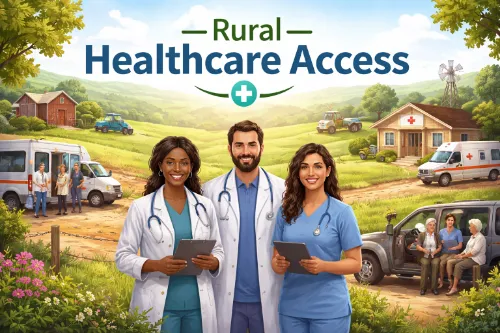
Rural Healthcare Access communities around the world face persistent barriers to getting timely, high‑quality healthcare, from long travel distances and provider shortages to hospital closures and limited broadband for telehealth. In the United States alone, nearly 60 million people live in rural areas that experience higher rates of chronic disease and fewer local services than urban regions, making rural healthcare access a critical public‑health priority.
Why Rural Healthcare Access Matters
Rural residents often have higher burdens of chronic illness, including heart disease, diabetes and respiratory conditions, yet fewer nearby providers and facilities to manage those conditions. The Health Resources and Services Administration (HRSA) notes that rural communities also face higher rates of behavioral‑health challenges and limited access to preventive care compared with urban areas.
These disparities translate into measurable health gaps. The Rural Health Information Hub, supported by HRSA, regularly aggregates data showing that rural populations have higher mortality from preventable causes, reduced life expectancy and more barriers related to transportation, insurance and social determinants of health. You can explore current policy briefs and data snapshots on its Rural Health Policy – News page.
To respond, HRSA’s Federal Office of Rural Health Policy (FORHP) invested nearly $365 million in rural health grants in fiscal year 2025 to expand access to care, strengthen health networks, improve small‑hospital quality, advance maternal health and support substance‑use services. HRSA’s Rural Health portal provides a comprehensive entry point to these programs.
The Rural Hospital Crisis
One of the most visible threats to rural healthcare access is the closure and financial instability of rural hospitals.
A 2025 brief from the KFF (Kaiser Family Foundation), “10 Things to Know About Rural Hospitals”, reports that from 2017 to 2024, 62 rural hospitals closed and only 10 opened, a net loss of 52 facilities. Over a longer twenty‑year period (2005–2024), 193 rural hospitals closed, according to UNC’s Sheps Center data cited in the report. Closures typically mean elimination of inpatient services or complete shutdown, forcing patients to travel further for emergency care, surgery, and maternity services.
An in‑depth article from Emory University’s Exploring Health, “The Rural Hospital Closure Crisis”, notes that over 1,000 small rural hospitals make up nearly a quarter of U.S. short‑term general hospitals but receive only about 2% of total national hospital spending. Between 2010 and 2021, 136 rural hospitals closed, leaving many communities without nearby emergency or obstetric care.
A separate analysis by the Center for Healthcare Quality and Payment Reform, summarised by Healthcare Dive in “More than 700 rural hospitals at risk of closing”, warns that more than 700 rural hospitals—over 30% of all rural facilities—are at risk of closure due to financial losses, low reserves and inadequate payments from private insurers. Of these, about 360 are at immediate risk within 2–3 years, underscoring the urgency of payment and policy reforms.
Together, these findings show that without targeted support, many rural communities could lose their only local hospital, dramatically worsening healthcare access.
Key Barriers to Rural Healthcare Access
Rural healthcare access is shaped by several interlocking barriers.
Provider Shortages
Rural regions often struggle to attract and retain physicians, nurses, dentists and mental‑health professionals. HRSA classifies many rural counties as Health Professional Shortage Areas (HPSAs), meaning they have too few primary‑care, dental or mental‑health providers for their populations.
HRSA’s Rural Health site details programs that try to address workforce gaps, including the National Health Service Corps and loan‑repayment incentives for clinicians who practice in underserved rural areas.
Distance and Transportation
Patients in rural areas may travel hours to reach specialty care or hospital services, creating delays in diagnosis and treatment. Exploring Health notes that after some rural hospitals closed, pregnant women had to drive much longer distances for labor and delivery, raising safety concerns.
Limited public transportation and high fuel costs can make even routine checkups difficult, particularly for older adults and low‑income patients without reliable vehicles.
Financial Challenges and Insurance
Rural hospitals often face thin margins because they serve smaller, older and poorer populations, with a higher share of patients on Medicare, Medicaid or uninsured. The KFF brief emphasises that low patient volumes and payer mix make it hard for rural hospitals to cover fixed costs like staffing and infrastructure.
The Center for Healthcare Quality and Payment Reform report, summarized in Healthcare Dive, argues that “inadequate” payments from private health plans are a major driver of rural‑hospital losses, even though about half of services at rural hospitals are delivered to privately insured patients. Without reforms to payment models and targeted subsidies, many facilities remain financially unstable.
Federal and Community Efforts to Improve Rural Access
Despite these challenges, there are significant efforts underway to protect and expand rural healthcare access.
HRSA Rural Health Grants and Programs
The Health Resources and Services Administration (HRSA) plays a central role in rural health. Its Federal Office of Rural Health Policy funds multiple grant programs to support local innovation, workforce and service delivery, described on the Rural Health portal.
For example:
- HRSA’s National Rural Health Day 2025 page notes that in FY 2025, FORHP funded nearly $365 million in grants to increase access, strengthen delivery systems, support critical access hospitals and advance maternal and behavioral health in rural communities.
- The Rural Health Care Services Outreach Program provides multi‑year grants to local networks to expand access using innovative, community‑driven models. In 2025, HRSA awarded over $15 million to 58 rural health organizations for four‑year outreach projects.
- HHS’s TAGGS database entry for the Outreach Program, “Rural Health Care Services Outreach Grant Program”, provides detailed information on specific grant awards and objectives for rural communities.
A practical breakdown of 2025 funding is available in SocialRoots’ “HRSA 2025 Rural Health Funding: Grants & Eligibility Guide”, which notes that nearly 60 million Americans live in rural areas and explains how HRSA’s $15 million Outreach funding supports projects in chronic‑disease management, behavioral health and preventive services.
Rural Health Information Hub
The Rural Health Information Hub (RHIhub), supported by HRSA, acts as a national clearinghouse for rural health resources. Its Rural Health Policy – News page aggregates updates on federal and state policies, funding opportunities, rural research and legislative changes affecting access to care.
RHIhub also offers topic guides on workforce, telehealth, maternal health, behavioral health and hospital finance, making it a valuable starting point for communities and providers designing local solutions.
Telehealth: A Game‑Changer for Rural Access
Telehealth and health information technology have emerged as essential tools for bridging distance and provider shortages in rural communities.
The Rural Health Information Hub’s topic guide “Telehealth and Health Information Technology in Rural Healthcare” explains that telehealth can:
- Offer e‑visits and virtual consultations so patients can receive specialty care without long trips.
- Support remote monitoring of chronic conditions, reducing hospitalizations.
- Enhance care coordination and population‑health management across wide geographic areas.
The guide highlights the role of Telehealth Resource Centers (TRCs), a network of 12 regional and 2 national centers funded by HRSA’s Office for the Advancement of Telehealth. These TRCs help rural providers design and implement cost‑effective telehealth programs through technical assistance, training and ongoing support.
HRSA’s own PDF, “Telehealth in Rural Communities”, outlines federal telehealth grants that support projects using technology to:
- Expand access and improve the quality of healthcare services.
- Enhance training for rural providers.
- Improve the availability of health information for patients and families.
A 2024 explainer from Global CCM, “Telehealth’s Impact on Rural Health Disparities”, points out that telemedicine can improve population‑health management by enabling proactive monitoring of high‑risk patients and can strengthen emergency response by giving rural clinicians access to remote specialists during critical events.
Priority Areas: Maternal Health, Behavioral Health and Chronic Disease
Rural healthcare access isn’t just about having a hospital; it’s also about ensuring specialized services in key areas where rural communities face disproportionate risks.
Maternal and Obstetric Care
Many rural counties lack local obstetric services, forcing pregnant women to travel long distances for prenatal care and delivery. Exploring Health’s piece on the rural hospital crisis describes how closures have left some regions without any nearby maternity units, raising concerns about delayed care and adverse birth outcomes.
HRSA notes on its National Rural Health Day page that part of its $365 million rural funding in 2025 is specifically aimed at advancing maternal health in rural communities, including initiatives to improve prenatal care, perinatal outcomes and postpartum support.
Behavioral Health and Substance Use
Rural communities often face higher rates of mental‑health conditions, suicide and substance‑use disorders, yet have fewer psychiatrists, psychologists and addiction‑treatment centers.
HRSA’s FORHP programs and HRSA‑funded telehealth projects prioritize behavioral health, supporting tele‑psychiatry, integrated primary‑care models and community‑based recovery services. SocialRoots’ grant guide highlights that many of the 58 organizations funded under the 2025 Rural Health Care Services Outreach Program are focusing on behavioral‑health and substance‑use interventions tailored to local needs.
Chronic Disease Management
Higher rates of chronic conditions like diabetes, hypertension and COPD in rural populations make continuous access to primary care and specialist support essential.
Telehealth, community health workers, and grant‑funded chronic‑disease programs (for example, HRSA’s outreach and network‑development grants) are being used to deliver education, remote monitoring and coordinated care that reduce hospitalizations and improve outcomes.
Building Sustainable Rural Health Systems
Improving rural healthcare access requires more than short‑term grants; it demands sustainable system changes.
Policy experts and rural advocates highlight several strategies:
- Payment reform: The Center for Healthcare Quality and Payment Reform argues that health plans should pay rural hospitals more to account for higher per‑patient costs and that both public and private payers should provide standby capacity payments to cover fixed operating costs for small facilities.
- Workforce pipelines: HRSA’s workforce‑development programs, including scholarships and loan repayment for clinicians who practice in HPSAs, help create long‑term pipelines of rural providers. Details are available via the Rural Health – HRSA page.
- Regional networks and partnerships: HRSA’s outreach and network grants encourage local hospitals, clinics, health departments, schools and community organizations to form regional networks that can share resources, coordinate services and pursue joint initiatives. The 2025 Outreach awards to 58 rural organizations exemplify this model.
- Data‑driven planning: Tools like HRSA’s HPSA maps, KFF’s Key Facts About Hospitals – Rural Section, and RHIhub’s data resources help policymakers and local leaders target interventions where need is greatest.
How Communities and Organizations Can Take Action
If you’re part of a rural community, nonprofit, clinic or health system, there are practical steps you can take to improve local access:
- Leverage federal and state grants
- Explore HRSA programs via the Rural Health portal and SocialRoots’ HRSA 2025 Rural Health Funding guide to identify grants that align with your needs.
- Review the Rural Health Care Services Outreach Program details in HHS’s TAGGS system to see how similar communities structure successful projects.
- Develop telehealth capacity
- Use RHIhub’s Telehealth and Health IT in Rural Healthcare guide and HRSA’s Telehealth in Rural Communities to design sustainable telehealth services.
- Connect with your regional Telehealth Resource Center for technical assistance and training.
- Focus on priority populations and services
- Prioritize maternal health, behavioral health and chronic‑disease management, leveraging HRSA funding streams and local partnerships to close the biggest gaps.
- Advocate for policy change
- Use evidence from KFF’s rural hospital facts and Exploring Health’s hospital‑closure analysis to advocate for fair payment policies and targeted legislative support at the state and federal levels.
Conclusion
Rural healthcare access sits at the intersection of geography, economics and policy. With dozens of rural hospitals already closed, hundreds more at financial risk, and nearly 60 million Americans relying on fragile healthcare infrastructure, the stakes could not be higher.
Yet there is also a clear path forward. Robust federal programs from HRSA, national resource hubs like RHIhub, telehealth innovation, and strong local partnerships are already expanding access, improving outcomes and keeping services open in many rural communities. By combining sustainable funding, workforce strategies, telehealth, and community‑driven solutions, policymakers and local leaders can ensure that where you live no longer determines whether you can get the care you need.