

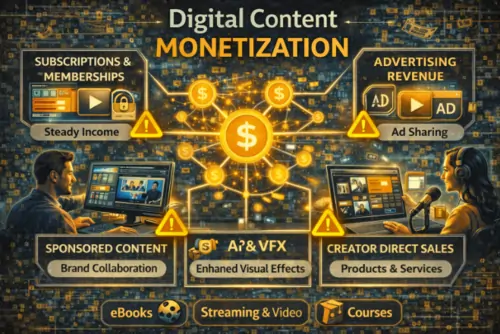
Digital Content Monetization sounds simple: you post content online, and you earn money. In real life, it’s more like building a small business—one that runs on attention, trust, and consistent value.
In 2026, monetizing content is still very possible, but it’s also more competitive. AI has made it easier to produce content fast, which means audiences are more selective. Platforms change algorithms and payout policies regularly. And creators who rely on only one income source often feel unstable.
This article breaks down Digital Content Monetization in a practical way—so you can choose a monetization model that fits your strengths, build content that converts (not just gets views), and protect your reputation while you grow.
What Digital Content Monetization Means
Digital Content Monetization is the process of earning income from content you publish online—videos, blog posts, newsletters, podcasts, social posts, courses, templates, and more.
Monetization can come from:
- Platform payouts (ads/revenue share)
- Brand partnerships
- Affiliate commissions
- Selling digital products
- Selling services
- Memberships or subscriptions
- Tips/donations or livestream gifts
Important point: monetization is not the same as profit. Profit is what you keep after expenses like:
- Internet and devices
- Tools (editing software, email marketing)
- Design assets
- Production time and labor
- Taxes and fees
The strongest creators treat trust as the real currency. Without trust, everything else becomes harder: people don’t click, buy, subscribe, or recommend you.
Why Digital Content Monetization Matters in 2026
Digital Content Monetization matters because it creates flexible income. Many Filipinos relate to this—students building side hustles, OFWs building online brands for long-term stability, stay-at-home parents creating income from home, and professionals adding another revenue stream.
But 2026 also brings new realities:
- Content competition is higher because tools make content easier to produce.
- Trust signals matter more because audiences see more low-quality or recycled content.
- Platform rules can change suddenly, affecting reach or payouts.
- Brands are more careful and often want proof of results before paying well.
The good news: creators who focus on credibility, consistency, and clear offers can still grow.
The Main Monetization Models (Choose Your Mix)
Most successful creators use more than one model. Think of monetization like a “mix” rather than a single path.
Ads and Platform Revenue Share
This is the most familiar model: your platform shares ad revenue based on views and engagement.
Examples:
- YouTube Partner Program ads
- Podcast ads (platform-driven or host-read)
- Short-form video payouts (varies per platform)
Reality check: ads usually require scale. It’s often not the fastest way for beginners unless you already get consistent traffic. Ads are better as a “stability layer” once you build volume.
Brand Deals and Sponsorships
Brands pay you to feature products, create UGC-style content, or promote services.
To avoid getting lowballed:
- Prepare a simple media kit (audience, stats, content samples)
- Clarify deliverables (how many videos, posts, stories)
- Ask for usage rights terms (can they run your content as ads?)
- Confirm payment terms in writing
Best practice: only promote what you would recommend. Brand deals can grow fast, but they can also destroy trust if you endorse anything for money.
Affiliate Marketing
Affiliate marketing means you earn a commission when someone buys through your unique link.
It works best when:
- You can naturally recommend tools/products that solve a problem
- Your content is evergreen (searchable) so it keeps earning
- You disclose clearly (“I may earn a commission”)
Affiliate income grows when your content is practical and specific, such as tutorials, comparisons, and “best tools for…” guides.
Digital Products
Digital products are items people can buy repeatedly with low extra effort from you.
Examples:
- E-books
- Templates (Google Sheets, Notion, Canva)
- Presets, brand kits
- Paid courses or workshops
Smart approach: validate before building.
- Start by sharing free tips on the topic
- Ask what people struggle with
- Offer a small product first (₱199–₱499 template) before building a full course
Services and Freelancing
For beginners, services are often the fastest way to monetize because you don’t need a huge audience.
Examples:
- SEO content writing
- Social media management
- Editing (video, podcast, blogs)
- Graphic design
- UGC creation for brands
- Coaching/consulting (if you have real experience)
This is powerful because your content becomes your portfolio. People see your work and hire you.
Memberships and Subscriptions
This model works when you can provide ongoing value.
Examples:
- Patreon
- Paid communities
- Newsletter subscriptions
- Channel memberships
Memberships succeed when you focus on retention:
- Consistent exclusive content
- Community interaction
- Clear benefits (templates, feedback, Q&A)
Tips, Donations, and Livestream Income
Donations and livestream gifts work best when you have a loyal community.
- It’s not about “everyone gives”
- It’s about “a small group supports consistently”
This works well for creators who do live teaching, entertainment, gaming, or community discussions.
Pick a Niche and Offer (The Money Map)
Many creators fail not because they’re untalented, but because they’re too broad.
A simple money map:
Niche + Audience + Pain Point + Outcome = Offer
Examples:
- “Budget meal prep for busy office workers” → weekly meal plans + grocery list templates
- “Beginner skincare for oily skin in humid climates” → product guides + affiliate links
- “Student productivity” → Notion templates + coaching
If you’re Filipino-focused, niche ideas that often work:
- Budget travel itineraries
- Home-based side hustles
- OFW-friendly online income skills
- Practical tech tutorials
- Review content (food, gadgets, tools)
The clearer your niche, the easier Digital Content Monetization becomes.
Build Content That Converts (Not Just Gets Views)
Views feel good, but conversions pay bills.
Search content vs social content
Search content:
- Blogs, YouTube tutorials, FAQs
- Evergreen: keeps bringing traffic
- Great for affiliates and products
Social content:
- Short videos, reels, posts
- Faster reach but shorter lifespan
- Great for awareness and brand deals
Best strategy: use both.
- Social brings attention now
- Search builds long-term income
Funnel basics (simple and effective)
A funnel is a path that moves people from “viewer” to “buyer.”
Simple funnel:
Free value → Email list → Offer
A beginner-friendly lead magnet:
- A checklist
- A template sample
- A mini guide (PDF)
- A “starter kit” download
Email lists matter because platforms change. Your email list is something you control.
Trust and E-E-A-T for creators
Google’s quality systems reward content that feels helpful, credible, and honest.
Trust signals you can add:
- Clear author bio (who you are, what you’ve done)
- Proof (screenshots, results, case studies)
- Transparent experience (“what worked for me, what didn’t”)
- References to reputable sources when making factual claims
- Updated dates for time-sensitive content
For a Core Update-proof approach, your content should show real expertise and avoid vague claims.
Platform-by-Platform Monetization (Practical)
YouTube
Best for: tutorials, reviews, evergreen content
Monetization: ads, affiliates, sponsorships, memberships
TikTok/Instagram Reels
Best for: awareness and discovery
Monetization: brand deals, affiliates, driving traffic to products/services
Facebook
Best for: community-building and local reach
Monetization: brand deals, affiliates, groups, traffic to offers
Blogs and SEO sites
Best for: search traffic and long-term earning
Monetization: affiliates, ads, digital products, services
Newsletters
Best for: trust and direct relationship
Monetization: paid subscriptions, product launches, sponsorships
Smart creators diversify. Digital Content Monetization becomes safer when your income isn’t tied to one platform.
Pricing and Simple Creator Math
If you want sustainable income, you need simple math.
Example target: ₱30,000/month
Possible paths:
- Sell a ₱500 template to 60 people/month
- Close 3 clients at ₱10,000/month
- Combine affiliates + one sponsor + small product
Track simple metrics:
- Views → clicks (CTR)
- Clicks → sign-ups
- Sign-ups → purchases
- Revenue per piece of content (what content actually earns)
You don’t need complex spreadsheets. You need consistent tracking.
Legal, Tax, and Safety Basics (PH-Friendly)
Disclosures
If it’s sponsored or affiliate, disclose clearly (#ad, “affiliate link”).
Contracts
For brand deals, confirm:
- Deliverables
- Deadlines
- Payment date
- Usage rights
- Revisions policy
Scam red flags
Avoid:
- “Pay to get paid” offers
- Brands asking you to buy something first for collaboration
- Fake PR emails with weird domains and pressure tactics
Data privacy
Be careful with collecting emails and customer info. Use trusted tools and keep data secure.
30-Day Starter Plan for Digital Content Monetization
Week 1: Foundation
- Choose a niche and audience
- Create 3 content pillars (topics you’ll repeat)
- Set one monetization goal (service, affiliate, or small product)
Week 2: Publish and repurpose
- Post 3–5 pieces of content
- Repurpose one long piece into short clips/posts
- Track what gets saves, comments, clicks
Week 3: Build an email list
- Create a simple lead magnet
- Add an email sign-up link to your bios
- Mention your free resource in content
Week 4: Launch your first offer
- Sell a small digital product or service package
- Reach out to potential clients or brands
- Improve based on feedback
Common Mistakes to Avoid
- Chasing every platform at once
- Posting without a clear offer or next step
- Selling too early without trust
- Relying on one income source
- Not tracking what content converts
- Copying trends without adding your experience
FAQs
How many followers do I need to monetize?
You can monetize with a small audience if you offer a clear service or product that solves a real problem.
What’s the fastest monetization method for beginners?
Services and freelancing are often the fastest because you can sell skills without needing big traffic.
Is blogging still worth it in 2026?
Yes, especially for evergreen topics, tutorials, and affiliate-driven content—if you focus on quality and search intent.
How do I price brand deals?
Base it on deliverables, content quality, usage rights, and your results—not just follower count.
How do I monetize without showing my face?
Use voice-over videos, screen recordings, tutorials, writing-based platforms, and UGC that doesn’t require face shots.
Final Thoughts
Digital Content Monetization in 2026 is less about hacks and more about building trust, choosing the right monetization mix, and creating content that solves real problems. If you treat your content like a helpful product—and your audience like a community—you can build income that grows steadily and survives platform changes.