

Cinema has been declared “dead” so many times that it’s almost a tradition. First, TV would replace it. Then VHS, DVDs, piracy, streaming, and short-form video. And yet, people still line up for big films, laugh and gasp together in dark rooms, and walk out talking about what they just experienced.
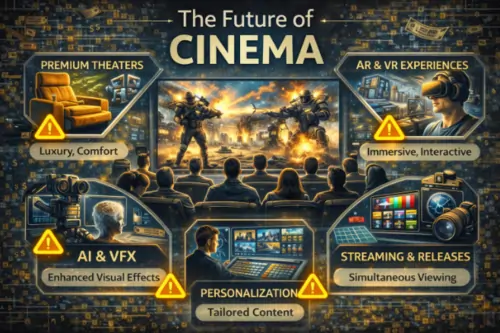
In 2026, cinema isn’t disappearing—it’s transforming. The future of cinema looks less like “every movie must be seen in theaters” and more like “the theater becomes the best way to see certain movies.” At the same time, filmmaking itself is changing because of new production tools, AI-assisted workflows, and a global audience that can make a film trend overnight.
Here’s what’s shaping the future of cinema, and what it could mean for Filipino moviegoers in the years ahead.
Why people still love cinema even with streaming
Streaming is convenient, but cinema offers something streaming can’t fully copy: a shared experience. Watching a horror film at home is one thing. Watching it in a packed theater—where everyone flinches at the same time—hits differently. The laughs are louder, the suspense is sharper, and the emotions feel bigger because you’re not alone.
The big screen and powerful sound also matter more than people admit. Some stories are built for scale: wide landscapes, giant action sequences, quiet scenes where you hear every breath, or musical moments that feel like a concert. Even if you own a good TV, the cinema’s audio and screen size can turn a film into an event.
Future of Cinema also fits into real life as a social activity. In the Philippines, going to the movies is still a classic mall day plan—especially for dates, barkada hangouts, and family bonding. It’s not just “watching a film.” It’s snacks, photos, walking around, and having something to talk about afterward.
And fandom culture keeps cinema alive. When a big franchise releases a new installment, theaters become gathering places. People dress up, cheer, and treat opening weekend like a mini celebration. Streaming can launch a trend, but cinema can create a moment.
What’s changing in cinema in 2026
The biggest shift is how movies move between theaters and streaming. The old model had long theatrical windows. Today, the window is often shorter and more flexible. Some films still stay longer if they perform well, while others transition quickly to digital.
This changes the way people decide what to watch in theaters. Many moviegoers now save cinema trips for films that feel “worth it” on a big screen—event movies, visual spectacles, or stories they don’t want spoiled online.
Premium formats are also rising. More people are paying extra for IMAX-style screens, enhanced sound, and special formats like 4DX. This premium push is part of how cinemas compete: if you can’t beat streaming on convenience, you compete on experience.
Pricing strategies are evolving too. Expect more membership models, bundles, promos, and dynamic pricing. In many markets, cinemas experiment with cheaper off-peak schedules and higher prices for peak times. For Filipino audiences, promos and credit card deals will likely stay important, because affordability heavily influences cinema decisions.
Social media has also become a major force. A film can get boosted—or crushed—by viral clips, reviews, and reactions within hours. Opening weekends can now be shaped by TikTok and YouTube just as much as traditional advertising.
Technology trends shaping the future of cinema
Virtual production and LED volume stages
One of the biggest behind-the-scenes changes is virtual production: using massive LED screens to display realistic environments while actors perform. Instead of filming in every location or relying purely on green screens, filmmakers can shoot scenes with lighting and backgrounds that look more natural in-camera.
This can make production faster, safer, and sometimes cheaper, while improving visual quality. It also helps smaller productions achieve bigger-looking worlds. As this tech becomes more common, you’ll likely see more films with polished visuals—even outside mega-franchises.
AI in filmmaking
AI is already influencing parts of the filmmaking pipeline, but the future depends on how ethically it’s used. In practical terms, AI tools can help with editing tasks, color matching, sound cleanup, subtitling, dubbing, and even VFX support. That can speed up workflows and reduce repetitive labor.
The major concerns are consent, creator rights, and job impact. Audiences are becoming more aware of issues like deepfakes, voice replication, and training data. In the future, expect more transparency rules, clearer crediting, and stronger protections for actors and creators—at least in projects that want trust.
For viewers, AI could also improve accessibility. Better subtitles, clearer dubbing, and cleaner audio mixes can help more people enjoy films—especially in multilingual regions like Southeast Asia.
Immersive sound and better picture quality
Future of Cinema technology keeps improving in ways that are easy to feel even if you don’t know the specs. Brighter projection, sharper resolution, HDR-like contrast, and more precise spatial audio make scenes feel more real. Quiet moments become more intimate, and action becomes more physical.
Premium formats matter because they give cinemas an edge. If a film’s sound design and visuals are a major part of its identity, theaters become the “best version” of that film.
XR and interactive cinema
Cinema may become more interactive at the edges. Some projects already experiment with “choose-your-path” narratives, and XR (VR and AR) experiences are growing in entertainment. While traditional cinema will remain mostly linear storytelling, special interactive screenings may become more popular for niche audiences.
Think of it as a new category: not replacing films, but adding a new kind of “cinema experience” for people who want something different.
Live-cinema hybrids and event screenings
Concert films, live Q&As, anime movie nights, and limited-run events are becoming more common. This is part of cinema’s future: the theater as a venue, not just a screen. A movie night could become closer to a mini festival or live experience—especially for fandom-driven communities.
Storytelling trends in the future of cinema
Filmmaking is getting more global. Audiences now watch stories from Korea, Japan, India, Thailand, and beyond more easily than ever. This will keep influencing mainstream cinema, pushing more diverse voices, settings, and storytelling styles into the spotlight.
At the same time, audiences are feeling “IP fatigue.” Franchises still dominate, but viewers increasingly crave original stories that feel fresh. The future likely includes both: big IP event films and smaller original films that break through because they feel different.
Runtime trends are also shifting. Some films are getting shorter to match modern attention spans and theater scheduling needs. Others are going bigger—epic sagas designed to feel like major events. Both approaches can work if the story earns it.
Hybrid genres are also becoming more common. Films blend comedy with horror, romance with sci-fi, or drama with thriller elements. This makes stories feel less predictable and more shareable online.
The business side: how cinemas will survive
Premium experience strategy
Future of Cinema are leaning into comfort: better seats, cleaner theaters, improved food options, and “date night” upgrades. The future cinema experience may feel more like a lounge than a simple screening hall.
In the Philippines, mall cinemas already play a major role, and premium experiences are often marketed as a special treat. Expect more segmentation: budget-friendly options for casual viewing and premium options for event films.
Community and niche programming
Niche programming is one of the smartest strategies. Anime screenings, K-movie festivals, classic movie nights, and special director retrospectives bring in dedicated audiences. Theaters can become community hubs for film lovers rather than relying only on blockbuster schedules.
This could also help local films. More curated screenings, filmmaker talks, and campus film culture can create stronger support for Filipino cinema—especially for indie projects that need visibility.
Partnerships with streamers
Streamers and theaters are not always enemies. Some films may get limited theatrical runs to build buzz, qualify for awards, or create an “event” feel before streaming release. Expect more hybrid release plans where theaters and platforms both benefit.
Sustainability and green cinema operations
Sustainability will become a bigger part of Future of Cinema operations and production. Cinemas can reduce energy use with more efficient projectors, better HVAC systems, and smarter lighting. Concessions may shift toward reusable or more sustainable packaging.
On the production side, studios are under pressure to reduce waste on sets, manage travel emissions, and use cleaner power when possible. In the long run, greener operations can also reduce costs—especially in energy-intensive venues like theaters.
What this means for Filipino moviegoers
For Filipino audiences, the future of cinema will likely feel like a mix of tradition and change.
Mall cinemas will remain central because they’re tied to the way many Filipinos spend time: shopping, dining, and hanging out. At the same time, boutique cinemas and special screening spaces may grow for people who want a more curated experience.
Pricing will continue to matter. Many viewers choose screenings based on promos, bundles, and schedules. Cinemas that offer flexible pricing—cheaper weekday screenings, membership perks, and family-friendly deals—will likely attract more repeat visits.
Access to international films will also keep improving. Filipino audiences already have strong interest in Korean, Japanese, and Hollywood releases, and global distribution is only getting faster. Theaters may increasingly host limited-run screenings for global hits and niche fandom events.
Local cinema could benefit too—especially if cinemas invest more in community programming, special showings, and partnerships that help Filipino films reach audiences beyond opening week.
Challenges and concerns
Affordability is a major challenge. If tickets and snacks keep rising, people may reserve cinema for only the biggest releases. Future of Cinemas will need to balance premium upgrades with accessible options.
Piracy remains a problem, especially for films that leak quickly. This can shorten theatrical momentum and reduce revenue for creators.
AI ethics will continue to be debated. Audiences care about authenticity, consent, and fairness for artists. Films that ignore these concerns may face trust issues.
Finally, the attention economy is tough competition. People are used to quick entertainment. Theaters will need to remind people why a two-hour shared experience is still worth it.
What cinema might look like by 2030
By 2030, Future of Cinema will likely be smaller in volume but stronger in identity. Theaters may become premium event hubs where you go for the best version of a film, not just any film. More screenings may be curated events: themed nights, limited runs, interactive experiences, or community screenings.
Streaming won’t kill cinemas. It will push cinemas to specialize.
And if cinema continues to evolve its technology, storytelling, and community role, it can remain one of the most powerful ways to experience stories—together.
FAQs
Will streaming kill cinemas?
Probably not, but it will keep changing what people choose to watch in theaters.
Why are tickets getting more expensive?
Costs rise with operations, premium formats, and upgrades, but cinemas may balance this with promos and memberships.
Is AI replacing filmmakers?
AI can assist workflows, but ethical concerns and creative direction still rely heavily on human creators.
What cinema format is most worth trying?
Premium sound and large screens are usually the biggest “feel it instantly” upgrades, especially for action or spectacle films.
Will Filipino films benefit from these trends?
They can, especially through better distribution, curated screenings, and stronger community-based cinema culture.