


Entrepreneurs in both the USA and Australia succeed faster when they treat networking as a deliberate, long‑term strategy rather than something they do only at events. A strong entrepreneurial network opens doors to opportunities, knowledge, and support that you simply cannot access alone.
Introduction
An entrepreneurial network is the web of relationships you build with other founders, mentors, investors, service providers, and industry partners who actively contribute to your business journey. For entrepreneurs in the USA and Australia, these networks are especially powerful because both ecosystems are rich with formal organizations, informal communities, and online platforms designed to help you connect.
If you want a deeper foundation in the core abilities that make networking easier, start by reviewing essential entrepreneur skills. At the same time, understanding the right entrepreneur traits will help you show up more confidently and authentically in every interaction.
In this guide, you will learn what an entrepreneurial network is, why it matters, how the USA and Australian landscapes differ, and the specific strategies you can use to build a strong, cross‑border network. You will also get practical examples, an action plan, and external resources you can tap into immediately.
What Is an Entrepreneurial Network?
An entrepreneurial network is the set of people and organizations that surround you as a founder: other entrepreneurs, mentors, industry experts, investors, suppliers, and even customers. These connections are not just “contacts in a list”; they are relationships that provide information, feedback, introductions, and often emotional support.
Core elements of a strong entrepreneurial network include mentors who guide strategic decisions, peers who share similar challenges, and professionals who offer specialized expertise (such as legal, finance, or marketing). A healthy network is diverse in skills, sectors, and seniority, which keeps you exposed to new ideas and opportunities.
If you are still developing your confidence as a founder, revisiting your underlying entrepreneur skills can help you communicate more clearly and get more value from every relationship.
Why Your Network Matters for Business Growth
Your network is one of the most important growth levers you control, especially in the early stages of a venture. Strong networks generate referrals, partnerships, and funding opportunities that would be very hard to engineer through cold outreach alone.
Referral‑driven networking groups like Business Network International (BNI) specialize in turning relationships into a consistent flow of new leads for small businesses. Mentorship platforms such as SCORE in the USA pair entrepreneurs with experienced volunteers who help them navigate strategy, operations, and growth. As your network deepens, you gain access to warm introductions to investors, potential co‑founders, and strategic partners across industries and borders.
Over time, consistent networking reinforces the traits of successful entrepreneurs, like resilience, curiosity, and openness, which you can explore in more depth in this guide to entrepreneur traits.
Understanding the Entrepreneurial Landscape in the USA
The USA has one of the most mature and diverse startup ecosystems in the world, with strong clusters in cities like San Francisco, New York, Austin, and Miami. Entrepreneurs can plug into local chambers of commerce, small business development centers, accelerators, and co‑working spaces that regularly host events and workshops.
If you are unsure where to start, the U.S. Chamber of Commerce CO site offers an overview of networking groups for entrepreneurs and business owners. You can combine those opportunities with free mentoring and education from SCORE, the nation’s largest network of volunteer business mentors.
Networking environments in the USA include in‑person meetup groups, structured referral networks, industry associations, and online communities. For example, local SCORE chapters host workshops and one‑to‑one mentoring, while BNI chapters offer weekly meetings for relationship‑based referrals. National organizations like the Entrepreneurs’ Organization (EO) connect founders into peer learning groups and global forums that extend well beyond local markets.
Understanding the Entrepreneurial Landscape in Australia
Australia’s startup ecosystem has grown rapidly, with major hubs in Sydney, Melbourne, Brisbane, and Perth, as well as emerging regional centers. Networking is supported by a mix of private organizations, local business groups, and government‑backed initiatives that aim to help small businesses and startups collaborate.
Local organizations such as Business NSW and Small Business NSW provide structured networking environments, training, and advocacy for entrepreneurs. Government programs like the Sydney Startup Hub and other state‑level initiatives organize workshops, mentoring, and pitch events that naturally foster connections.
Online, Australian founders can join LinkedIn communities, Facebook groups like Entrepreneur Network Australia, and dedicated networks that keep them plugged into local opportunities. Guides such as Small Business Australia’s networking resources explain how to use these networks to unlock growth.
Core Principles of Building a Strong Network (Applies to Both Countries)
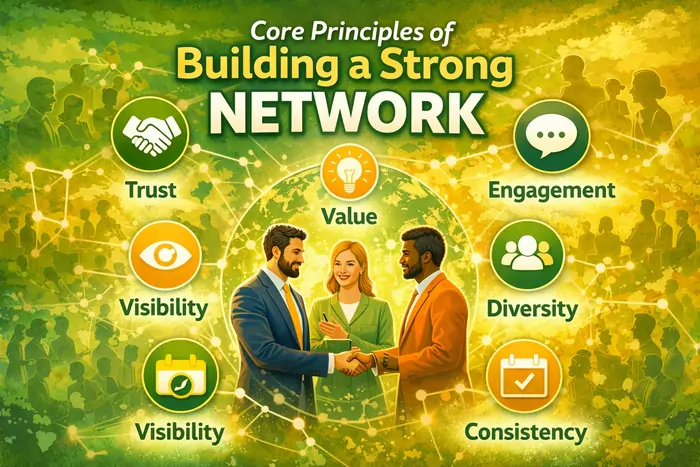
Although the USA and Australia have different cultures and structures, the core principles of building a strong entrepreneurial network are the same. If you consistently apply these fundamentals, your network will grow in depth and quality, regardless of geography.
Key principles include:
- Give before you ask: Lead with value by sharing advice, introductions, or resources instead of immediately pitching your product or asking for favors.
- Consistency over intensity: Attend fewer events more regularly so people see you as a committed member, not a one‑time visitor.
- Authenticity and trust: Be transparent about your goals and challenges, and focus on building long‑term relationships rather than collecting business cards.
- Clarity of positioning: Clearly communicate who you are, what you do, and whom you help, so others can remember and refer you accurately.
- Follow‑up and nurturing: Always follow up after a meeting, stay in touch periodically, and look for opportunities to collaborate or help.
Working on your foundational entrepreneur skills makes it easier to apply these principles consistently and confidently.
Practical Networking Strategies in the USA
In the USA, you have access to a wide range of formal and informal networking options, both online and offline. The key is to choose a few high‑leverage channels and commit to them rather than trying to be everywhere.
Some practical strategies include:
- Join structured referral and peer groups: Explore organizations like BNI, SCORE, the National Association for the Self‑Employed (NASE), and local chambers of commerce to build a base of recurring in‑person or virtual interactions.
- Leverage national and global entrepreneur networks: Consider joining the Entrepreneurs’ Organization or similar communities that provide curated peer groups, learning events, and cross‑border connections.
- Attend targeted meetups and industry events: Use platforms listed in guides such as Entrepreneur social network sites to find founder‑focused gatherings and industry‑specific sessions where you can meet relevant contacts.
- Use curated resource lists: Articles like Top 5 Resources for New Entrepreneurs and 10 Entrepreneur Resources for Starting Your Business highlight programs, tools, and organizations worth exploring.
- Optimize LinkedIn for networking: Craft a clear founder profile, share insights, and connect with people you meet at events or through content.
When reaching out in the USA, be direct but respectful: briefly explain who you are, what you are building, why you want to connect, and what value you can offer. Here, strong entrepreneur traits like clarity and confidence make a noticeable difference.
Practical Networking Strategies in Australia
Australian networking often emphasizes relationship depth, consistency, and a more understated communication style. You will find plenty of structured opportunities through local business groups and government‑supported initiatives.
Effective strategies include:
- Tap into local business organizations: Join groups like Business NSW and use state resources such as Small Business NSW networking and support to find events, mentoring, and training.
- Leverage government‑backed startup hubs: Participate in programs linked to the Sydney Startup Hub and similar state initiatives that combine co‑working, workshops, mentoring, and networking events.
- Join national networking communities: Groups like BNI Australia offer structured, repeat interactions that help build trust and generate referrals.
- Use online platforms with a local focus: Search LinkedIn and Facebook for groups like Entrepreneur Network Australia and regional startup communities to find peers and opportunities.
- Learn from dedicated networking guides: Articles such as Networking Opportunities for Entrepreneurs in Australia and Unlocking Growth: Networking for Australian Small Businesses provide concrete examples of events and strategies.
When networking in Australia, take time to understand others’ businesses before pitching and focus on building rapport through ongoing conversation and collaboration.
Online Networking Tactics That Work in Both Markets
Online networking lets you build and nurture relationships across borders, making it ideal for connecting the USA and Australian entrepreneurial ecosystems. A strong digital presence also ensures in‑person connections can find and remember you.
Useful tactics include:
- Optimize your founder profile: On LinkedIn, make your headline problem‑ and outcome‑focused, add a concise “About” summary, and highlight key achievements and projects.
- Contribute to online entrepreneur communities: Platforms featured in resources like Top online platforms to connect with like‑minded entrepreneurs help you find peers beyond your local area.
- Explore entrepreneurial platforms lists: Collections such as 20+ Entrepreneurial Platforms that will Help You Overcome Startup Hurdles showcase tools and communities designed specifically for founders.
- Share value‑driven content: Publish short posts, articles, or videos that share lessons learned, frameworks, or case studies; this positions you as a helpful, credible peer.
- Maintain a simple personal site or landing page: A clear website built with popular site builders gives people a central place to learn about you and contact you.
For cross‑border networking, schedule short video calls to get to know new contacts and look for small, fast ways to collaborate, such as co‑creating content or sharing resources.
Finding Mentors, Partners, and Investors
Mentors, strategic partners, and investors often enter your network through a combination of structured programs and organic relationships.
To find mentors:
- In the USA, services like SCORE business mentoring and the SCORE mentor search offer free one‑on‑one mentoring and workshops, while accelerator programs and university entrepreneurship centers pair founders with advisors.
- In Australia, initiatives highlighted by Small Business NSW and other advisory programs connect entrepreneurs with experienced leaders.
To find partners:
- Participate in mastermind groups and peer‑to‑peer circles where entrepreneurs regularly share goals and challenges; collaboration opportunities naturally emerge.
- Look for complementary businesses at networking groups like BNI Australia, local business associations, and online communities where your services align.
To find investors:
- Use startup ecosystems and platforms that highlight investor‑friendly events, such as pitch nights at hubs like the Sydney Startup Hub and other innovation precincts.
- Join curated founder communities like those listed in online entrepreneur platform guides, which often facilitate introductions to active investors.
The most effective investor relationships usually begin with learning and collaboration, not a cold pitch deck, so focus first on building rapport and demonstrating traction.
Common Networking Mistakes Entrepreneurs Make
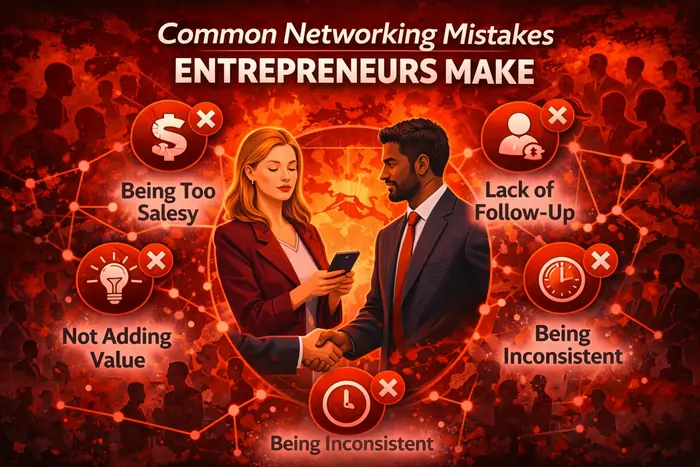
Many entrepreneurs underestimate networking or approach it in ways that damage, rather than strengthen, their reputation.
Avoid these common mistakes:
- Treating networking as a one‑off event: Going to a single conference or meetup and expecting transformational results rarely works; relationships develop over repeated contact.
- Being overly transactional or pitch‑heavy: People quickly disengage when every interaction is framed around “buy my product” instead of mutual value.
- Failing to follow up: If you never send a follow‑up message or schedule a call, you lose the momentum created by the initial interaction.
- Not clarifying your niche or value: If others cannot clearly articulate what you do or who you help, they cannot refer the right people to you.
- Ignoring online presence: A weak or outdated profile can undermine the positive impression you made in person.
Reviewing your entrepreneur skills and aligning your behavior with proven entrepreneur traits will help you avoid these pitfalls and show up as a valuable member of every community you join.
Action Plan: Build Your Cross‑Border Network in 30 Days
A 30‑day action plan helps you turn principles into behavior and start building a strong entrepreneurial network that spans both the USA and Australia.
Week 1 – Clarify and Set Up
- Define your networking goals (mentors, partners, customers, investors) and the types of people you want to meet.
- Refresh your LinkedIn and website so they clearly state who you help and how.
- Identify 2–3 key networks in each country to focus on (for example, your local chamber plus SCORE in the USA, and Business NSW plus a startup hub in Australia).
Week 2 – Join and Observe
- Join at least one structured networking group or mentoring platform (e.g., BNI, SCORE, EO, or a local business association).
- Register for one meetup or event in the USA and one in Australia, even if both are virtual, using resources highlighted by the U.S. Chamber or Small Business NSW.
- Spend time observing how experienced members introduce themselves, ask questions, and offer help.
Week 3 – Engage and Add Value
- Start conversations in online communities mentioned in lists like Top online platforms to connect with like‑minded entrepreneurs by answering questions and sharing resources.
- After any event, send follow‑up messages within 24–48 hours suggesting a short call or sharing a useful link based on what you discussed.
- Offer small, concrete help—an introduction, a recommended tool, or a brief review of someone’s idea—to begin building reciprocity.
Week 4 – Deepen and Systematize
- Schedule 3–5 one‑on‑one conversations with people you met across both ecosystems.
- Decide which groups or platforms are producing the best relationships and commit to them for the next 90 days.
- Create a simple tracking system (spreadsheet or CRM) to log contacts, notes, and follow‑up dates, so nothing slips through the cracks.
By the end of 30 days, you will have a clearer positioning, presence in multiple communities, and a growing list of meaningful contacts in both the USA and Australia.
Conclusion and Next Steps
Building a strong entrepreneurial network in the USA and Australia is less about attending as many events as possible and more about intentionally investing in a few high‑quality communities and relationships. When you combine clear positioning, consistent presence, and a genuine desire to help others, your network becomes a powerful engine for referrals, mentorship, and growth.
Take one step today: join a relevant group like SCORE in the USA or Business NSW in Australia, update your LinkedIn profile, and send a message to a founder you admire to start a conversation. As you do, keep sharpening your entrepreneur skills and living out the right entrepreneur traits, so every new connection sees you as a reliable, high‑value partner. Over time, these small actions compound into a robust entrepreneurial network that spans both markets and supports every stage of your business journey.