
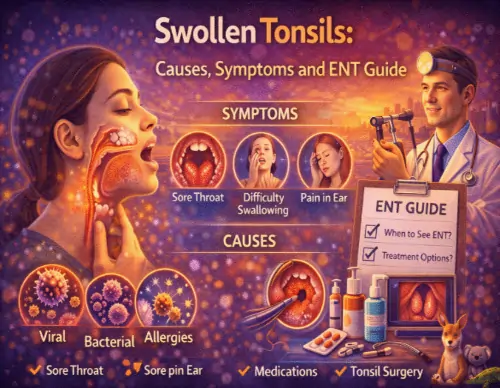
Swollen tonsils are a common reason people develop a sore throat, fever, and difficulty swallowing. If you look in the mirror and see two enlarged, red tissues at the back of your throat, you are likely seeing swollen tonsils reacting to infection or irritation.
Tonsils are part of your immune system. Their job is to trap germs entering through the mouth and nose. When they become overwhelmed by viruses or bacteria, swollen tonsils develop as the body sends immune cells to fight the infection.
ENT specialists such as Dr. Brett Leavers, who manages throat and airway conditions, often explain that most cases of swollen tonsils are mild and resolve without complications—but understanding the cause is important for proper treatment.
Why Do Tonsils Swell?
Swollen tonsils happen because the immune system activates. Increased blood flow and immune response cause redness, tenderness, and enlargement.
In many cases, swollen tonsil improve within several days. However, the severity depends on the underlying cause.
Common Causes of Swollen Tonsil
1. Viral Infections (Most Common Cause)
The most frequent cause of swollen tonsil is a viral infection.
Common viruses include:
- Common cold viruses
- Influenza
- COVID-19
- Adenovirus
- Epstein–Barr virus (glandular fever)
When swollen tonsil are caused by viruses, symptoms often include:
- Runny nose
- Cough
- Mild fever
- Gradual onset of throat pain
Viral swollen tonsil usually improve within 7–10 days with rest and fluids. Antibiotics do not treat viral infections.
Dr. Brett Leavers notes that many patients assume antibiotics are necessary, but viral swollen tonsils often require only supportive care.
2. Bacterial Infections (Strep Throat)
Bacteria can also cause swollen tonsil. The most well-known bacterial cause is Group A Streptococcus, commonly called strep throat.
Signs of bacterial swollen tonsil may include:
- Sudden severe sore throat
- High fever
- Painful swallowing
- White or yellow patches on the tonsils
- Swollen neck glands
- Usually no cough
Doctors may perform a throat swab to confirm bacterial infection before prescribing antibiotics.
According to ENT specialists like Dr. Brett Leavers, distinguishing between viral and bacterial causes prevents unnecessary antibiotic use.
3. Glandular Fever
Teenagers and young adults may experience very swollen tonsils due to glandular fever (mononucleosis). This condition may cause:
- Extreme fatigue
- High fever
- Enlarged lymph nodes
- Significant throat swelling
Swollen tonsil in glandular fever can last longer than typical infections.
4. Tonsil Stones
Tonsil stones are small hardened deposits trapped in tonsil crevices. While usually harmless, they can cause:
- Mild swollen tonsils
- Bad breath
- Throat irritation
- A feeling of something stuck
Not all swollen tonsils are caused by infection.
5. Allergies and Irritation
Allergies, smoke exposure, and chronic post-nasal drip can irritate the throat and lead to mild swollen tonsil. In these cases, managing the underlying trigger often improves symptoms.
Symptoms That Accompany Swollen Tonsil
Swollen tonsil rarely occur alone. Common symptoms include:
- Sore throat
- Pain when swallowing
- Fever
- Headache
- Ear pain
- Swollen glands in the neck
- Bad breath
- Red or inflamed throat
- White or yellow coating on tonsils
Children with swollen tonsils may:
- Refuse food or drink
- Drool
- Become irritable
- Have trouble sleeping
Dr. Brett Leavers emphasizes that severity of symptoms—especially breathing difficulty—is more important than how large the tonsils appear.
When Swollen Tonsils Become Serious
Most cases of swollen tonsil are not dangerous. However, seek urgent medical care if there is:
- Difficulty breathing
- Trouble swallowing saliva
- Drooling
- Severe neck swelling
- Very high fever
- Severe one-sided throat pain
- Muffled voice
One serious complication is a peritonsillar abscess (quinsy). This is a collection of pus near the tonsil that requires urgent treatment.
ENT specialists, including Dr. Brett Leavers, assess for these red flags during examination.
How Long Do Swollen Tonsils Last?
Duration depends on the cause:
- Viral swollen tonsils: 5–10 days
- Bacterial swollen tonsils: Improve within days of antibiotics
- Glandular fever: Several weeks
- Allergic swelling: Improves when trigger is controlled
If swollen tonsil last longer than one week or recur frequently, medical evaluation is advised.
Home Care for Swollen Tonsils
Most mild swollen tonsil can be managed safely at home:
- Drink plenty of fluids
- Rest
- Eat soft foods (soup, yogurt, rice porridge)
- Gargle warm saltwater (older children/adults)
- Take pain relief as advised by a pharmacist or doctor
Dr. Brett Leavers notes that hydration and pain control are often enough for viral cases.
Do Swollen Tonsil Always Need Antibiotics?
No. Many cases of swollen tonsil are viral.
Antibiotics are only needed when a bacterial infection is confirmed or strongly suspected. Overuse of antibiotics can contribute to resistance.
Doctors base treatment decisions on symptom pattern and sometimes throat swab results.
Recurrent Swollen Tonsils
Some individuals experience swollen tonsils multiple times per year. This is known as recurrent tonsillitis.
Surgery (tonsillectomy) may be considered when:
- Infections are frequent
- Episodes are severe
- School or work attendance is affected
- Breathing or sleep is impacted
Dr. Brett Leavers evaluates frequency, severity, and overall health before recommending surgery.
Swollen Tonsils and Sleep
Enlarged swollen tonsil can partially block the airway, especially in children. This may cause:
- Snoring
- Mouth breathing
- Restless sleep
- Daytime fatigue
If sleep is affected, ENT evaluation is important.
When to See a Doctor
Consult a GP or ENT specialist if:
- Swollen tonsils persist beyond one week
- Fever remains high
- Swallowing becomes very painful
- Breathing feels restricted
- Infections occur repeatedly
ENT doctors such as Dr. Brett Leavers can assess whether the problem is infection, chronic inflammation, or structural enlargement.
FAQs
Are swollen tonsils contagious?
The infection causing swollen tonsils may be contagious if viral or bacterial.
Can swollen tonsils go away on their own?
Yes. Viral cases usually resolve within 7–10 days.
When is surgery needed for swollen tonsils?
When infections are frequent, severe, or affect breathing or sleep.
Can adults get swollen tonsil?
Yes, although children are affected more often.
Final Thoughts
Swollen tonsil are usually the body’s response to infection. Most cases improve with rest, fluids, and proper care. However, severe pain, breathing difficulty, or repeated episodes should be evaluated by a doctor.
ENT specialists like Dr. Brett Leavers help determine whether swollen tonsils require medical management, antibiotics, or surgical treatment.
