

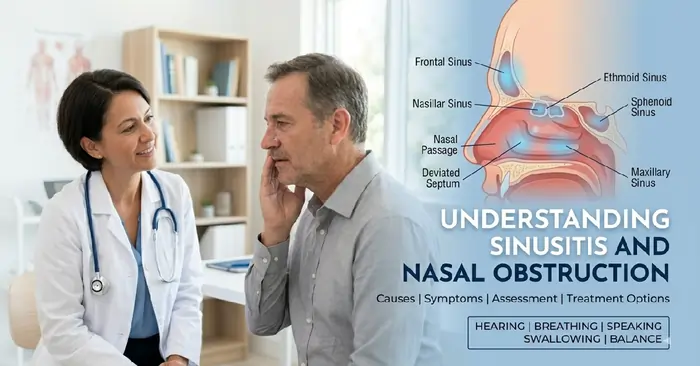
Sinus and nasal conditions are very common and can affect breathing, sleep, comfort and day-to-day functioning. Many people experience nasal congestion during a cold, flu or allergy season, and these symptoms often improve with time. In some cases, however, symptoms persist, return frequently, or become more troublesome. When that happens, the cause may be sinusitis, nasal obstruction, or a combination of both.
This guide explains what the sinuses and nasal passages do, the difference between sinusitis and nasal obstruction, common causes and symptoms, and when it may be appropriate to seek medical advice. It is intended to help readers understand these conditions and support informed conversations with a healthcare professional.
What Are the Sinuses and Nasal Passages?
The sinuses are air-filled spaces located in the bones of the face and skull. They connect to the nasal passages through small drainage openings. In healthy conditions, the sinuses produce mucus that drains into the nose and helps trap dust, particles and germs.
The sinuses and nasal passages have several functions:
- They help humidify and filter the air we breathe.
- They contribute to voice resonance.
- They produce mucus that supports the body’s natural filtering system.
The nasal passages allow air to flow in and out of the nose. They also warm and humidify the air before it reaches the lungs. When these passages are open and the sinus drainage pathways are working well, breathing through the nose is usually comfortable and efficient.
Problems begin when swelling, inflammation or blockage interferes with airflow or drainage. This can cause pressure, congestion, reduced smell and other symptoms that affect daily life.
What Is Sinusitis?
Sinusitis refers to inflammation of the lining of the sinuses. When the sinus lining becomes swollen, mucus may not drain properly. This can lead to congestion, facial pressure and discomfort.
Sinusitis is usually grouped into different types depending on how long symptoms last.
Acute sinusitis
Acute sinusitis often follows a cold or another viral upper respiratory infection. Symptoms usually last less than 4 weeks.
Subacute sinusitis
Subacute sinusitis lasts between 4 and 12 weeks. Symptoms may begin after an infection and gradually improve, but not fully resolve.
Chronic sinusitis
Chronic sinusitis lasts more than 12 weeks. In many cases, it involves ongoing inflammation rather than an active infection. Symptoms may be less intense than acute sinusitis, but they are often more persistent and can still affect quality of life.
Recurrent sinusitis
Recurrent sinusitis refers to several episodes in a year. A person may recover between episodes but continue to experience repeated flare-ups.
Understanding the type of sinusitis can help guide treatment, since the management approach may differ depending on whether the problem is short-term, chronic or recurring.
Common Causes of Sinusitis
Sinusitis can develop for a variety of reasons, and more than one factor may be involved.
Common causes include:
- Viral infections, such as the common cold.
- Bacterial infections.
- Allergies.
- Nasal polyps, which are non-cancerous growths in the nose or sinuses.
- Structural problems, such as a deviated nasal septum.
- Environmental irritants like smoke, dust or pollution.
In many cases, sinusitis begins with inflammation from a viral illness or allergies. Swelling inside the nose can block the sinus openings, trapping mucus and creating a feeling of pressure or fullness. If drainage remains poor, symptoms may continue or worsen.
A person with frequent sinusitis may have an underlying contributing factor such as allergies, chronic nasal inflammation or a structural issue that makes drainage less effective.
Symptoms of Sinusitis
Sinusitis can cause a range of symptoms, and not everyone experiences them in the same way. Some symptoms are more common in acute illness, while others are more typical of chronic inflammation.
Common symptoms include:
- Nasal congestion or blockage.
- Facial pressure or pain, especially around the cheeks, eyes or forehead.
- Thick nasal discharge, which may be yellow or green.
- Reduced or lost sense of smell.
- Headache.
- Fatigue.
- Tooth discomfort or pressure in some cases.
- Postnasal drip, where mucus drains toward the throat.
In chronic sinusitis, symptoms may be milder but more long-lasting. A person may not feel severely ill, but they may notice ongoing blockage, reduced smell or repeated congestion that never fully clears.
It is important to note that coloured nasal discharge does not automatically mean there is a bacterial infection. Symptoms need to be considered in context, which is one reason medical evaluation can be useful if symptoms persist.
What Is Nasal Obstruction?
Nasal obstruction refers to a sensation that airflow through the nose is reduced. A person may feel blocked on one side or both sides, and the obstruction may be temporary or ongoing.
Nasal obstruction is a symptom rather than a diagnosis. It can happen for several reasons, including inflammation, swelling, structural issues or growths in the nasal passages.
Some people describe nasal obstruction as:
- A blocked nose.
- Trouble breathing through the nose.
- Feeling “stuffy” or congested.
- Needing to breathe through the mouth, especially at night.
Because the nose plays an important role in sleep and breathing comfort, nasal obstruction can have a wider impact than people expect. It may contribute to snoring, dry mouth, poor sleep and daytime tiredness.
Common Causes of Nasal Obstruction
Nasal obstruction can be grouped into several categories.
1. Inflammation
Inflammation is a very common cause of nasal blockage. It may result from:
- Allergic rhinitis, also called hay fever.
- Viral infections.
- Irritants such as smoke, dust or strong odours.
When the inside of the nose becomes inflamed, the tissues swell and airflow becomes more difficult. The swelling may also affect sinus drainage, which is why nasal obstruction and sinus symptoms often occur together.
2. Structural factors
Some people have anatomical features that make nasal breathing more difficult. These include:
- A deviated nasal septum, where the wall between the nostrils is off-centre.
- Enlarged turbinates, which are structures inside the nose that help filter and humidify air.
Structural issues may cause a constant sense of blockage, often worse on one side. In some cases, the obstruction becomes more noticeable during colds or allergies because swelling adds to an already narrow passage.
3. Growths
Nasal polyps are soft, non-cancerous growths that can develop in the nasal passages or sinuses. They may contribute to blockage, reduced smell and recurrent sinus symptoms.
Less commonly, other types of masses may cause obstruction and should be assessed if symptoms are persistent, one-sided or unusual.
4. Other factors
Nasal obstruction may also be associated with:
- Hormonal changes.
- Certain medications.
- Chronic inflammation.
- Reflux-related irritation in some cases.
Because the causes vary, persistent blockage should not be assumed to be “just congestion.” An assessment may help identify whether the problem is temporary, inflammatory, structural or something else.
Symptoms of Nasal Obstruction
Nasal obstruction may lead to:
- Difficulty breathing through the nose.
- Persistent congestion.
- Mouth breathing.
- Snoring or disrupted sleep.
- Reduced sense of smell.
- Dry mouth, especially on waking.
In some cases, symptoms may worsen at night or when lying flat. This can affect sleep quality and may contribute to fatigue during the day. Children may also show signs such as snoring, mouth breathing or restless sleep.
Sinusitis vs Nasal Obstruction
Sinusitis and nasal obstruction are related but not identical.
Sinusitis means inflammation of the sinuses. It often causes pressure, congestion and discharge.
Nasal obstruction means reduced airflow through the nose. It can happen because of swelling, structural narrowing, polyps or other causes.
The two often occur together. For example, someone with sinusitis may also have nasal blockage because inflamed tissues and mucus interfere with airflow. Likewise, a person with a deviated septum may experience repeated congestion or sinus symptoms because drainage is less efficient.
When to Seek Medical Advice
Many cases of congestion or sinus discomfort improve without medical treatment, especially if they are linked to a cold. However, it is important to seek medical advice if symptoms are persistent, severe or affecting daily life.
You should consider speaking with a healthcare professional if you have:
Persistent symptoms
- Symptoms lasting more than 10 days without improvement.
- Ongoing congestion for several weeks.
- Recurrent sinus infections.
- Symptoms that keep returning after they improve.
Severe or concerning symptoms
- Severe facial pain or swelling.
- High fever.
- Vision changes.
- Severe headache.
- Swelling around the eyes.
- Foul-smelling discharge or one-sided symptoms that do not resolve.
Impact on daily life
- Difficulty breathing through the nose.
- Sleep disturbance or snoring.
- Reduced sense of smell affecting appetite or safety.
- Trouble concentrating because of poor sleep or discomfort.
A general practitioner is usually the first point of contact. They can assess the symptoms, consider possible causes and decide whether further evaluation or referral to an Ear Nose Throat specialist is needed. In some situations, prompt assessment is important, especially if symptoms are severe or unusual.
How Are These Conditions Assessed?
A healthcare provider will usually begin with a conversation about your symptoms and medical history. They may ask:
- When symptoms began.
- Whether they are constant or come and go.
- Whether one or both sides are affected.
- If there is facial pain, fever, discharge, reduced smell or headache.
- Whether you have allergies, asthma, smoke exposure or frequent infections.
- Whether any medications could be contributing.
A physical examination may include looking inside the nose and checking for swelling, drainage, polyps or signs of structural blockage.
In some cases, additional tests may be recommended, such as:
- Nasal endoscopy, which uses a small camera to examine the nasal passages more closely.
- Imaging, such as a CT scan, if chronic or complicated sinus disease is suspected.
- Allergy testing, if allergic rhinitis may be contributing.
- Other investigations if the symptoms are persistent, one-sided or not typical.
The exact tests depend on the pattern and duration of symptoms, as well as the clinician’s judgement.
General Approaches to Management
Treatment depends on the underlying cause, severity and duration of symptoms. Some cases improve with conservative care, while others need medication or specialist treatment.
Non-surgical approaches
These may include:
- Observation and follow-up.
- Medications to reduce inflammation or treat infection, if appropriate.
- Saline nasal sprays or rinses.
- Allergy management strategies.
- Avoidance of triggers such as smoke or dust.
- Measures to support rest and hydration.
Saline rinses can help loosen mucus and reduce irritation for some people. Allergy control may also reduce repeated swelling and congestion if allergic rhinitis is a factor.
Surgical considerations
In some cases, procedures may be considered to:
- Improve sinus drainage.
- Address structural issues.
- Remove nasal polyps.
A procedure is usually only considered after careful assessment. Decisions should be made after discussing the possible benefits, risks and alternatives with a qualified healthcare professional. Not everyone with chronic symptoms will need surgery.
Living With Sinus and Nasal Conditions
For people with recurring or long-term symptoms, management may involve a combination of approaches rather than a single treatment.
Practical steps that may help include:
- Staying hydrated to help thin mucus.
- Avoiding known allergens where possible.
- Using a humidifier in dry environments.
- Avoiding smoke and air pollution exposure.
- Following any treatment plan recommended by a clinician.
These measures may reduce irritation and support comfort, but they are not a substitute for medical evaluation when symptoms persist or worsen.
Sinus and Nasal Conditions in Children
Children can also experience sinus and nasal problems, although the pattern of symptoms may differ from adults. Their symptoms may be harder to describe clearly, so parents often notice behavioural or sleep-related changes first.
Common signs in children include:
- Persistent nasal congestion.
- Mouth breathing.
- Snoring.
- Recurrent infections.
- Restless sleep.
- Reduced sense of smell or appetite in some cases.
If symptoms affect sleep, learning, behaviour or development, it is a good idea to seek medical advice. A healthcare professional can determine whether the issue is likely to improve on its own or whether further assessment is needed.
Why Individual Assessment Matters
Sinusitis and nasal obstruction can have similar symptoms, but the causes may be different in each person. One person may have allergies, another may have chronic sinus inflammation, and another may have a structural issue that limits airflow.
That is why individual assessment matters. A healthcare professional can:
- Identify contributing factors.
- Recommend suitable management options.
- Determine whether specialist care is needed.
- Monitor progress over time.
Getting the right diagnosis is important before treatment decisions are made. It helps avoid unnecessary treatment and ensures that the approach matches the likely cause of symptoms.
Frequently Asked Questions (FAQ
- What is sinusitis?
Sinusitis is inflammation of the lining of the sinuses that can cause congestion, pressure, and discomfort. - What is nasal obstruction?
Nasal obstruction is reduced airflow through the nose caused by swelling, inflammation, structural issues, or growths. - What are the common symptoms of sinusitis?
Common symptoms include nasal congestion, facial pressure, thick nasal discharge, reduced smell, headache, fatigue, and postnasal drip. - What causes sinusitis?
Sinusitis can be caused by viral infections, bacterial infections, allergies, nasal polyps, structural problems, and environmental irritants. - What is the difference between acute and chronic sinusitis?
Acute sinusitis lasts less than 4 weeks, while chronic sinusitis lasts more than 12 weeks. - What is recurrent sinusitis?
Recurrent sinusitis means having several sinus infection episodes in a year, with improvement between episodes. - Can allergies cause sinusitis?
Yes, allergies can lead to inflammation and swelling that block sinus drainage and trigger sinusitis. - What is nasal obstruction a sign of?
Nasal obstruction may be a sign of inflammation, allergies, sinusitis, a deviated septum, nasal polyps, or other structural problems. - What are common symptoms of nasal obstruction?
Common symptoms include a blocked nose, trouble breathing through the nose, mouth breathing, snoring, dry mouth, and reduced smell. - Can sinusitis and nasal obstruction happen together?
Yes, they often occur together because inflammation and swelling can affect both sinus drainage and airflow through the nose. - When should I see a doctor for sinus symptoms?
You should see a doctor if symptoms last more than 10 days, keep coming back, become severe, or affect sleep and daily life. - What are warning signs of a more serious sinus problem?
Warning signs include severe facial pain, swelling around the eyes, vision changes, high fever, severe headache, or one-sided foul-smelling discharge. - How are sinusitis and nasal obstruction diagnosed?
They are usually diagnosed through a medical history, physical exam, and sometimes nasal endoscopy, imaging, or allergy testing. - What is a nasal endoscopy?
A nasal endoscopy is a procedure that uses a small camera to look inside the nasal passages more closely. - How is sinusitis treated?
Treatment may include observation, saline rinses, medications, allergy management, and in some cases surgery. - How is nasal obstruction treated?
Treatment depends on the cause and may include medications, allergy treatment, saline rinses, or surgery for structural problems. - Can children get sinus and nasal problems?
Yes, children can develop sinus and nasal conditions, often showing signs such as mouth breathing, snoring, and repeated congestion. - What can I do at home to help sinus symptoms?
Staying hydrated, avoiding smoke, managing allergies, and using saline rinses may help reduce irritation and congestion. - Do all cases of sinusitis need antibiotics?
No, not all cases need antibiotics. The treatment depends on the cause and severity of the condition. - Why is early assessment important for sinus and nasal conditions?
Early assessment can help identify the cause, prevent complications, and guide the right treatment before symptoms become more difficult to manage.
Final Thoughts
Sinusitis and nasal obstruction are common conditions that can range from short-lived and mild to ongoing and disruptive. Because they affect breathing, sleep and comfort, even moderate symptoms can have a noticeable effect on daily life.
Understanding the sinuses, recognising the difference between inflammation and blockage, and knowing when to seek medical advice can help you respond appropriately. If your symptoms are ongoing, recurrent or affecting your wellbeing, consider speaking with a general practitioner. They can assess the issue and advise whether further evaluation or referral to an ENT specialist may be appropriate.
Disclaimer
This information in realceostories.com is general in nature and is intended for educational purposes only. It does not replace professional medical advice, diagnosis or treatment. Always seek the guidance of a qualified healthcare provider regarding your individual circumstances.
For your particular condition, it is important to consult a qualified healthcare professional for personalized medical advice. Dr. Brett Leavers is a licensed medical practitioner and a Fellow of the Royal Australasian College of Surgeons (FRACS). Additional information can be found at https://drleavers.com.au/.