

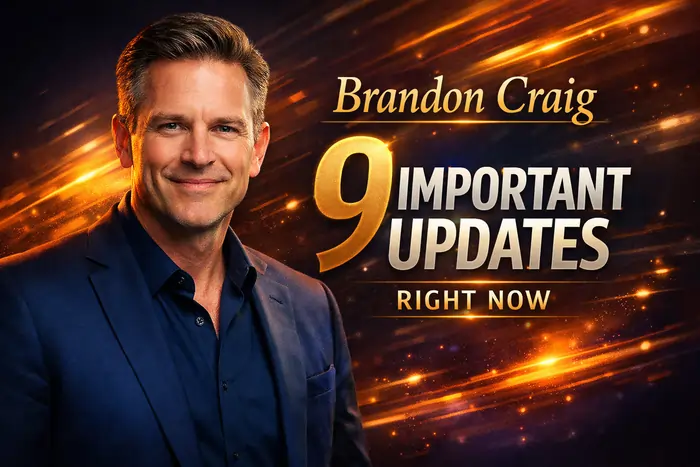
Brandon Craig, a 25-year veteran of BHP, has been appointed CEO starting July 2026, signaling continuity in the company’s strategy focused on copper, potash, and future-facing resources.
Brandon Craig is expected to prioritize organic growth through major projects like Escondida, Vicuña, and Resolution Copper rather than aggressive acquisitions. His leadership comes at a critical time as global demand for energy-transition metals rises and mining companies face increasing pressure on ESG performance, regulation, and capital discipline.
For investors and the industry, Brandon Craig’s appointment suggests a balanced approach—combining operational excellence, disciplined growth, and long-term sustainability—while positioning BHP as a key player in the global shift toward electrification and decarbonization.
1. Brandon Craig Named BHP CEO: Why It Matters Now
BHP Group has appointed Brandon Craig—its current President of the Americas—as the next Chief Executive Officer, with his term beginning on 1 July 2026. He succeeds Mike Henry, who reshaped BHP’s portfolio around “future‑facing” commodities and delivered strong shareholder returns during his tenure.
Under Henry, BHP exited petroleum, simplified its dual‑listed share structure and doubled down on copper and potash, setting a higher strategic bar for any incoming CEO. Brandon Craig’s appointment has been welcomed by investors and analysts who see continuity rather than a radical break, especially given his deep involvement in key growth projects across the Americas. For a concise market‑oriented summary of the leadership change, you can read the Reuters coverage on BHP naming Brandon Craig as CEO.
This leadership transition arrives at a pivotal moment: global miners are racing to secure copper and other energy‑transition metals just as decarbonisation, geopolitics and capital discipline collide. Craig’s track record suggests he is being brought in not to tear up the playbook, but to scale it.
2. A 25‑Year BHP Veteran With Deep Copper, Iron Ore and Americas Experience
Brandon Craig is not an outsider parachuted into the top job; he is a 25‑year BHP veteran who has climbed through the ranks by running some of the company’s most important businesses. His résumé includes leadership of the Western Australia Iron Ore division—historically BHP’s profit engine—and stewardship of its Americas portfolio, which now houses much of the group’s copper growth pipeline.
In Western Australia, Brandon Craig led a business that has consistently generated nearly half of group earnings in some periods, giving him intimate knowledge of BHP’s operational backbone and cost structure. As President of the Americas, he oversaw the Escondida mine in Chile—currently the world’s largest copper mine—and helped maintain production levels while lifting productivity and operational efficiency. Morningstar’s coverage on BHP’s new CEO appointment highlights how investors see his experience as a natural fit with BHP’s copper‑led future.
This background gives Brandon Craig a rare combination: he understands the legacy iron ore franchise that still funds BHP’s dividends, and he has hands‑on experience building the next generation of growth projects across copper and potash.
3. Organic Growth First: Vicuña JV, Escondida and Resolution Copper
One of the most important updates around Brandon Craig is his stated strategic bias toward organic growth, leveraging BHP’s existing pipeline instead of chasing mega‑mergers at any price. This is particularly visible in three flagship projects he has helped shape: the Vicuña joint venture, Escondida, and Resolution Copper.
The Vicuña joint venture, straddling the border of Argentina and Chile, is described by BHP as having the potential to become one of the world’s premier copper and gold mining districts. It sits squarely in the emerging “copper super‑belt” of the Andes, where grade, scale and jurisdictional risk all intertwine. At Escondida, Craig’s team has focused on productivity improvements and long‑term planning to maintain output from what is already the largest copper mine globally, a critical asset for the energy transition. For context on Escondida’s position in global copper markets, the International Copper Study Group and industry resources like Mining.com’s copper coverage provide useful background.
Brandon Craig has also overseen the Resolution Copper project in Arizona, a joint venture with Rio Tinto that has faced legal challenges and community opposition but recently cleared a key hurdle via a federal land exchange. If developed, Resolution could become one of the largest underground copper mines in North America, making the U.S. more self‑reliant in a metal essential for electric vehicles, power grids and data centers. The U.S. Geological Survey and project documentation on Resolution Copper’s official website outline why this deposit is strategically significant for American industry.
By prioritising these projects, Brandon Craig is signaling that BHP’s next era of growth will be built as much through engineering and execution as through M&A headlines.
4. A Quiet But Charismatic Operator Focused on Relationships and Geopolitics
Biographical reporting on Brandon Craig paints a picture of a relatively low‑key but charismatic leader who values relationships with governments, customers and local communities. Born in South Africa and later a naturalised Australian, he holds a mechanical engineering degree and a master’s in business leadership, reflecting both technical and managerial training.
Colleagues describe him as engaging and grounded, with personal interests like fishing and a fondness for the band Metallica—small details that underscore his relatability despite leading a global giant. More importantly, he frequently emphasises the importance of forging “really close relationships” across the board, particularly in iron ore markets where ties with customers and governments can shape contract terms, expansion approvals and long‑term security of supply. Global Banking & Finance’s profile on BHP’s new CEO strategy highlights this relational approach as central to his leadership.
In an era where resource nationalism, ESG expectations and community consent are becoming decisive project factors, Brandon Craig’s relationship‑driven style may be one of BHP’s most valuable intangible assets.
5. Compensation, Incentives and Alignment With Shareholders
Another important update is the structure of Brandon Craig’s CEO compensation, which reveals how BHP’s board wants him to think about risk, growth and shareholder value. According to regulatory filings, his base salary will be about 1.9 million US dollars per year, plus a 10% pension contribution.
On top of that, he is eligible for a Cash and Deferred Plan with a target bonus equal to 240% of base salary and a maximum of 360%, linking short‑term incentives to operational and financial metrics. Long‑term incentives, granted via performance rights, are set at 200% of base salary annually, vesting over five years and subject to performance conditions, with an expectation that he holds shares worth five times his base salary and maintains a post‑retirement holding. You can see further details in the SEC filing on BHP’s CEO appointment.
This package is designed to tie Brandon Craig’s personal wealth to BHP’s long‑term total shareholder return rather than just short‑term commodity price swings. It also signals that the board wants a disciplined, capital‑efficient approach to growth, echoing investor demands for returns and buybacks alongside decarbonisation and expansion.
6. Strategic Context: Copper Race, Potash Bets and an M&A‑Obsessed Industry
Brandon Craig inherits an industry that is both capital‑intensive and fiercely competitive, especially in copper. Global miners from Rio Tinto to Anglo American and Freeport‑McMoRan are scrambling to secure long‑life copper resources, as electrification and digitalisation push long‑term demand higher. BHP itself has made multiple attempts to acquire Anglo American in recent years, trying to combine their copper portfolios into an industry powerhouse.
While those efforts have so far failed, they underline how central copper is to BHP’s strategy and how challenging it is to grow purely through acquisitions in a world of high valuations and political scrutiny. Craig has openly acknowledged that M&A is still on the table, but insists that any deal would need to be “incredibly compelling” to compete with BHP’s internal pipeline of options. For broader context on the global copper race and related deals, S&P Global’s analysis of the copper supply gap is a useful resource.
On top of copper, BHP is investing heavily in potash, with a major new mine in Canada scheduled to start operations around 2027, adding exposure to agricultural demand and food‑security themes. This diversification supports BHP’s positioning as a “future‑facing” miner straddling clean energy, infrastructure and global food systems.
Brandon Craig’s challenge is to steer BHP through this M&A‑obsessed landscape without overpaying or diluting returns, while still securing enough resource optionality to remain relevant in a net‑zero world.
7. Operational Excellence Over “Empire‑Building” Deals
One of the clearest signals from Craig’s early comments is his emphasis on operational excellence rather than headline‑grabbing acquisitions. He has framed the coming era as being about “taking that endowment and bringing it to life,” referring to BHP’s existing project pipeline and asset base.
This implies a focus on:
- Maximising throughput and uptime at existing Tier‑1 assets like Escondida and the WA iron ore operations.
- Carefully phasing capex at projects like Vicuña and Canadian potash to avoid cost blowouts.
- Using technology, automation and data to incrementally improve productivity and safety.
Industry observers note that this “evolutionary rather than transformational” stance may reassure investors who fear value‑destroying mega‑deals. Global Banking & Finance describes Craig’s strategy as one that emphasises strengthening global ties, managing supply chain and geopolitical risks, and focusing on disciplined growth. For a primer on why operational discipline is so critical in mining, resources like McKinsey’s analysis on mining productivity are informative.
The risk, of course, is that in a world of fast‑moving strategic pivots, a cautious approach could leave BHP outflanked if competitors secure scarce resources first. Craig will need to walk a fine line between prudence and boldness.
8. Stakeholder Expectations: ESG, Decarbonisation and Community Consent
Craig also steps into a role where social licence and ESG performance are just as important as tonnage and earnings. BHP’s operations span water‑stressed regions, Indigenous lands and carbon‑intensive supply chains, putting it under scrutiny from regulators, communities and investors. The collapse of tailings dams, climate‑related lawsuits and community protests across the sector have raised the bar for what “responsible mining” looks like.
BHP has already committed to ambitious emissions reductions and climate‑alignment goals, including scope 1 and 2 cuts and engagement with customers on scope 3 emissions in steel and other value chains. Under Craig, investors will expect continued progress on:
- Decarbonising operations via renewable energy, electrified fleets and process innovation.
- Strengthening tailings, water and biodiversity management.
- Engaging with Indigenous and local communities as genuine partners rather than afterthoughts.
Frameworks like the International Council on Mining and Metals’ ESG principles and the Global Reporting Initiative’s mining standards provide benchmarks for how companies like BHP are judged. Craig’s history of relationship‑building suggests he understands that ESG is not a side project but a core risk‑management and value‑creation lever, though he will be tested quickly by real‑world events.
9. What Brandon Craig’s Appointment Means for Investors and the Industry
For investors, the appointment of Brandon Craig marks both continuity and subtle change. Continuity, because he is widely seen as a custodian of the strategic path charted by Mike Henry: focus on future‑facing commodities, disciplined capital allocation and strong returns. Change, because his operational background and Americas focus may tilt BHP further toward copper, potash and the western hemisphere at a time when Asia and China dynamics are evolving.
Market reactions so far have been modestly positive, with BHP’s share price ticking higher on the announcement, reflecting confidence in his ability to deliver growth without sacrificing discipline. Commentators note that his combination of iron ore, copper and Americas experience gives him a unique vantage point on supply, demand and geopolitical risk across the commodities that will power electrification and infrastructure for decades. For a real‑time investor‑focused view, MarketWatch’s report on BHP naming Craig as CEO summarises market sentiment.
Across the industry, his appointment underscores a broader trend: boards are increasingly favouring leaders with deep operational and regional expertise in critical growth markets over pure dealmakers. As competition for copper and other strategic resources intensifies, Brandon Craig’s decisions will help shape not just BHP’s trajectory, but also how the mining sector balances growth, risk, ESG and returns in a rapidly changing world.
Major leadership transitions can feel like a soft reboot of a franchise—familiar, but suddenly headed in a new direction. For a pop‑culture take on how sweeping resets work, check out 9 Surprising Changes in Spider‑Man: Brand New Day on Real CEO Stories.