

NAPLAN 2026 is just around the corner, and it’s bringing together all the recent changes in dates, format, and reporting that parents and students have been hearing about over the last few years. This guide walks you through what NAPLAN is, when it happens in 2026, how the online tests work, what the new proficiency levels mean, and how families can prepare without unnecessary stress, with trusted external resources linked throughout.
What is NAPLAN in 2026?
NAPLAN (National Assessment Program – Literacy and Numeracy) is a nationwide series of tests sat by students in Years 3, 5, 7 and 9 across Australia. It assesses essential skills in reading, writing, conventions of language (spelling, grammar and punctuation) and numeracy, providing a snapshot of how students are progressing against national standards.
National Assessment Program – Literacy and Numeracy is coordinated by the Australian Curriculum, Assessment and Reporting Authority (ACARA), which publishes official information and updates for parents, carers, and schools. You can always find the most authoritative information on the NAPLAN section of the national assessment site and ACARA updates.
To see the official parent brochure for this cycle, download the NAPLAN 2026 information for parents and carers via the national assessment site. For a state‑based overview, the NSW Government’s NAPLAN information for parents and carers page gives a clear explanation that’s relevant across Australia, not just in NSW.
NAPLAN 2026 dates and test window
In 2026, National Assessment Program – Literacy and Numeracy will run during a nine‑day test window in Term 1.
- The NAPLAN 2026 test window is from Wednesday 11 March to Monday 23 March 2026.
- Around 1.4 million students in Years 3, 5, 7 and 9 are expected to take part across more than 9,000 schools.
- Schools are required to schedule tests as early as possible within this window, with a strong preference to complete most testing in the first week.
State and school authorities emphasise that no school camps, excursions or major events should be booked during the test window so students can participate without clashes. Your child’s school will confirm the exact test dates and times they have chosen, usually via a note home, email or school app.
For detailed key dates and future years, including how NAPLAN aligns with Ramadan and other calendar issues, check the official NAPLAN key dates page. Families in NSW can also refer to NAPLAN key dates – NSW Government for a state‑specific calendar.
Which year levels sit NAPLAN and what tests are included?
National Assessment Program – Literacy and Numeracy is designed for all students in Years 3, 5, 7 and 9 enrolled in Australian schools, regardless of school sector (government, Catholic, independent, selective, or alternative schools).
Students sit four tests:
- Writing
- Reading
- Conventions of language (spelling, grammar and punctuation)
- Numeracy
According to NAPLAN information for parents and carers, all four of these assessments are compulsory unless a parent or carer has requested an exemption, withdrawal, or adjustment for their child based on individual needs. ACARA supports inclusive testing with accessibility options and adjustments for students with disability so that as many students as possible can participate meaningfully.
A useful school example of how this works in practice is the Forest Crescent PS NAPLAN 2026 Parent Info & Schedule, which outlines how one school schedules tests and communicates with families.
Test format in 2026: mostly online
Since 2022, National Assessment Program – Literacy and Numeracy has been delivered primarily online, with the important exception of Year 3 writing, which remains paper‑based. The move to online testing allows for adaptive assessment and quicker processing of results.
Key features of the 2026 test format include:
- Years 5, 7 and 9 complete all NAPLAN tests online, including writing.
- Year 3 students complete reading, conventions of language and numeracy online, but writing is done using traditional paper booklets.
- Tests are adaptive, which means the difficulty of questions adjusts based on how students are performing as they move through the test.
- Each student gets a slightly different mix of questions, tailored to their ability level, which gives a more precise picture of their skills.
The KIS Academics overview, Everything You Need to Know about NAPLAN 2026, provides a simple explanation of how online adaptive testing works and what it feels like from a student’s perspective. Many schools also use the public demonstration site linked from the national assessment site to help students practise logging in and navigating the online tools.
NAPLAN 2026 test schedule: what happens across the window
ACARA sets national rules for the order of tests and how they should be scheduled within the nine‑day window. Schools then design their own timetable that follows these rules but fits local needs.
Common features of the schedule include:
- Writing must be completed first, usually on the first day of testing (11 March) for all year levels.
- Remaining tests – reading, conventions of language, and numeracy – are scheduled over the next few days, prioritising mornings when students are typically fresher.
- Schools use the second week mainly for catch‑up sessions for students who were absent during their original test time.
The NAPLAN 2026 Test Schedule – What to Expect During Test Week guide gives a clear breakdown of how a typical test week looks, including durations and suggested daily structure. Another parent‑friendly overview is BrainTree’s NAPLAN 2026: Dates, Format, Results & Parent Guide, which summarises key timing details.
Changes to NAPLAN reporting: new proficiency levels
One of the biggest changes in recent years is how NAPLAN results are reported to parents and schools. From 2023 onwards, the old 10‑band structure and “national minimum standard” have been replaced by four proficiency levels for each year level.
According to ACARA’s media release on new proficiency standards for NAPLAN, results are now described using these categories:
- Exceeding
- Strong
- Developing
- Needs additional support
This new approach is intended to give parents a clearer sense of whether their child is on track, above expectations, or requires extra help, rather than focusing on band numbers and minimum cut‑offs. Commentary such as The Conversation’s article, What do the NAPLAN test changes mean for schools and students?, explains the reasoning behind these changes and what they mean in practical terms.
The Queensland Curriculum and Assessment Authority’s memo on changes to NAPLAN reporting from 2023 also highlights that the reporting scale was reset in 2023, meaning trend comparisons now start from that year. For parents, this means you should compare 2026 results to 2023–2025 data rather than older test reports if you want to see progress on the same scale.
When and how you receive NAPLAN results
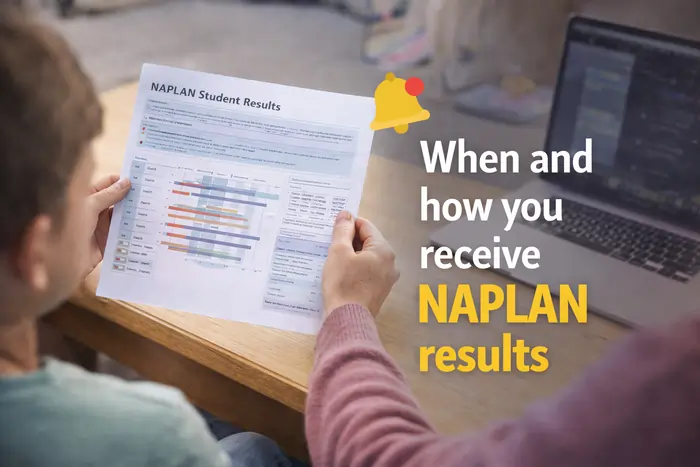
National Assessment Program – Literacy and Numeracy is held in March, but schools receive results later in the year after central marking and processing. Parents get an Individual Student Report (ISR) that summarises their child’s performance across each domain.
ACARA notes that results are generally available to schools from the start of Term 3, and parents and carers receive reports soon after through their child’s school. The ACARA Update – July 2025 outlines this timing and confirms that schools are responsible for distributing ISRs to families.
Your child’s report will:
- Show their achievement in each test (reading, writing, conventions of language, numeracy).
- Place them in one of the four proficiency levels.
- Provide a short description of what students in that level typically know and can do.
Parents are encouraged to discuss the ISR with their child’s teacher, who can combine NAPLAN results with classroom assessments to build a more complete picture of strengths and areas for improvement.
Why NAPLAN matters (and what it doesn’t do)
National Assessment Program – Literacy and Numeracy is a diagnostic tool, not a pass‑or‑fail exam. It provides information to:
- Help parents see how their child is tracking against national literacy and numeracy expectations.
- Support teachers and schools in identifying trends and planning targeted teaching or interventions.
- Inform system‑level decisions about curriculum and educational policy.
However, National Assessment Program – Literacy and Numeracy does not replace the ongoing assessments teachers conduct throughout the year, nor does it measure every aspect of learning such as creativity, collaboration, resilience, or subject‑specific knowledge in areas like science or the arts. Articles like What do the NAPLAN test changes mean for schools and students? stress that results should be interpreted as one piece of evidence, not the whole story.
How schools help students prepare
Most schools integrate NAPLAN preparation into normal teaching rather than treating it as a separate subject. Teachers focus on building core literacy and numeracy skills over time, then ensure students are familiar with the test format and online platform in the weeks before NAPLAN.
Typical school‑based preparation includes:
- Short practice sessions using the public demonstration site linked from the NAPLAN website to get used to the online tools and question styles.
- Guidance on time management and reading instructions carefully.
- Reassurance that NAPLAN is simply another chance to show what students have learned, not something to be afraid of.
The Forest Crescent PS NAPLAN 2026 Parent Info & Schedule shows how schools may run practice sessions in class and simulate test conditions without recording results. ACARA specifically notes that it does not endorse commercial NAPLAN coaching products and that heavy drilling is unnecessary and not recommended.
How parents can support their child for NAPLAN 2026
Parents play a key role in shaping how children feel about National Assessment Program – Literacy and Numeracy. The aim is to support and encourage them, not to create extra pressure.
Helpful ways to support your child include:
- Keep it in perspective: Explain that NAPLAN is just one snapshot of their skills on one set of days, not a judgment of their overall worth or intelligence.
- Maintain healthy routines: Ensure good sleep, regular breakfast, and punctual arrival at school, especially during the test window from 11–23 March 2026.
- Talk positively: Emphasise effort over scores, and remind them that it is okay to find some questions challenging.
- Stay informed: Read official resources like the NAPLAN 2026 parent brochure and state pages such as NAPLAN information for parents and carers so you know what to expect.
Avoid turning NAPLAN into a high‑stakes event at home. As education experts note in What do the NAPLAN test changes mean for schools and students?, parental anxiety can easily transfer to children and undermine performance.
To help your child study smarter and build strong learning habits in general, you might also explore future‑focused resources like Education Perfect 2026: The Vital New AI Learning Roadmap, which discusses how AI‑powered learning tools can personalise practice, give rich feedback, and make everyday study more efficient.
Using AI and digital tools to support NAPLAN‑level skills
While you should not “cram” for National Assessment Program – Literacy and Numeracy using test‑style booklets, using high‑quality digital learning platforms throughout the year can strengthen the literacy and numeracy foundations that NAPLAN measures. AI‑enhanced tools can adapt to a student’s level, highlight gaps, and provide extra practice where needed, similar in spirit to NAPLAN’s adaptive test design.
The article Education Perfect 2026: The Vital New AI Learning Roadmap explores how platforms like Education Perfect are building data‑driven learning journeys, integrating analytics and AI to support mastery over time. When used sensibly, these tools can complement classroom learning and help students build confidence in reading, writing and numeracy well before the NAPLAN window.
Families interested in how AI fits into education more broadly can also look at Education Perfect’s own learning platform and related explainers about their AI tools. The key is to treat technology as a long‑term support for understanding, not as a short‑term NAPLAN “hack”.