

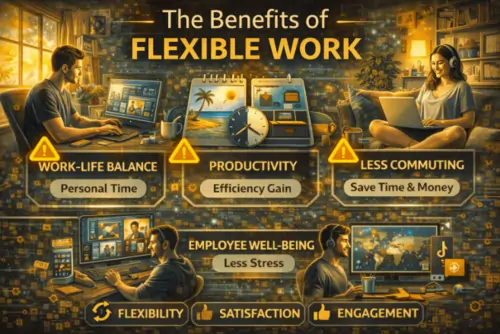
The benefits of flexible work are becoming clearer every year. In 2026, flexible work is no longer just a pandemic adjustment — it is a long-term shift in how companies operate and how employees build their careers.
Flexible work means having control over where you work, when you work, or how your work is measured. It includes remote work, hybrid work, flexible hours, compressed workweeks, and output-based setups. For Filipino workers dealing with traffic congestion, rising costs, and global job competition, the benefits of flexible work are especially meaningful.
This guide explains the benefits of flexible work for employees and employers, the Philippine context, potential challenges, and how to make it successful.
What Flexible Work Really Means
Before discussing the benefits of flexible work, it’s important to define it clearly.
Flexible work arrangements can include:
- Remote work – working from home or anywhere outside the office
- Hybrid work – combining office and remote days
- Flexible hours – choosing your start and end times
- Compressed workweek – completing full hours in fewer days (e.g., 4-day workweek)
- Output-based work – focusing on results instead of time spent
According to the International Labour Organization (ILO), flexible and remote arrangements have expanded globally, especially in digitally enabled industries, and are shaping the future of work structures. Flexible work is increasingly tied to productivity, inclusion, and work-life balance.
In short, the benefits of flexible work come from increased autonomy.
The Benefits of Flexible Work for Employees
1. Better Work-Life Balance
One of the biggest benefits of flexible work is improved work-life balance.
In the Philippines, daily commutes in Metro Manila can take two to four hours. Flexible work reduces or removes that commute. This gives employees more time for:
- Family
- Exercise
- Rest
- Side businesses
- Personal development
Instead of spending hours in traffic, workers can use that time for meaningful activities.
2. Increased Productivity
Research from institutions like Stanford has shown that remote workers can experience productivity improvements when distractions are reduced and schedules are better aligned with personal peak focus times.
The benefits of flexible work include:
- Fewer office interruptions
- Ability to work during high-energy hours
- Customized work environment
Some people are most productive early in the morning. Others perform better at night. Flexible hours allow individuals to align work with their natural rhythm.
3. Cost Savings
Another major benefit of flexible work is financial.
Employees save on:
- Transportation (fuel, Grab, MRT, parking)
- Office clothing
- Daily eating out
- Relocation costs for global roles
For Filipino workers, these savings can significantly increase take-home value without increasing salary.
4. Improved Mental Health
Long commutes and rigid schedules often increase stress.
The benefits of flexible work include:
- Reduced commute fatigue
- Greater sense of control
- Lower burnout risk when boundaries are managed well
Autonomy is strongly linked to job satisfaction. When workers feel trusted, stress decreases.
5. Access to Global Opportunities
One of the most powerful benefits of flexible work for Filipinos is access to international jobs without leaving the country.
Remote roles allow professionals to:
- Work for foreign companies
- Earn globally competitive rates
- Stay close to family
- Avoid the emotional cost of overseas relocation
For some, flexible work becomes an alternative to traditional OFW pathways.
The Benefits of Flexible Work for Employers
Flexible work is not only good for employees. Companies also experience strong advantages.
1. Access to a Wider Talent Pool
Companies are no longer limited by geography. They can hire:
- Skilled workers from different provinces
- Specialists from different countries
- Parents who prefer home-based work
This expands hiring potential and increases diversity.
2. Higher Employee Retention
When employees value flexibility, they are less likely to resign.
The benefits of flexible work for retention include:
- Higher satisfaction
- Reduced burnout
- Greater loyalty
Replacing employees is expensive. Flexibility reduces turnover costs.
3. Lower Overhead Costs
Companies save on:
- Office rent
- Utilities
- Equipment
- Maintenance
Many organizations now operate with smaller office footprints or shared spaces.
4. Results-Based Culture
Flexible work often shifts performance measurement toward output instead of hours logged.
This encourages:
- Clear KPIs
- Defined deliverables
- Accountability
The benefits of flexible work in this context include clearer performance standards.
Flexible Work in the Philippines
The benefits of flexible work are particularly relevant in the Philippines due to:
Traffic and Infrastructure
Metro Manila traffic is consistently ranked among the most congested globally. Remote work removes this burden.
Strong BPO and Freelance Industry
The Philippines has a large BPO sector and growing freelance community. Many workers are already used to digital collaboration.
Digital Nomad Growth
More Filipino professionals are working remotely while living in provinces with lower living costs.
Internet Gaps
However, challenges remain:
- Uneven internet connectivity in rural areas
- Power interruptions
- Shared devices in households
For flexible work to scale nationally, infrastructure improvements are essential.
The Challenges of Flexible Work
Despite the benefits of flexible work, it is not perfect.
Communication Gaps
Without clear systems, miscommunication increases.
Isolation
Some workers feel lonely without face-to-face interaction.
Blurred Boundaries
Working from home can lead to:
- Overworking
- Difficulty “switching off”
- Constant availability expectations
Time Zone Issues
Global remote workers may work odd hours.
Understanding these risks helps maximize the benefits of flexible work while minimizing downsides.
How to Make Flexible Work Successful
For Employees
To fully experience the benefits of flexible work:
- Set clear work hours
- Create a dedicated workspace
- Communicate proactively
- Use productivity tools
- Take real breaks
Discipline is essential. Flexibility without structure can lead to burnout.
For Employers
Companies should:
- Define clear KPIs
- Train managers in remote leadership
- Encourage regular check-ins
- Provide mental health support
- Invest in collaboration tools
Trust-based leadership is key. Micromanagement reduces the benefits of flexible work.
The Future of Flexible Work
The benefits of flexible work suggest it is not temporary.
Trends indicate:
- Hybrid models becoming standard
- Four-day workweek experiments increasing
- AI tools supporting remote collaboration
- Output-based performance replacing time-based evaluation
Employees increasingly prioritize flexibility when choosing employers. Companies that ignore this shift risk losing talent.
Is Flexible Work Here to Stay?
Evidence suggests yes.
Employee demand remains high. Companies continue offering hybrid options to stay competitive. Global hiring models are normalizing remote-first operations.
The benefits of flexible work have moved from “perk” to “expectation.”
FAQs
What is flexible work?
Flexible work allows employees control over location, schedule, or performance structure, including remote and hybrid models.
Is flexible work more productive?
Many studies suggest productivity can increase when workers have autonomy and reduced commute stress.
What are the disadvantages of flexible work?
Possible downsides include isolation, communication issues, and blurred boundaries between work and home life.
Is flexible work growing in the Philippines?
Yes. The BPO sector, freelancing industry, and remote international hiring are contributing to growth.
How can companies manage remote teams effectively?
Clear KPIs, trust-based leadership, structured communication, and strong collaboration tools are essential.