

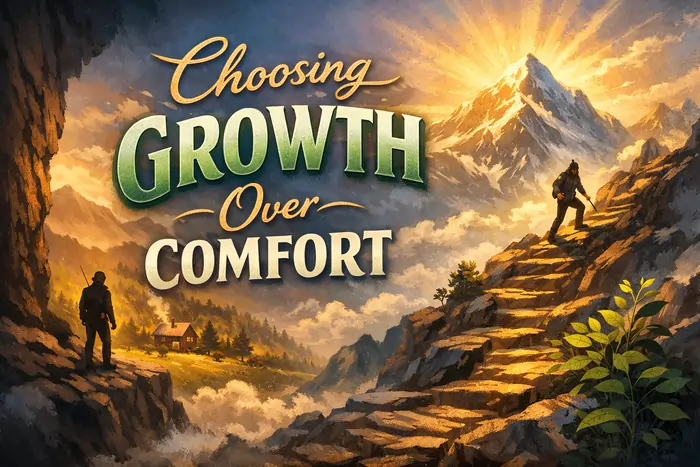
Choosing growth over comfort is one of the most powerful decisions you can make if you want a life that feels meaningful, challenging, and truly your own. It requires you to step away from the familiar, tolerate discomfort, and trust that the person you are becoming matters more than the temporary ease you are leaving behind.
Why “Choosing Growth Over Comfort” Changes Everything
Picture this: you wake up, go to the same job you’ve outgrown, talk to the same people, and follow the same routines that no longer excite you. It feels safe, predictable, and manageable—but deep down, you know you’re stuck. You might tell yourself you’re “lucky to have stability,” yet a quiet restlessness keeps whispering that you’re capable of more.
This is the tension between growth and comfort. Growth is the process of expanding your skills, mindset, and possibilities, often through challenge and uncertainty. Comfort is the state of staying where you are—emotionally, professionally, mentally—because it feels secure and familiar. Neither is inherently “good” or “bad,” but when comfort becomes your default choice, it slowly closes the door on the life you could have had.
At its core, choosing growth over comfort means deciding that long-term fulfillment matters more than short-term relief. It means being willing to feel awkward, afraid, or unprepared so you can eventually feel proud, capable, and free.
For a deeper dive into how leaving your comfort zone affects your mindset and habits, this guide on how to leave your comfort zone is a helpful resource: PositivePsychology.com.
The Comfort Zone: Safe but Stagnant
Your comfort zone is the psychological space where your activities and behaviors fit a familiar routine and pattern. You feel in control, you face minimal risk, and your stress levels are generally low. On the surface, it’s an attractive place to live—especially if you’ve gone through periods of chaos or instability.
But the cost of staying there too long is subtle:
- You stop challenging yourself, so your skills plateau.
- You avoid risks, so you miss out on meaningful opportunities.
- You protect your ego, but you slowly erode your confidence to handle new situations.
Imagine someone who has been in the same role for years. They know the systems, the people, and the expectations. It’s comfortable—yet every time they think about applying for a more challenging role, they talk themselves out of it. “What if I fail? What if I look stupid? What if I’m not ready?” Over time, that self-protection becomes self-sabotage.
Researchers and coaches often describe three zones: the comfort zone (safety and routine), the growth or stretch zone (manageable challenge), and the panic zone (overwhelming stress). Growth happens when you step out of the inner circle of comfort into that stretch zone, where things feel a bit uncomfortable but still doable.
To better understand these zones and how they impact your behavior, you can explore this article on the comfort, stretch, and panic zones: Wellness Compass.
The Growth Zone: Where Discomfort Builds You
The growth zone is where your life starts to expand. It’s where you:
- Take on new challenges.
- Learn skills you don’t yet have.
- Expose yourself to new ideas, people, and environments.
In this zone, you might feel nervous, uncertain, or exposed—but these emotional signals are not proof that something is wrong. They’re often signs that you’re stretching into unfamiliar territory. Ginny Rometty, former CEO of IBM, famously said, “Growth and comfort do not coexist,” capturing the idea that you cannot become who you want to be and stay entirely comfortable at the same time.
What makes the growth zone powerful is that it compounds. Every time you:
- Speak up in a meeting instead of staying silent.
- Take a class in a subject you know nothing about.
- Say yes to a project that scares you a little.
…you strengthen your internal belief that you can handle discomfort. Over time, behaviors that once felt intimidating become routine, and your comfort zone expands to include what used to be scary.
A useful resource that breaks down how growth happens just outside your comfort zone is this article on growth zones at work: Hamilton Locke – Growth only happens outside your comfort zone
Why We Keep Choosing Comfort (Psychology Behind It)
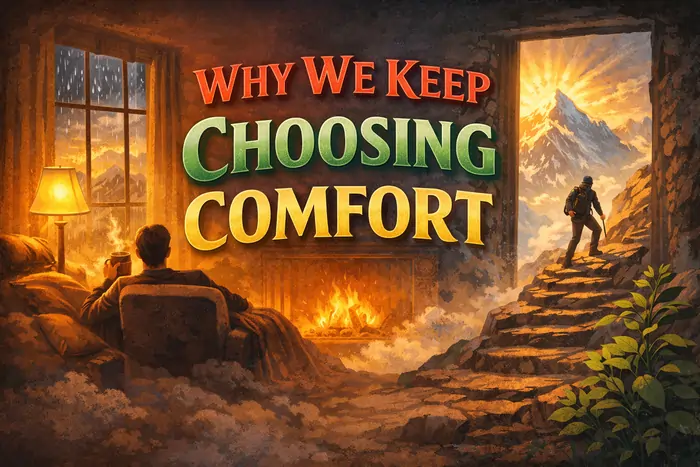
If growth is so beneficial, why do so many of us stay stuck in comfort for years? The answer lies in how our minds are wired.
First, our brains are designed to prioritize safety and predictability. Anything unfamiliar can feel like a threat, even if it’s an opportunity that could benefit us. That’s why applying for a dream job or starting a passion project can trigger the same fight-or-flight sensations you’d feel in a genuinely dangerous situation.
Second, we fear failure and judgment. We worry about what others will think if we try something and don’t immediately succeed. Protecting our self-image can seem more important than pursuing our potential. Many people choose the path that looks “safe” because they don’t want to risk embarrassment, criticism, or being seen as a beginner again.
Third, we become attached to short-term comfort. Scrolling instead of studying, staying silent instead of speaking up, choosing the familiar relationship instead of leaving an unhealthy one—these choices soothe us in the moment but compound into long-term dissatisfaction.
In other words, staying comfortable is often a way of managing anxiety, even when it costs us growth. When you recognize this pattern, you can start to see that your resistance to change is not a character flaw; it’s a protective strategy that has simply outlived its usefulness.
For more on the psychology of stepping beyond comfort, this science-backed breakdown of the comfort zone and growth mindset is worth reading: PositivePsychology.com – How to Leave your Comfort Zone.
The Mindset Shift: From Avoiding Pain to Embracing Purpose
To consistently choose growth over comfort, you need a different relationship with discomfort. Instead of asking, “How do I avoid pain?” you start asking, “What discomfort is worth enduring for the sake of who I want to become?”
One helpful distinction is between stagnation pain and growth pain:
- Stagnation pain is the frustration, boredom, and regret you feel when you stay stuck.
- Growth pain is the temporary fear, effort, and vulnerability you feel when you stretch yourself for a meaningful goal.
Both involve discomfort—but only one moves you forward. When you understand that discomfort is inevitable either way, it becomes easier to choose the kind that leads somewhere.
Purpose is the bridge that makes this possible. If you have a clear vision of the life you want—a career that challenges you, relationships that are honest and deep, a body and mind you feel proud of—then the discomfort of growth feels more like an investment than a punishment. You’re no longer enduring awkward conversations, difficult decisions, or challenging tasks “just because”; you’re doing them in service of the person you’re becoming.
For an inspiring reflection on choosing growth as a form of character building, explore this article: Choose Growth Over Comfort | Character Building.
Practical Ways to Choose Growth Daily
Choosing growth over comfort is not just about big life decisions like changing careers or moving to a new country. It’s also about the small daily choices that slowly reshape who you are. Here are practical ways to bring growth into your everyday life while naturally weaving in the ideas from the outline above.
Start Small: One Stretch Action Per Day
You don’t have to overhaul your life overnight. In fact, trying to do too much too fast can throw you into the panic zone. Instead, aim for one small “stretch” action each day—something just beyond your comfort zone but not so intense that it overwhelms you.
Examples:
- Speak up in a meeting to share an idea instead of staying quiet.
- Take a class in a subject you know nothing about but want to learn more deeply.
- Introduce yourself to someone new at an event, even if you feel shy.
- Try a new route, routine, or environment—like working from a café instead of home—to break autopilot.
These small actions build self-trust. You prove to yourself that you can feel uncomfortable and still take action, which is the essence of living in the growth zone.
If you want a structured list of ideas to nudge yourself forward, this resource with ways to leave your comfort zone is practical and actionable: GoAbroad – 10 Ways to Leave Your Comfort Zone.
Use Discomfort as a Compass
Instead of interpreting discomfort as a “stop” signal, try seeing it as a “pay attention” signal. When something scares you, ask:
- Is this aligned with my values and long-term goals?
- Am I afraid because it’s wrong for me, or because it’s new to me?
If an action is aligned with your values, supports your growth, and helps you become the person you want to be, then that discomfort is a compass pointing toward the growth zone. For instance, having a hard conversation about boundaries in a relationship is uncomfortable, but it moves you toward healthier connections.
An excellent example of reframing discomfort as progress comes from this article on stepping out of your comfort zone with practical tips: wikiHow – How to Step Out of Your Comfort Zone.
Build Systems That Support Growth
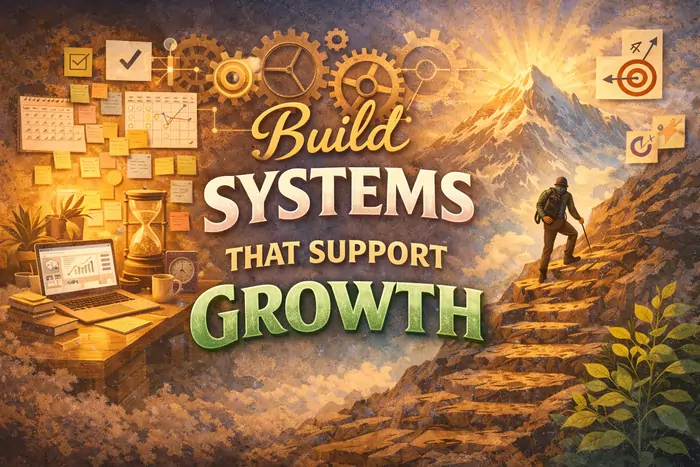
Willpower alone is unreliable. To keep choosing growth over comfort, it helps to build systems and environments that nudge you forward even on low-motivation days.
You can:
- Design your environment: Prepare your gym bag the night before, set up your workspace for deep work, or block distracting apps when you need focus.
- Create accountability: Share your goals with a friend, mentor, or community that values growth and will encourage you to stretch.
- Schedule reflection: Take a few minutes each week to review where you chose comfort and where you chose growth, then adjust.
These systems keep you in the growth zone more consistently, without pushing you into panic. For more specific ideas, this list of tested ways to get out of your comfort zone offers practical starting points: Dr. Rob Bell – 11 tested ways to get out of your comfort zone.
Navigating the Panic Zone (Not All Discomfort Is Good)
It’s important to remember that not all discomfort is beneficial. Beyond the growth or stretch zone lies the panic zone, where the challenge is so high that you feel overwhelmed, unsafe, or unable to cope. In this state, stress is too intense for real learning or performance, and you’re more likely to shut down than grow.
Signs you might be in the panic zone:
- You feel constant dread or anxiety about a task.
- Your sleep, health, or relationships are suffering badly.
- You feel paralyzed instead of challenged.
For example, quitting your job overnight with no plan, no savings, and no support network may be less of a “growth move” and more of a panic-inducing leap. A more sustainable approach would be to take gradual but meaningful steps toward your next chapter—like upskilling, saving money, or building a side project—so your comfort zone expands in stages.
Experts recommend pacing your growth: stay in the stretch zone where tasks are challenging but not overwhelming, and retreat temporarily to your comfort zone when you need to rest and consolidate. That balance prevents burnout and supports long-term growth.
To understand these three zones in more depth, this resource breaks them down clearly: Forest Healing – The Comfort Zone, Stretch Zone, and Panic Zone.
Your Next Brave Choice
Every meaningful change in your life will, at some point, ask you to choose growth over comfort. Whether it’s starting the project you’ve been postponing, having the conversation you’ve been avoiding, or finally admitting what you really want, the choice will rarely feel convenient. It will almost always involve uncertainty, effort, and the possibility of failure.
But remember this: staying comfortable has a cost too. Over time, choosing comfort over growth can cost you your dreams, your potential, and your sense of who you might have become. Growth, on the other hand, will cost you your excuses, your familiar limitations, and the smaller version of yourself you’ve outgrown.
As you reflect on your own life, you might ask yourself:
- Where am I choosing comfort even though it no longer serves me?
- What is one small stretch action I can take today that aligns with my future self?
- If I imagined my life five years from now, what would I regret not starting today?
You don’t need to transform everything overnight. You only need to make one brave choice at a time—one honest conversation, one application sent, one boundary set, one habit begun.
Comfort protects who you are today; growth reveals who you can become. When in doubt, choose the path that expands you.