

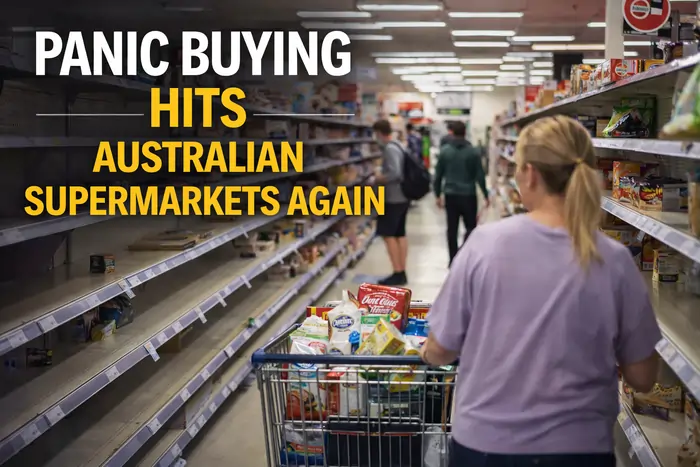
Supermarket Panic Buying has returned to Australia in 2026, with empty shelves, product limits, and long queues reappearing as supply shocks, war‑driven fuel issues, and extreme weather hit the food and fuel system. This guide explains what is happening, why it keeps happening, what items are most affected, and how families can respond calmly using reliable information and smart shopping strategies.
What is happening in Australian supermarkets in 2026?
Over early March 2026, shoppers across parts of Australia have reported bare shelves and sudden product limits at major chains like Coles and Woolworths, particularly in the Top End and regional areas. In Darwin and parts of the Northern Territory, severe flooding and wet‑season damage have disrupted freight routes, while a wartime fuel shock has pushed up costs and caused queues at many service stations.
A recent report notes that supermarkets in affected regions have seen “chaotic scenes” reminiscent of early COVID, with staples like bottled water, UHT milk, infant formula, and some meats sold out or heavily rationed. Supply chain expert David Leaney told Yahoo News that while deliveries of frozen, canned, and locally sourced fresh items are resuming, “certain items tend to be more susceptible to panic buying,” and hoarding behaviour is amplifying the disruption. At the same time, farmers and logistics providers are warning of fresh food price pain as war‑related fuel shortages push up the cost of moving goods to stores.
For a current snapshot of how floods, fuel and war are combining to pressure food prices, the analysis “double whammy” on food prices and wartime fuel shock is a useful context piece.
Why Supermarket Panic Buying is happening again
The underlying triggers in 2026 are different in detail from the early pandemic, but the pattern is familiar: a real disruption starts the problem, public anxiety amplifies it, and panic buying makes temporary shortages worse.
Current pressure points include:
- Flooding and wet‑season damage blocking key roads into the Top End and parts of northern Australia.
- A Middle East conflict driving up global fuel prices and creating local diesel shortages, particularly for regional farmers and freight operators.
- Social media posts and news images of empty shelves triggering fear of missing out (FOMO) on essentials, leading shoppers to buy more “just in case.”
Supermarket shortages during COVID followed a similar pattern. An ABC News report from 2022 on bare supermarket shelves in Queensland noted that Woolworths blamed panic buying while Coles pointed to supply chain issues, but in reality both factors were feeding each other. The ACCC also commented at the time that the shortages were “essentially due to unnecessary panic buying, and the logistics challenge this presents, rather than an underlying supply problem.”
The Conversation’s explainer on why current supermarket shortages can feel “different this time” emphasises that when labour shortages, weather and logistics issues combine, they create a fragile system where even small bursts of panic buying can empty shelves fast.
The psychology of Supermarket Panic Buying
Research into COVID‑era shopping behaviour shows that panic buying is driven by a mix of fear, loss of control, and social cues, not just rational stock‑up planning.
Key psychological drivers identified in recent studies include:
- Fear of scarcity: seeing images of empty shelves or hearing rumours of “running out” triggers a strong urge to secure supplies, even if official sources say there is enough.
- Need for control: in situations where global conflict, floods, or pandemics feel uncontrollable, filling the pantry gives people a sense of taking action.
- Social contagion: when others are loading trolleys with toilet paper, fuel or rice, it feels risky not to join in.
A 2023 study on the psychology of panic buying found that traits like fear of missing out (FOMO), psychological entitlement and status consumption were associated with greater stock‑up behaviour, especially for non‑perishables and cleaning products. Earlier commentary from the University of Queensland also noted that hoarding often reflects attempts to manage anxiety, not objective need.
You can read more about this in “What drives people to panic buy during times of crisis” on The Conversation and the article “Is it time to stock up? Understanding panic buying during the COVID‑19 pandemic,” which both unpack how personality, media use and perceived norms shape behaviour.
What items are being panic bought in 2026?
Based on supply chain analysis and supermarket statements, the items most likely to be hoarded in the current wave include:
- Shelf‑stable essentials: UHT milk, canned goods, rice, pasta, flour, sugar, long‑life juices.
- Infant and special‑diet foods: infant formula, certain medical nutrition products.
- Water and drinks: bottled water and large multi‑packs, especially where tap water quality is temporarily affected by floods.
- Cleaning and hygiene: toilet paper, tissues, hand sanitiser, disinfectants, cleaning sprays.
- Fuel: petrol and diesel in regional areas, with motorists warned not to top up unnecessarily.
In the current Top End crisis, Woolworths has introduced product limits on certain items like bottled water, while both Coles and Woolworths are rationing key lines where deliveries are constrained. During COVID, the ACCC temporarily allowed the big supermarket chains to coordinate logistics and supply so basics could be distributed more fairly, underscoring how seriously regulators take panic‑driven demand spikes.
For a detailed case study of how COVID changed supermarket operations, the analysis “Did COVID affect Coles and Woolworths in the short term?” traces how early‑2020 panic buying forced the temporary suspension of home delivery and click‑and‑collect as online demand surged and store stock ran out.
How supermarkets and regulators are responding
Supermarkets, regulators and governments have learned some lessons from the first big waves of panic buying and are trying to act faster in 2026.
Common responses include:
- Rapid purchase limits on high‑demand items such as bottled water, toilet paper, baby formula and fuel.
- Clearer messaging from supermarkets urging customers to “buy only what you need,” especially in flood‑affected regions.
- Coordination between major supermarket chains and suppliers to share data and logistics capacity, as seen when the ACCC authorised cooperation to “ensure the supply and fair and equitable distribution” of groceries in 2020.
- Appeals from fuel and food industry groups asking motorists not to panic buy petrol to avoid worsening shortages and price spikes.
The ACCC’s media release “Supermarkets to work together to ensure grocery supply” is still a key reference showing how regulators may again step in if panic buying threatens vulnerable communities’ access to food. ABC News’ coverage of past shortages also highlights how chains communicate with customers about what is really driving gaps on shelves.
How this wave is different from early COVID panic buying
There are clear similarities with 2020‑22, but experts say 2026 shortages are being driven by a different mix of factors.
Key differences:
- Cause of disruption: COVID shortages were fuelled by lockdowns, staff illness, and sudden online demand; 2026 shortages are more about flooded roads, fuel shocks and global conflict.
- Labour vs logistics: earlier waves saw supermarket warehouses and factories hamstrung by labour shortages, while 2026 is more about physically getting trucks through flooded regions and securing affordable fuel.
- System readiness: supermarkets now have better demand‑tracking systems, stronger online channels, and more experience in applying product limits quickly.
The Conversation’s article “Supermarket shortages are different this time: how to respond and avoid panic” sets out why food supply is still fundamentally secure, even if some products temporarily disappear, and advises shoppers to stay flexible about brands and pack sizes.
Practical tips for households: how to respond without panicking
Families can’t control floods or wars, but they can control how they respond in the aisles. Drawing on expert advice and previous crises, these strategies help protect your household while keeping shelves fair for everyone.
- Trust official sources over rumours
Before rushing out to “stock up,” check reliable news and government updates about supply issues in your region. ABC News and SBS usually carry verified information from supermarkets, farmers and regulators. - Build a modest buffer, not a bunker
Experts say it is sensible to keep a small reserve of shelf‑stable staples (like rice, canned goods, UHT milk) that covers a week or two, especially in flood‑prone areas, but there is no need to fill the garage. The panic‑buying research suggests that going well beyond your normal consumption usually reflects anxiety rather than genuine need. - Be flexible with brands and products
When favourite brands or sizes are missing, choose alternatives rather than visiting multiple stores and adding more stress to the system. The Conversation’s guide to supermarket shortages notes that swapping brands or pack sizes can dramatically reduce the impact of temporary gaps. - Respect purchase limits
Limits on items like bottled water, toilet paper and formula are designed to keep stock available for everyone, especially vulnerable groups. Ignoring them not only undermines fairness but can trigger further restrictions or enforcement. - Plan fuel sensibly
If you live in a region facing fuel shortages, fill up when you are genuinely low, not every time you pass a servo. Farmers and freight operators warn that panic buying at the bowser can do more damage than the initial supply shock. - Look after mental health
Studies on panic buying show that stocking up is often a way of coping with anxiety and uncertainty. Talk openly in your household about fears, use trusted information, and remember that Australia’s food system is resilient – as supermarket CEOs and the ACCC have repeatedly stressed. - Use bulk shopping strategically: if you have a warehouse membership, plan calm, regular top‑up trips rather than last‑minute rushes. Guides like Costco Australia: Best Deals and Smart Shopping Guide 2026 can help you spot genuine value and avoid over‑buying things your family will not actually use.
For a deeper look at the psychology and how to avoid being swept up in it, the article “What the health: Why do people panic buy and hoard items?” from the University of Queensland is a helpful read.
Impact on prices and the broader economy
Panic buying doesn’t just clear shelves; it can distort prices, put pressure on smaller retailers, and strain already thin household budgets.
- Farmers warn that wartime fuel shocks and higher fertiliser and transport costs could push food prices higher later in 2026, even without panic buying.
- When customers hoard key items, supermarkets may source emergency supply at higher cost or from further away, which can feed into retail prices.
- Smaller independent stores can be hit particularly hard if wholesalers ration stock or if major chains buy heavily to protect their own shelves.
Articles such as “Dire warning for food prices with wartime fuel shock” and “Double whammy: food prices warning over war fuel shock” detail how conflict‑driven energy spikes cascade through the food system. Meanwhile, SBS and ABC coverage of regional fuel panic buying shows how quickly queues and dry pumps can appear when rumours spread.
Lessons from previous waves of Supermarket Panic Buying
Looking back at COVID and 2022 floods, several lessons stand out that apply directly to 2026:
- Supply capacity is high: as Woolworths’ CEO said in 2020, the industry is “supply‑constrained, not demand‑constrained” when panic sets in – the system can feed everyone if buying is steady.
- Product limits work: temporary limits on items like toilet paper and tissues helped normalise shelves again after initial “toilet paper wars.”
- Online and local shopping adapt: while online orders initially collapsed under demand, supermarkets improved e‑commerce and click‑and‑collect; shoppers also rediscovered local IGA and independent stores when big malls were empty.
Bowen Consulting’s review of COVID’s impact on Coles and Woolworths shows how quickly consumer behaviour shifts and how supermarkets are now better placed to handle sudden spikes in 2026 than they were in early 2020. ABC’s and The Conversation’s pieces stress the same takeaway: the system recovers if people resist hoarding and allow supply chains to catch up.