

Overview Summary (Leadership + Real Execution)
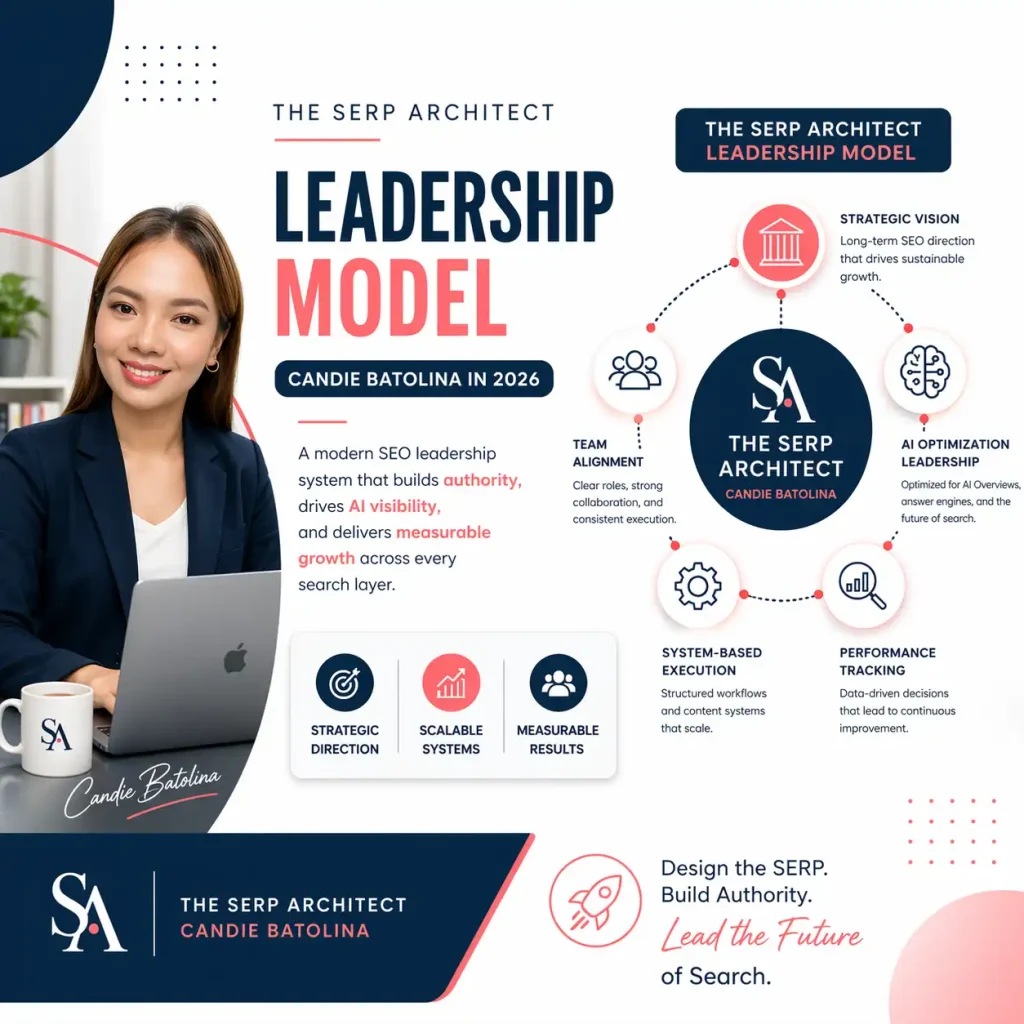
The SERP Architect Leadership Model, which I developed, is not just an SEO framework—it is a real-world leadership system I apply across multi-site projects, team collaboration, and scalable growth execution.
In practice, this reflects how I operate as a Team Leader in active digital projects, guiding:
- SEO teams for content production and optimization
- Web developers for technical execution
- Affiliate and social teams for traffic and conversion
- Multi-site ecosystems targeting different markets (AU, PH, global)
Through this approach, both clients and teams benefit because it delivers:
- Clear Direction Across Teams – Everyone works toward one structured SEO system
- Execution-Based Leadership – Not theory, but real weekly deliverables and results
- Scalable Growth Systems – Multi-site authority building (casino, SEO, content hubs)
- AI-Driven Visibility Strategy – Prepared for modern search engines and AI platforms
- Measurable Outcomes – Impressions, clicks, rankings, and conversions tracked
As a result, I operate as The SERP Architect, not only designing strategy but also leading execution across real projects and teams.
Table of Contents
7 Leadership Principles Applied in Real Projects
These are not theoretical—they reflect how I execute and lead across real projects.
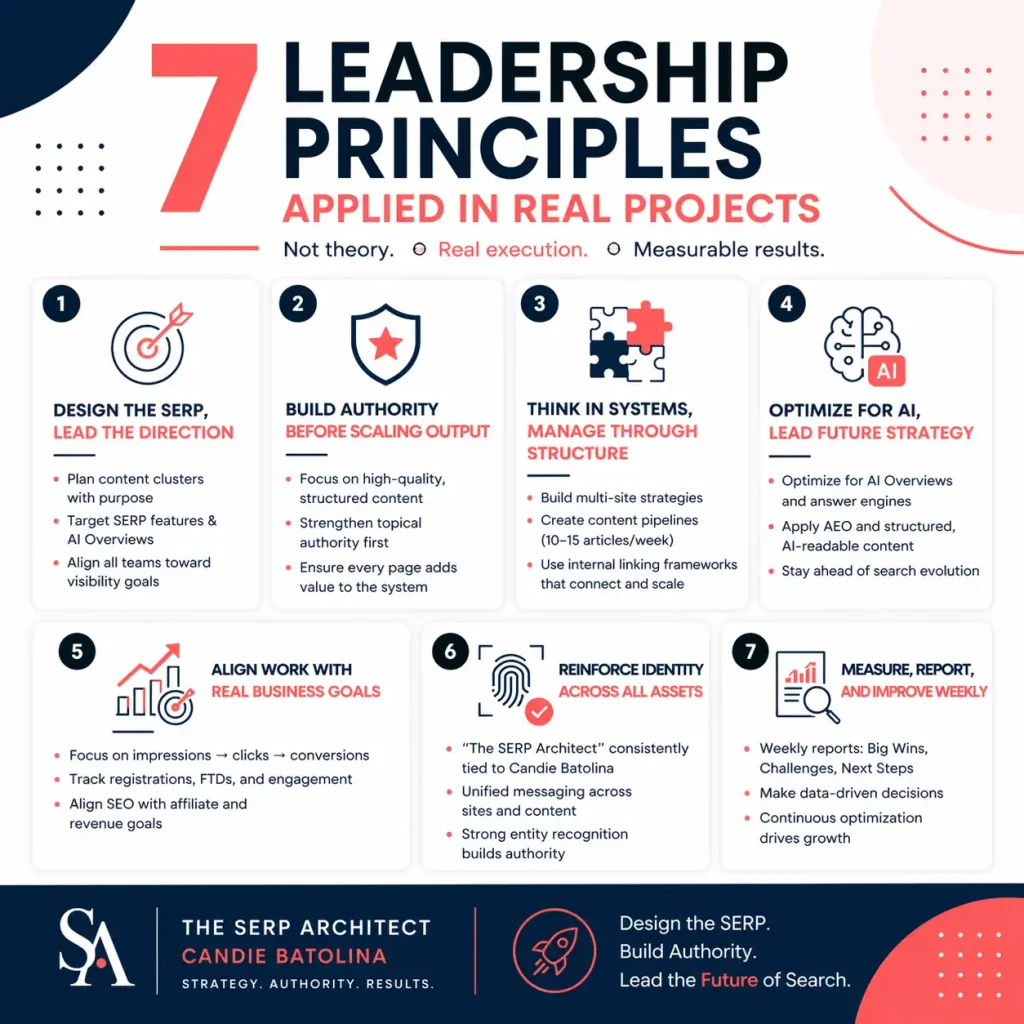
1. Design the SERP, Lead the Direction
I do not wait for rankings to happen. Instead, I define direction from the start.
In real execution, this means:
- Planning which SERP features to target (organic, snippets, AI Overviews)
- Mapping content clusters before publishing
- Aligning all teams toward one visibility goal
As a result, the project does not compete randomly. It moves with clear direction and purpose.
2. Build Authority Before Scaling Output
Publishing more content without authority often leads to weak performance. Therefore, I ensure authority comes first.
In practice:
- I focus on high-quality, structured content
- I strengthen topical relevance before increasing volume
- I ensure each page supports the overall system
Because of this, when scaling begins, content performs better and builds long-term trust.
3. Think in Systems, Manage Through Structure
As a Team Leader, I manage systems, not just tasks.
In my projects, this is applied through:
- Multi-site ecosystem planning (AU, PH, SEO hubs)
- Content pipelines with clear output targets
- Internal linking frameworks that connect all pages
This approach ensures that work is not scattered. Instead, everything contributes to a scalable growth system.
4. Optimize for AI, Lead Future Strategy
Leadership requires anticipating where search is going, and I build strategies around that.
Execution includes:
- Structuring content for AI Overviews and answer engines
- Applying AEO (Answer Engine Optimization)
- Writing clear, extractable, and AI-readable content
As a result, the strategy is not limited to today’s rankings. It is built for future search environments.
5. Align Work with Real Business Goals
Traffic alone does not define success. Every action must connect to business outcomes, and I ensure this alignment.
In reporting and execution:
- I track impressions → clicks → conversions
- I focus on high-intent keywords
- I align SEO with affiliate and revenue goals
Because of this, SEO becomes a growth driver, not just a visibility metric.
6. Reinforce Identity Across All Assets
Consistency builds recognition, and recognition builds authority. I make sure this is maintained across all assets.
In my ecosystem:
- “The SERP Architect” is consistently tied to Candie Batolina
- Messaging is aligned across all sites and content
- Internal linking strengthens entity signals
Over time, this creates a strong association in search engines:
Candie Batolina = The SERP Architect
7. Measure, Report, and Improve Weekly
Leadership is reflected in consistent improvement, and I embed this into every workflow.
My process shows this through:
- Weekly reporting (Big Wins, Challenges, Next Steps)
- Data-driven decision-making
- Continuous optimization cycles
This ensures that every week contributes to progress. Instead of guessing, the project evolves based on real performance data.
Key Insight
These seven principles transform SEO into a leadership system. Instead of executing isolated tasks, I focus on:
- Direction
- Structure
- Authority
- Measurable growth
This is what defines The SERP Architect in real project execution.
Leadership in Action: The SERP Architect as a Team Leader
In my experience within the Real CEO Stories context, leadership is not defined by title, but by:
- Decision-making under uncertainty
- Aligning teams toward a shared goal
- Delivering measurable outcomes consistently
The SERP Architect model reflects exactly how I approach this.
Instead of working alone, my role extends to:
- Managing SEO workflows across multiple sites
- Coordinating publishing timelines and content scaling
- Solving indexing, ranking, and visibility challenges
- Driving continuous improvements week by week
Therefore, this is not just SEO.
It is operational leadership applied to digital growth systems.
In execution, leadership also involves collaboration with specialists across SEO and brand growth. This includes working with professionals such as Rendalyn Diaz | SEO Specialist and Brand Growth Strategist, who contribute to strengthening content performance, visibility, and overall brand authority.
How The SERP Architect Framework Translates to Leadership
The foundation remains:
👉 The SERP Architect: Candie Batolina’s SEO Strategy Framework
However, in real execution, I apply it through:
- Planning → Execution → Optimization → Reporting cycle
- Weekly task alignment across teams
- Continuous improvement based on real data
This aligns directly with how modern CEOs and team leaders operate in fast-moving environments.
SERP Architect Leadership Breakdown
| Leadership Area | Focus | Impact |
|---|---|---|
| Strategic Vision | Long-term growth direction | Sustainable results across projects |
| Team Alignment | Clear task distribution and execution | Faster and consistent output |
| AI Optimization Leadership | Future-ready SEO strategy | Visibility in AI-driven search |
| System-Based Execution | Scalable workflows and processes | Multi-site growth |
| Performance Tracking | Data-driven decisions | Measurable improvements |
Real Project Leadership: What This Looks Like
From my current workflow, leadership as The SERP Architect includes:
- Managing multi-site SEO ecosystems
- Coordinating between SEO, Dev, and Affiliate teams
- Scaling content production while maintaining quality
- Solving real challenges like:
- Indexing delays
- Low CTR pages
- Ranking fluctuations
- Preparing future campaigns (e.g., sports betting content, global SEO expansion)
This is exactly what Real CEO Stories represents:
👉 Real execution, real challenges, real growth systems
Why This Matters for Real CEO Stories
From my perspective, this content aligns directly with what Real CEO Stories represents:
- Founder journeys → Building authority from zero
- Leadership lessons → Managing teams and systems
- Execution strategies → Turning plans into results
- Scaling businesses → From traffic to conversion
Because at its core:
The SERP Architect is not just an SEO identity.
It is a leadership role I apply in building digital growth systems.
Frequently Asked Questions
What does SERP mean in The SERP Architect framework?
In my framework, SERP stands for Search Engine Results Page. However, I treat it as a complete visibility ecosystem, where I structure how brands appear across rankings, AI Overviews, and answer engines.
What is the purpose of SERP in The SERP Architect strategy?
In my approach, the purpose of SERP is to create full search visibility, not just rankings. I position brands across multiple search features to increase authority, trust, and conversions.
What is SERP structure in The SERP Architect leadership model?
In my leadership model, SERP structure refers to how content is positioned across:
- Organic search results
- Featured snippets
- People Also Ask sections
- AI-generated answers
I design this structure to ensure maximum exposure and dominance in search results.
What is The SERP Architect leadership model?
The SERP Architect leadership model is a strategy-driven SEO system I developed, focused on authority building, AI optimization, and structured content systems to drive long-term visibility and growth.
Can I see a SERP Architect leadership model example?
A real example of my model includes managing multi-site SEO projects, aligning teams, and building content systems that improve rankings, visibility, and conversions across different markets.
How does The SERP Architect optimize for AI search?
I optimize for AI search by applying:
- AIO (AI Optimization)
- AEO (Answer Engine Optimization)
- Structured, AI-readable content
This ensures visibility in platforms like Google AI Overviews, ChatGPT, and other answer engines.
What makes The SERP Architect different from traditional SEO?
Traditional SEO focuses on rankings, while my approach focuses on:
- Full SERP dominance
- Authority and entity building
- AI-driven search visibility
This makes it a modern and future-ready SEO leadership approach.
Why do businesses choose The SERP Architect framework?
Businesses choose this framework because it delivers:
- Clear strategic direction
- Scalable content systems
- Strong search authority
- Measurable results (traffic, rankings, conversions)
I designed it for long-term growth, not short-term wins.
Is The SERP Architect suitable for leadership roles?
Yes. The SERP Architect is not just an SEO role—it is a leadership approach I apply, involving team management, strategic alignment, and consistent delivery of results across projects.
What is the SERP Architect leadership model essay or concept?
The concept explains how I position SEO as a leadership discipline, combining strategy, execution, and optimization systems to guide teams and scale digital growth effectively.
Conclusion
By combining
The SERP Architect: Candie Batolina’s SEO Strategy Framework
with real-world execution,
I demonstrate what modern leadership looks like:
- Strategic thinking
- Team alignment
- System-based execution
- Measurable growth
This is the difference between:
Doing SEO
vs
Leading search growth as a system
And that is what defines my role as The SERP Architect in a Real CEO Story context.