


Working while traveling is no longer a fringe idea; it is a realistic path to designing a location‑independent life if you understand the trade‑offs, pick the right kind of work, and structure your days with intention. This guide walks through what working while traveling really means, the best jobs for it, how to get started, and how to stay productive and sane on the road, with curated external resources linked naturally throughout.
What “Working While Traveling” Really Means
When people talk about “working while traveling,” they usually mean sustaining full‑ or part‑time income while consistently moving between cities or countries, often as a digital nomad or remote employee. It is different from a short business trip because work is not a temporary add‑on to a vacation; it is the backbone that funds and shapes your travels.
You will hear terms like digital nomad, workation, slow travel, and location‑independent being used almost interchangeably, but they describe slightly different approaches. A digital nomad typically travels long‑term while working online, while a workation is a short‑term trip where you keep your usual job but change your environment for a week or a few months. Slow travel usually means staying in one place for weeks or months to minimize burnout, costs, and logistics, whereas fast travel involves hopping quickly between destinations and is more draining when you have a full workload.
This lifestyle is ideal for people whose work is computer‑based, outcome‑driven, and relatively asynchronous, like content, development, design, marketing, and some client services. It is not a great fit for roles that require rigid in‑person presence, constant synchronous calls in one time zone, or strict security environments where working from anywhere is not allowed.
For a deeper overview of what it means to become a digital nomad, you can also explore this step‑by‑step guide on how to become a digital nomad from Airalo: How to Become a Digital Nomad.
Pros and Cons of Working While Traveling
Working while traveling comes with some powerful upsides that attract many professionals.
Key benefits include:
- Freedom and flexibility: You can choose where to live based on climate, culture, or cost of living instead of office location, which lets you arbitrage costs by earning in one currency and spending in a cheaper region.
- Lifestyle design: You can structure your day around your energy peaks, build your routine around surfing, hiking, or city exploration, and integrate more travel into your life without waiting for limited vacation days.
- Career optionality: Building strong remote skills, like asynchronous communication and self‑management, makes you more resilient in a global job market that increasingly values independent workers.
Major challenges to be honest about:
- Time‑zone strain: Working with a team in a fixed time zone while you move across continents increases late‑night or early‑morning calls and can erode sleep if you do not plan your moves intelligently.
- WiFi uncertainty and logistics: Internet connectivity, quiet workspaces, and power reliability vary widely between accommodations and cities, so you need backup plans like coworking spaces and hotspots.
- Loneliness and burnout: Continual goodbyes, lack of stable social circles, and pressure to “see everything” while working full hours can quickly lead to exhaustion if you try to travel too fast.
If you want practical tips on staying effective on the move, this article is a great companion read: Working While Traveling Tips.
Best Jobs You Can Do While Traveling
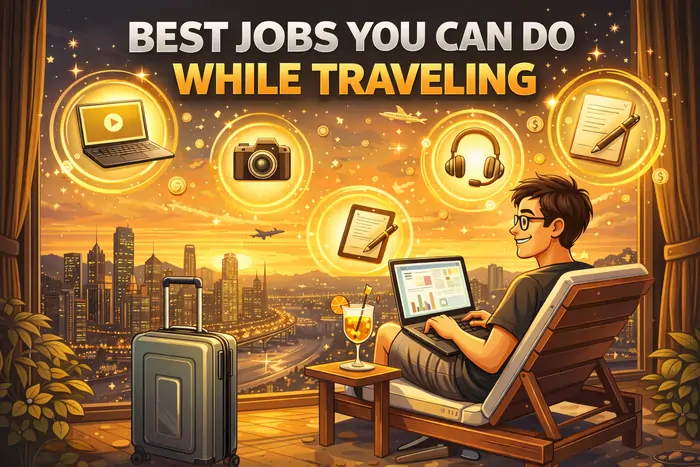
Not every job is equally suited to working while traveling, and some roles naturally lend themselves better to a location‑independent lifestyle. Broadly, they divide into beginner‑friendly roles and more advanced professional paths.
Beginner‑friendly online jobs include:
- Customer support and virtual assistance: Handling email, chat, scheduling, and light admin tasks makes these accessible entry points into remote work.
- Content writing and editing: You can start with blog posts or product descriptions and gradually move into higher‑value content or niches as you gain experience.
- Social media management: Scheduling posts, responding to comments, and monitoring basic analytics for brands or creators fits well with flexible schedules.
- Data entry and online research: These roles are lower paid but a realistic first step to learn remote discipline and client communication.
More advanced digital nomad jobs usually require stronger skills but pay better:
- Content marketing and SEO: You own strategy, performance, and content calendars rather than just writing individual pieces.
- UX/UI and product design: Fully digital, collaboration‑heavy work that can be done asynchronously with the right tools.
- Software development and engineering: Consistently among the most sought‑after remote roles due to high demand and negotiable schedules.
- Data analysis and analytics: Working with dashboards and reports with minimal need for constant meetings, as long as you deliver results.
- Digital marketing specialist roles: Paid ads, email marketing, and conversion optimization are often remote‑friendly and performance‑driven.
Many digital nomads begin by starting a side business while working full‑time, building income streams in the evenings or weekends before relying on them on the road. For inspiration and practical lessons from real founders, read: Starting a Side Business While Working Full‑Time.
If you want an organized list of remote‑friendly roles and current opportunities, this catalog is useful: Digital Nomad Jobs. For a beginner‑focused breakdown of starting roles and career paths, see: Digital Nomad Jobs for Beginners.
How to Get Started (Step‑by‑Step)
The best way to start working while traveling is not to quit your job overnight but to follow a deliberate, staged approach.
1. Clarify your skills, income target, and runway
Start by auditing your existing skills and how they can be delivered online. Think in terms of outcomes: writing content, running campaigns, designing interfaces, coding, handling operations, or managing projects. Then, calculate your minimum monthly income needs based on realistic cost‑of‑living data in your target region, and decide how many months of savings you want as a buffer before you leave.
A smart way to de‑risk this transition is to start a side business while working full‑time, using your evenings or weekends to validate offers, find clients, and prove that your skills can generate remote income. You can learn how other professionals built that bridge in Starting a Side Business While Working Full‑Time.
2. Decide: keep your role or change paths
Next, decide whether you can evolve your current role into a remote position or whether you need a career shift. Some employees successfully negotiate remote arrangements by first proving they can perform just as well from home, documenting results, and then asking for location flexibility once trust is built. Others realize their role will never be truly location‑independent and choose to move into freelance work, consulting, or remote‑first companies.
For some, this process eventually involves a bigger leap: leaving a stable but misaligned job for a new, remote‑friendly path. If you are wrestling with that decision, this story might resonate: The Courage to Quit. It explores what it really takes to walk away from comfort in pursuit of a more aligned work life.
3. Choose your first destination strategically
When picking your first destination, do more than scroll social media. Assess:
- Visa rules and length of stay.
- Safety and basic infrastructure.
- Time zone overlap with your clients or company.
- WiFi reliability and availability of coworking spaces.
- Cost of living relative to your income and savings.
Starting in a known digital nomad hub can ease the transition because these places tend to have coworking spaces, communities, and services built around remote workers.
4. Set up your remote work stack
Before leaving, make sure your basic infrastructure is ready:
- A reliable laptop, backups (physical drive plus cloud), and surge protection.
- Noise‑cancelling headphones for calls and noisy environments.
- A way to get online on the move: eSIMs, local SIM cards, and tethering from your phone.
- Standardized work tools: cloud storage, password manager, project management app, and communication channels that you can access from anywhere.
For a structured walkthrough of the entire transition, including job search tips and preparation, see: How to Become a Digital Nomad.
Staying Productive on the Road
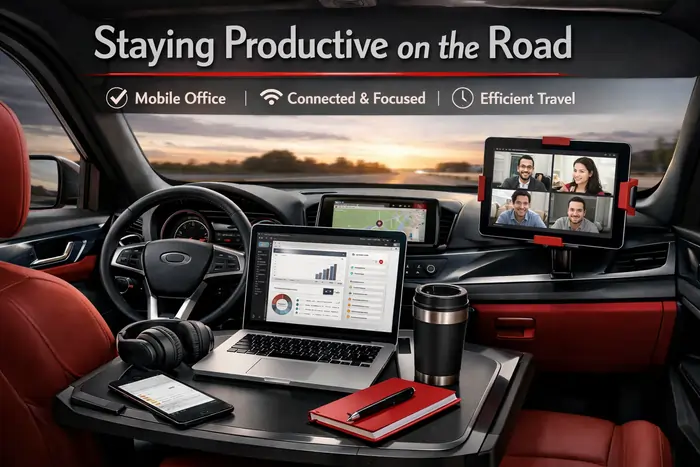
Staying productive while working while traveling is less about clever hacks and more about deliberately controlling your environment, time, and energy.
You will be far more consistent if you maintain a specific daily schedule or routine, even when the city around you changes regularly. Time‑blocking deep work in fixed windows—such as mornings—then leaving late afternoons or evenings for exploration helps avoid the constant tension between “I should be working” and “I should be seeing the city.” Planning your week in advance with a realistic task list that includes travel days prevents you from overloading your calendar and falling behind due to flights, trains, and check‑ins.
Your workspace matters as much as your schedule. Many remote workers prioritize:
- Booking accommodation with decent WiFi and a dedicated workspace, like an apartment with a desk and chair or a hotel with a business center.
- Using coworking spaces when accommodation is not ideal, to access reliable internet, a focused environment, and community.
- Having an international data plan or local SIM for hotspot backup when café or hostel WiFi fails.
For detailed productivity advice, routines, and environment tips, check out: Tips for Remote Work While Traveling and this practical piece: How to Stay Productive While Traveling.
Managing Work–Travel Balance (So You Don’t Burn Out)
The biggest trap new digital nomads fall into is trying to be a full‑time tourist and a full‑time worker at the same time.
When you choose to work while traveling, your work days are still work days; sightseeing becomes something you intentionally schedule around your job, not something you squeeze in between calls without boundaries. Slow travel is the single most effective tactic for maintaining your health and productivity because staying longer in each place reduces the number of travel days that disrupt your routines and force you to work from transit.
You also need to actively protect your mental health. Helpful strategies include:
- Carrying simple routines that travel with you: morning walks, stretching, workouts, journaling, or scheduled calls with friends and family.
- Accepting that you will not see everything in every city and instead prioritizing a few experiences that matter most to you.
- Connecting with other remote workers through coworking spaces, local meetups, or online communities to reduce isolation and share city‑specific tips.
For extra ideas on maintaining performance and sanity while constantly moving, this short guide is worth a read: 5 Tips for Staying Productive While Traveling Full‑Time.
Money, Visas, and Practical Logistics
The romantic side of working while traveling often hides the boring but essential pieces: budgeting, insurance, and visas.
First, you need a realistic budget that includes:
- Rent or accommodation costs in your target city.
- Food, transport, and occasional flights or long‑distance travel.
- Coworking memberships or café budgets.
- Data/eSIM costs and gear maintenance.
- An emergency fund for medical issues, sudden travel, or equipment replacement.
Many long‑term travelers aim for at least a few months of living expenses saved before departure, especially if their income is not yet stable. You should also think about health and travel insurance, plus coverage for your equipment, because unexpected illness or theft abroad without protection can wipe out your savings.
Visas and legal considerations vary widely:
- Some travelers technically work remotely on tourist visas while being paid by foreign clients or employers, but this can exist in a gray zone and needs individual research.
- A growing number of countries now offer digital nomad visas that explicitly allow remote workers to live and work from their territory for months or years if they meet income and work requirements.
- These visas often require proof of remote employment or contracts, income thresholds, background checks, and health insurance, so planning ahead is crucial.
If you are coming from a place of financial struggle, remember that you can still design a new chapter. Stories like Starting Again After Bankruptcy show how entrepreneurs rebuild after serious setbacks and eventually create the freedom they want.
For structured information on visa options and requirements, explore: Digital Nomad Visa 2025 Guide and this round‑up: Digital Nomad Visas 2025. None of this replaces professional legal or tax advice, so always confirm your situation with qualified experts in your home country and destination.
Common Mistakes New Digital Nomads Make
Patterns repeat for almost everyone starting to work while traveling, and being aware of common mistakes makes them easier to avoid.
Common pitfalls include:
- Traveling too fast: Frequent moves mean more days lost in transit, worse sleep, and a constant feeling of playing catch‑up at work.
- Underestimating costs: People often budget for rent and food but forget visas, flights, coworking, data, and emergencies.
- Neglecting routines: Without deliberate routines, your days blur together, productivity drops, and stress with clients or your employer rises.
- Ignoring time zones: Constantly agreeing to calls at terrible hours for yourself quickly becomes unsustainable.
- Skipping backups: Not having redundant backups of your data, projects, and connectivity means a lost laptop or WiFi outage can threaten your income.
You can see how experienced travelers handle this balance and stay sane in reflections like: How to Travel for Work and Stay Sane. Use these as a reality check and a set of guardrails while planning your own path.
Sample “Working While Traveling” Itineraries
To make everything more concrete, it helps to imagine what a month might look like when you work while traveling.
Example: Slow travel month (1–2 cities)
You pick one city and stay for four weeks. Monday to Friday, you work roughly standard hours from a coworking space or your apartment, following a reliable morning routine and ending the day with a walk, café visit, or a small local activity. Weekends become your time for bigger experiences—day trips, hikes, or museums—and the lack of frequent moves means fewer disruptions and late‑night catch‑up sessions.
Example: Fast travel month (3–4 cities)
You choose three or four cities and move every week. Travel days often eat into your work time; you may find yourself working in airports, on trains, or late at night to compensate. This can be exciting for a short burst but quickly becomes exhausting if you keep it up. Many seasoned digital nomads therefore recommend starting with slow travel until you understand your own energy limits and workload.
For more ways to mix trip styles and work patterns, this article offers 15 concrete ideas: 15 Ways to Work While Traveling.
Is Working While Traveling Right for You?
Working while traveling is not automatically better or worse than staying in one place; it is simply a different set of trade‑offs.
It may not be right for you if you strongly value deep roots and long‑term in‑person community in one location, work best with strict external structure, or have family responsibilities that make frequent moves unrealistic. It can be a great fit if you value autonomy, are comfortable with uncertainty, already do (or can transition into) remote‑friendly work, and feel energized rather than drained by new environments and cultures. A low‑risk way to experiment is to try a 2‑ to 4‑week workation in another city within your country or a nearby destination while keeping your current job.
If your experiment shows that this lifestyle fits you, you may later face the deeper question of whether to stay in your existing role or make a larger leap, a transition explored in The Courage to Quit. Combining that kind of honest self‑reflection with practical experimentation makes it easier to decide whether this is a lifestyle you want temporarily, seasonally, or long term.
At its core, choosing to work while traveling is about choosing growth over comfort: trading some predictability for new skills, experiences, and perspectives. If you are drawn to that kind of evolution, you will likely appreciate the reflections in Choosing Growth Over Comfort, and you can treat your first workation not as a final decision but as a meaningful step toward the kind of life you want to build.