

The Fish and Chips Good Friday 2026 story highlights a perfect storm of rising fuel costs, energy price spikes, and surging seasonal demand. As chippies prepare for their busiest day of the year, many are being forced to raise prices, simplify menus, or adjust portions just to stay viable. Despite these pressures, the Good Friday Fish and Chips tradition remains strong, with customers still queuing for a meal that blends cultural significance, value, and comfort food appeal—even as costs climb across the entire supply chain.
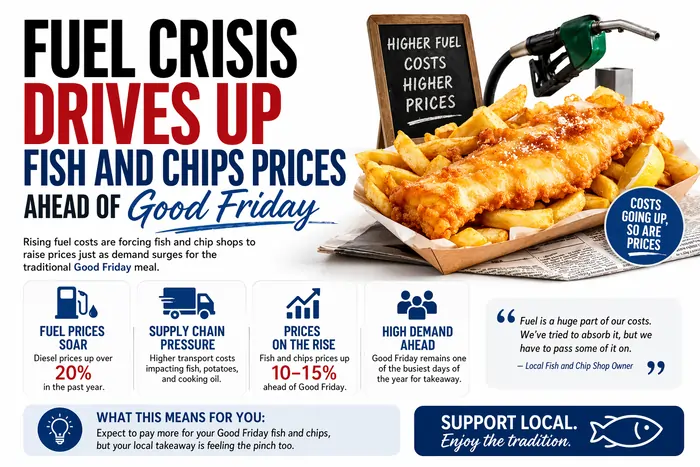
Fuel prices and wider energy costs are putting serious pressure on the humble plate of Fish and Chips, just as demand surges ahead of Good Friday. With chippies preparing for their busiest trading day of the year, many owners say they have no choice but to raise prices or simplify menus to survive the latest fuel crisis.
Why Fish and Chips Matter So Much on Good Friday
In the UK and many parts of the Commonwealth, Fish and Chips aren’t just a casual takeaway—they’re a Good Friday tradition. Rooted in Christian practice, many families skip meat on this day and opt for fish-based meals, making chippies some of the most in-demand food businesses of the Easter period.
Chippies regularly report that Good Friday is their single busiest day of the year, with trade jumping by 30–50% or more compared with a standard Friday. Shops stock extra cod, haddock, and potatoes, extend opening hours, and draft in extra staff to cope with the queues. In Stockport, for example, one shop said Good Friday takings can be up to 50% higher than usual, forcing them to double staff and prep volumes ahead of time.
For many customers, a Good Friday portion of Fish and Chips is non-negotiable, even in a cost-of-living crisis. Owners note that people still see it as good value for money and an important cultural ritual worth budgeting for. If you want a taste of how strongly this tradition is marketed, venues like Bridie Molloy’s / The Celtic Hearth promote Good Friday Fish & Chips as “a tradition you don’t want to miss.”
How the Fuel Crisis Is Pushing Up Fish and Chips Prices
The latest spike in fuel and energy prices is part of a wider economic storm battering the Fish and Chips trade. Conflict in the Middle East, especially the Iran war, has driven up global oil prices, which in turn raise the cost of transport, shipping, and energy for every link in the supply chain—from fishing fleets to wholesalers and, finally, to local chippies.
Experts warn that fish and chip shops, which traditionally run on tight margins, are particularly exposed to surging fuel and energy costs. Commercial fryers run at very high temperatures for long hours, making gas and electricity bills a major overhead. When fuel prices climb, refrigerated transport for fish and potatoes, packaging costs, and even import charges all move in the same direction.
Reports in UK media suggest that energy bills for hospitality businesses can be four or five times higher than pre-2019 levels, while food costs and wages have also structurally reset upwards. Industry leaders estimate that up to half of the UK’s Fish and Chips shops could be at risk of closure if costs continue to rise without additional support. For a deeper breakdown of these pressures, the article “Fish & Chips in Peril: Britain’s National Dish Faces Economic Storm” offers a detailed overview.
Rising Costs Through the Fish and Chips Supply Chain
The current fuel crisis feeds into almost every input required to serve Fish and Chips at your local shop.
Key pressure points include:
- Fuel and shipping costs
Higher oil prices make it more expensive to transport frozen or fresh fish from ports, move potatoes from farms, and deliver packaging and ingredients nationwide. Shipping routes affected by geopolitical tension, such as the Strait of Hormuz, push up freight costs and create volatility in supply. - Energy for cooking and refrigeration
Fryers must stay at high temperatures for hours, while cold rooms and freezers keep fish in top condition. When electricity and gas prices spike, these energy-intensive processes become significantly more expensive. - Raw ingredients and harvest issues
Some industry reports highlight poor potato harvests and higher global fish prices as additional factors pushing up the cost of Fish and Chips. Sustainability measures and import taxes can also influence the price of popular species like cod and haddock. - Labour, tax, and business rates
Rising minimum wages, higher payroll costs, and business rates calculated on property value (rather than profitability) add financial pressure on small, independently run chippies.
When all these costs rise together, it’s “seldom just one bill that increases,” as one insolvency expert put it. Shops face difficult decisions: absorb the hit and risk losses, shrink portions, or increase prices per portion of Fish and Chips to stay afloat.
Good Friday Demand vs. Cost Pressures
Despite these challenges, Good Friday remains a huge trading opportunity for Fish and Chips shops—if they can manage demand without sacrificing quality or profitability. Many owners have already begun prepping extra fish and chips days in advance, deboning and cutting fish in the early morning and blanching loads of chips to keep queues moving.
In County Durham, one operator expects trade across four sites to triple for Good Friday, preparing around 7,000 cod and 1,000 haddock portions to meet demand. Staff rosters are doubled, menus simplified to a single fish size and species, and opening hours extended to spread out the rush.
Meanwhile, consumer-facing coverage shows that price expectations are already shifting. A feature from Liverpool, for instance, documented spending £18.50 on some of the city’s best Fish and Chips for Good Friday, highlighting how families treat the meal as a special annual tradition despite rising costs. You can get a feel for current pricing and portions in that report from the Liverpool Echo, which describes a top-rated chippy and its Good Friday offering.
Even in markets like the Philippines, vendors are warning that fish prices could rise during Holy Week due to a mix of increased demand and production costs, echoing some of the same pressures seen in the UK.
How Shops Are Responding: Price Hikes, Menu Tweaks, and Efficiency
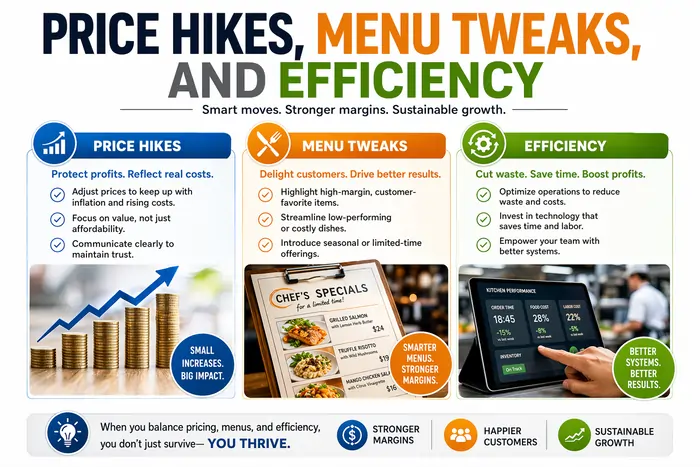
To survive the fuel and energy crisis, many Fish and Chips shops are adopting a mix of short-term and long-term strategies.
Common responses include:
- Modest price increases
Shops may raise prices by small increments rather than large jumps, hoping customers accept a few extra pence per portion as unavoidable in the current climate. - Menu simplification
On peak days like Good Friday, some chippies cut the menu back to one fish size and one main species (for example, a 6–8oz haddock) to reduce waste and speed up service. - Portion and packaging control
Tightening portion sizes a touch and moving to more cost-effective packaging helps keep margins viable without shocking customers at the till. - Energy and equipment upgrades
Where possible, shops invest in more efficient fryers, better insulation, or smart meters to monitor and optimise energy use, though upfront costs can be a barrier. - Diversifying revenue
Some businesses add delivery, click-and-collect, or limited-time offers around Good Friday to maximise revenue per shift without overextending staff.
Industry bodies like the National Federation of Fish Friers and insights from Seafish’s “Fish and Chips in Foodservice” factsheet help shop owners benchmark their performance and understand wider trends in Britain’s Fish and Chips trade.
What This Means for Customers
For regular customers, the impact of the fuel crisis will most visibly show up in checkout prices and, sometimes, in portion sizes of Fish and Chips. A family order that used to cost around £15 might now be closer to £18–£20, depending on region and quality.
However, many customers still see Fish and Chips as relatively affordable compared with restaurant dining, particularly if they share portions or skip extras. Given how strongly Good Friday traditions are embedded, most chippies expect queues to form regardless of price rises, as long as the product quality stays high.
Food writers and local reviewers emphasise that high-quality batter, well-fried chips, and fresh fish can justify a higher price, especially when component costs are rising across the board. For a snapshot of current consumer experiences and prices, you can read the Liverpool Echo’s piece on one of the UK’s best Fish and Chips.
How to Find Fairly Priced Fish and Chips This Good Friday
If you’re planning a Good Friday Fish and Chips meal, there are a few ways to balance tradition with budget:
- Check local reviews and awards
Look for shops recognised by regional food awards or the National Fish & Chip Awards; these venues often balance quality and price carefully to keep loyal customers returning. - Compare menus online
Many chippies now post prices and special Good Friday menus on their websites or social media, so you can compare portion sizes and pricing before you order. - Go earlier or later to avoid surges
Visiting outside the absolute peak times can mean shorter queues and less risk of sold-out items, especially when shops restrict the menu to keep up with demand. - Support your local independent shop
Independent chippies are often the ones most exposed to the fuel and energy crisis but also the most rooted in local communities. Paying a little more for your Fish and Chips can directly help keep these businesses alive.
In conclusion, the fuel crisis is reshaping the way consumers and businesses approach Easter and Good Friday traditions, from the cost of a simple portion of Fish and Chips to how households budget for long weekends and seasonal spending. While many chippies are doing everything they can to keep prices fair and portions generous, the reality is that higher energy, fuel, and ingredient costs are likely to keep pressure on menus for some time, especially around peak demand days like Good Friday.
If you’re in Australia and also planning your broader Easter and autumn spending, it can help to stay across the biggest value events and calendar changes affecting retailers. For bargain hunters, this guide to the Click Frenzy Liquidation Sale: Best Deals in Australia 2026 is a useful starting point for snapping up heavily discounted tech, fashion, and homewares.
At the same time, trading rules across states and territories can influence when your favourite shops, supermarkets, and bottle shops are open over Easter. To avoid wasted trips and make the most of your long weekend, it’s worth reading up on key public holiday rules, restricted trading days, and late-night options in this explainer 7 Things to Know About Easter Trading Hours 2026 in Australia.
FAQs About Fish and Chips Prices and the Fuel Crisis
Why are Fish and Chips getting more expensive before Good Friday?
Prices are rising due to higher fuel costs, energy price increases, and more expensive ingredients, affecting the entire supply chain.
How does the fuel crisis affect shops?
It increases transport costs, delivery prices, and energy bills, making fryers, freezers, and storage more expensive to run.
Will all shops raise prices this Good Friday?
Not all, but many will either increase prices, reduce portions, or simplify menus to stay profitable.
Why is Good Friday such a big day?
Due to religious tradition, many people eat fish instead of meat, making it the busiest day of the year for chippies.
How much more are customers paying?
Typical orders have risen from around £15 to £18–£20, depending on location and portion size.
Are some shops at risk of closing?
Yes—rising fuel, energy, labour, and ingredient costs mean some businesses face serious financial pressure.
How are shops coping with demand and costs?
They are preparing more stock, hiring extra staff, simplifying menus, and extending opening hours.
Why do some shops limit menus on Good Friday?
To speed up service, reduce waste, and keep operations efficient during peak demand.
Are Fish and Chips still good value?
Many still see it as affordable compared to restaurants, especially given its portion size and tradition.
Is this only happening in the UK?
The UK is most affected, but similar price pressures are seen in other regions during Holy Week demand spikes.
How can I find affordable options?
Check local reviews, compare menus online, and look for trusted independent shops.
Will prices go down if fuel costs drop?
Possibly—but structural cost increases mean prices may not return to previous levels.
Are there cheaper alternatives?
Some customers opt for smaller portions, shared meals, or lower-cost items.
How can I support local shops?
Continue to buy from them, accept small price increases, and leave positive reviews.
Where can I learn more?
Industry reports and food publications provide detailed insights into the economic pressures facing chippies.