

Introduction
Criticism is something almost everyone experiences at some point in life. Whether in business, careers, leadership roles, or personal life, negative feedback and public criticism can feel discouraging and overwhelming.
However, many successful individuals have proven that criticism does not have to define a person’s future. Instead, it can become the foundation for growth and transformation.
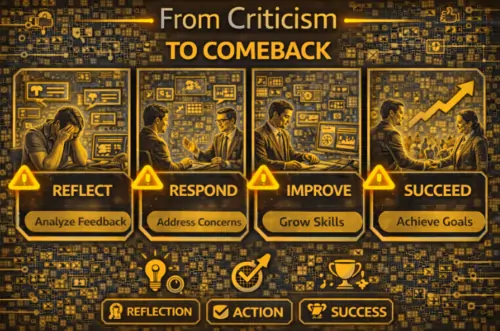
The journey from criticism to comeback often begins when individuals learn to turn negative feedback into motivation. Rather than allowing criticism to damage confidence, resilient individuals use it as a catalyst to improve, adapt, and rebuild stronger than before.
History is filled with examples of entrepreneurs, innovators, and leaders who faced criticism early in their careers but later achieved remarkable success. Their stories show that setbacks and criticism can become powerful drivers of progress.
Understanding how people move from criticism to comeback can provide valuable lessons for anyone seeking to overcome challenges and pursue long-term success.
Understanding Criticism
Criticism occurs when individuals receive feedback, judgment, or negative opinions about their actions, decisions, or performance. In professional environments, criticism may come from:
- supervisors or colleagues
- customers or clients
- investors or stakeholders
- media coverage or public opinion
While criticism can sometimes feel personal, it often reflects differing perspectives, expectations, or standards.
Constructive criticism can be valuable because it highlights areas that require improvement. However, destructive criticism—often emotional or unfair—can create self-doubt and discourage progress.
Learning to distinguish between helpful feedback and harmful negativity is an important step in turning criticism into growth.
Why Criticism Feels Difficult
Criticism can be difficult to handle because it often challenges self-confidence and personal identity. People naturally want to be recognized for their efforts and achievements.
When criticism appears, individuals may experience:
- embarrassment
- frustration
- anger
- loss of motivation
These reactions are normal. However, allowing criticism to dominate emotions can prevent individuals from recognizing the potential lessons within the feedback.
Developing emotional resilience allows people to process criticism more constructively and focus on improvement rather than discouragement.
Turning Criticism Into Motivation
The transition from criticism to comeback begins with a change in perspective.
Instead of viewing criticism as a personal attack, successful individuals treat it as information that can guide improvement.
Several strategies help transform criticism into motivation.
Evaluate the Feedback
The first step is determining whether criticism contains useful insights. Even harsh criticism may include valuable points that can help identify weaknesses or areas for growth.
Separate Emotion From Analysis
Emotional reactions are natural, but stepping back and analyzing feedback objectively can reveal constructive insights.
Focus on Improvement
Criticism becomes valuable when it motivates individuals to improve skills, refine strategies, or correct mistakes.
Use Criticism as Energy
Many successful individuals channel criticism into motivation, using it as fuel to prove that progress is possible.
Famous Stories of Comebacks After Criticism
Many well-known figures achieved success despite facing intense criticism earlier in their careers.
J.K. Rowling
Before publishing the Harry Potter series, J.K. Rowling faced multiple rejections from publishers who believed the book would not succeed. Despite the criticism and rejection, she continued pursuing her vision. The series eventually became one of the best-selling book franchises in history.
Michael Jordan
Michael Jordan, widely regarded as one of the greatest basketball players of all time, was once cut from his high school basketball team. Instead of giving up, he used the experience as motivation to improve his skills and prove critics wrong.
Oprah Winfrey
Early in her career, Oprah Winfrey was told she was not suitable for television news. She later reinvented her career and became one of the most influential media personalities in the world.
These examples demonstrate how individuals can move from criticism to comeback by maintaining determination and belief in their goals.
Developing Resilience
Resilience plays a major role in overcoming criticism.
Resilient individuals do not allow temporary setbacks to define their long-term potential. Instead, they maintain focus on improvement and personal growth.
Resilience can be strengthened through:
- maintaining a positive mindset
- learning from past experiences
- setting realistic goals
- building supportive relationships
These qualities help individuals remain motivated even when facing difficult feedback.
Building Confidence After Criticism
Rebuilding confidence is an essential part of the comeback process.
Confidence often grows when individuals begin to see progress in their efforts. Achieving small improvements can gradually restore belief in personal abilities.
Ways to rebuild confidence include:
- celebrating small achievements
- continuing skill development
- seeking constructive feedback
- surrounding yourself with supportive people
Confidence does not appear instantly, but it grows through consistent effort and perseverance.
The Role of Growth Mindset
A growth mindset—the belief that abilities can be improved through effort and learning—plays an important role in moving from criticism to comeback.
Individuals with a growth mindset view criticism as an opportunity to learn rather than a sign of failure.
This mindset encourages people to:
- embrace challenges
- learn from mistakes
- continue improving skills
- remain open to feedback
Over time, this approach leads to stronger performance and personal development.
Turning Setbacks Into Opportunities
Criticism and setbacks can also create opportunities for reinvention.
Many individuals use criticism as motivation to explore new ideas, improve their work, or pursue new directions.
Opportunities may include:
- launching new projects
- developing innovative solutions
- refining leadership styles
- exploring different career paths
These opportunities often lead to unexpected success.
Conclusion
The journey from criticism to comeback is a powerful example of resilience, determination, and growth. Criticism can feel discouraging at first, but it often contains valuable lessons that help individuals improve their performance and strategies.
By evaluating feedback, maintaining resilience, and focusing on continuous improvement, individuals can transform criticism into motivation. Over time, these efforts lead to stronger confidence, greater achievements, and meaningful personal growth.
Ultimately, criticism does not determine success—the response to criticism does. Those who learn from feedback and remain persistent are often the ones who achieve the most powerful comebacks.
FAQ
What does “from criticism to comeback” mean?
It refers to overcoming criticism and using feedback as motivation to achieve success or improvement.
How can criticism help personal growth?
Criticism can reveal weaknesses and areas for improvement, helping individuals develop stronger skills and strategies.
Why do successful people often face criticism?
Successful individuals often challenge existing ideas or attempt ambitious goals, which naturally attracts criticism.
How can someone respond positively to criticism?
Responding positively involves analyzing feedback, focusing on improvement, and maintaining a growth mindset.
Can criticism lead to success?
Yes. Many successful individuals used criticism as motivation to improve and ultimately achieve greater success.