

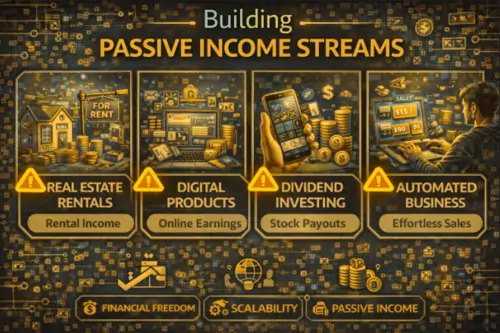
Introduction
Building passive income streams has become one of the most discussed financial goals in recent years, and for good reason. Many people want more than a paycheck that depends entirely on their time and daily effort. They want financial flexibility, better security, and the ability to create income sources that continue earning even when they are not actively working.
Passive income does not mean effortless money. That is one of the biggest misunderstandings around the topic. Most passive income streams require time, planning, skill, or capital at the beginning. Some also need occasional maintenance. However, once the right system is in place, passive income can reduce reliance on a single salary and create more freedom over time.
The appeal is simple. A well-built passive income strategy can help cover monthly expenses, support long-term savings, strengthen retirement planning, and provide a cushion during uncertain times. Whether someone wants to supplement their current income, achieve financial independence, or simply diversify how they earn, building passive income streams is often a smart long-term move.
What Is Passive Income?
Passive income is money earned from assets, systems, or investments that do not require constant active labor to keep generating revenue. Unlike a traditional job where income stops when work stops, passive income is designed to continue producing returns over time.
That said, passive income exists on a spectrum. Some income sources are more passive than others. Dividend investing, for example, can become relatively hands-off after the initial investment is made. Renting out property, on the other hand, may still require management, maintenance, and tenant coordination unless a property manager is involved.
The key idea behind building passive income streams is to create income-producing assets that work beyond direct hourly effort.
Why Building Passive Income Streams Matters
There are several reasons why people are becoming more interested in passive income.
The first is financial security. Relying on one source of income can be risky, especially during layoffs, business slowdowns, or economic changes. Multiple income streams can provide more stability.
The second is flexibility. Passive income can give people more freedom in how they use their time. It can help support career transitions, family responsibilities, travel goals, or early retirement plans.
The third is wealth building. Income that gets reinvested can create compounding effects over time. This makes building passive income streams not just a short-term money strategy but a long-term financial growth strategy.
The Most Common Types of Passive Income
There is no single formula for creating passive income. Different methods suit different skills, budgets, and risk tolerance.
Dividend Stocks
Dividend stocks are shares in companies that regularly distribute a portion of profits to shareholders. For investors, this can become a reliable passive income source over time.
This strategy usually works best for people with patience and a long-term mindset. A portfolio of solid dividend-paying companies can generate regular income while also offering potential capital appreciation.
Real Estate Rentals
Rental property remains one of the most popular ways of building passive income streams. Property owners can earn recurring monthly income through rent while also benefiting from long-term property value appreciation.
However, real estate is not completely passive unless systems are in place. Repairs, tenant management, vacancies, and legal responsibilities can all require time and attention.
Digital Products
Digital products are increasingly attractive because they can be created once and sold many times. Examples include e-books, online courses, templates, printables, stock photos, music, and software tools.
This is one of the most scalable approaches to passive income. Once the product is created and marketed, it can continue generating sales with relatively low ongoing cost.
Affiliate Marketing
Affiliate marketing involves promoting products or services and earning a commission when someone purchases through a referral link. This model is common in blogging, video content, newsletters, and niche websites.
It works best when trust and useful content are already in place. For this reason, building passive income streams through affiliate marketing usually depends on strong audience relationships and consistent publishing.
Royalties
Royalties are payments earned when people use intellectual property such as books, music, art, patents, or licensed designs. Writers, musicians, photographers, and creators may all build passive income this way.
Although royalties can seem highly passive, the initial creation phase often requires substantial work and skill.
Peer-to-Peer Lending and Interest Income
Some people generate passive income by lending capital through financial platforms or by earning interest from savings instruments, bonds, or fixed-income products. These options can appeal to those who prefer a more finance-based approach rather than a business-building approach.
Still, every investment carries risk, so research and diversification are important.
How to Start Building Passive Income Streams
Many people are interested in passive income but never begin because they think they need a lot of money, a huge audience, or advanced business knowledge. In reality, the best starting point depends on current resources and abilities.
Start With What You Already Have
A practical first step is to assess existing assets. These might include savings, a professional skill, a useful hobby, industry knowledge, writing ability, design experience, or a property that could generate income.
Someone with investment capital may begin with dividend funds or rental property. Someone with subject expertise may create a course or digital guide. Someone with a blog may focus on affiliate content.
The smartest approach to building passive income streams often starts with assets that are already within reach.
Choose One Stream First
Trying to build multiple passive income streams all at once can lead to burnout and poor execution. It is usually better to start with one model, learn how it works, improve it, and then expand later.
For example, a person might start with one digital product, one investment portfolio, or one content platform. Once that first stream becomes stable, adding another becomes easier.
Build Systems, Not Just Projects
Passive income becomes more sustainable when it is built around repeatable systems. A single product sale is helpful, but an automated product funnel is better. One rental property can produce income, but a property management system makes it more scalable. A blog post with affiliate links may earn occasionally, but a content library built around search intent has stronger long-term potential.
The real power of building passive income streams comes from creating assets that continue working efficiently over time.
Challenges People Often Face
Passive income sounds attractive, but it comes with real challenges.
The first challenge is delayed reward. Many passive income ideas require significant upfront effort before any money appears. Creating a course, writing a book, growing a website, or saving enough to invest all take time.
The second challenge is inconsistency. Some passive income streams are stable, while others fluctuate. Affiliate income can change with traffic. Rental income can be interrupted by vacancies. Dividends may change if companies reduce payouts.
The third challenge is unrealistic expectations. Many people assume passive income will arrive quickly and easily. In truth, building passive income streams usually requires patience, experimentation, and steady improvement.
Best Practices for Long-Term Success
Those who succeed with passive income often follow a few common principles.
Focus on Value
Income tends to follow value. A digital product must solve a problem. A rental property must meet tenant needs. Affiliate content must genuinely help readers. Strong passive income is rarely built on shortcuts.
Reinvest Early Earnings
Instead of spending the first returns immediately, it often makes sense to reinvest them. Reinvestment can help improve tools, grow traffic, buy more assets, or strengthen the overall system.
Diversify Over Time
Depending on a single passive income source can create risk. A balanced approach may include both content-based income and investment income, or both digital assets and real-world assets.
Diversification makes building passive income streams more resilient over the long term.
Stay Realistic and Consistent
Passive income usually grows slowly before it grows meaningfully. Small monthly results can become powerful over time when supported by consistency and patience.
Examples of Passive Income Paths
A beginner with limited capital might start a niche blog, publish useful articles, add affiliate links, and later sell a downloadable guide.
A salaried worker with steady savings might build a dividend investment portfolio and gradually add bond or real estate exposure.
A freelancer might turn repeated client work into templates, toolkits, workshops, or recorded training.
An entrepreneur might create software, memberships, or licensing models that continue earning beyond the original sale.
These examples show that building passive income streams is not limited to one type of person. It can be adapted to different backgrounds, budgets, and goals.
Conclusion
Building passive income streams is one of the most practical ways to create financial flexibility and long-term wealth. It does not happen overnight, and it is rarely effortless, but it can be highly rewarding when approached with patience and strategy.
The best passive income stream is often the one that matches a person’s skills, resources, and tolerance for risk. Some will prefer investments. Others will build digital products, content platforms, or rental income. What matters most is starting with a realistic plan and focusing on assets that can grow over time.
In the end, passive income is not just about making extra money. It is about creating systems that support greater independence, stronger resilience, and more control over the future.
FAQ
What does building passive income streams mean?
Building passive income streams means creating income sources that continue generating revenue with limited ongoing active work, often through investments, digital products, royalties, or rental assets.
Is passive income really passive?
Not completely. Most passive income streams require upfront time, money, or skill. Some also need maintenance, but they can become less labor-intensive over time.
What is the best passive income stream for beginners?
The best option depends on available resources. Beginners often start with dividend investing, affiliate content, or digital products because these can be scaled gradually.
How long does it take to build passive income?
It depends on the method. Some streams may take months or years to become meaningful. Passive income usually grows through consistency rather than quick results.
Can passive income replace a full-time job?
It can, but usually not immediately. Many people begin by using passive income to supplement their salary before eventually building enough to cover larger expenses.
Would we order from Rayunan Bali Catering again?
Yes, absolutely. Based on this experience, we would confidently order from them again for future events.