

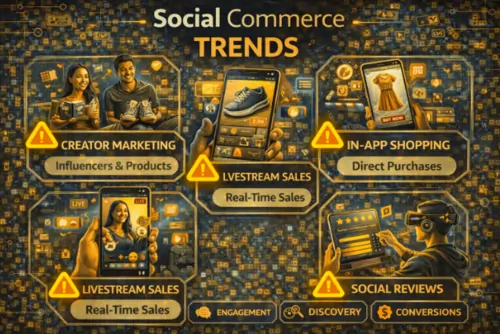
Social commerce is changing the way people shop online. Instead of searching for products on traditional e-commerce websites, consumers now discover, review, and purchase items directly through social media platforms. From TikTok videos to Instagram posts and Facebook marketplaces, the line between entertainment and shopping is becoming increasingly blurred.
In 2026, social commerce is no longer an experimental feature—it has become a major part of the global e-commerce ecosystem. Research estimates the social commerce market will reach about $992 billion in 2026, growing rapidly as more consumers buy products directly on social platforms.
This article explores the biggest social commerce trends shaping online shopping today and what businesses, creators, and consumers should expect in the future.
What Is Social Commerce?
Social commerce refers to buying and selling products directly through social media platforms. Instead of leaving the app to visit a separate store, the entire shopping experience—from discovery to checkout—can happen within the social platform itself.
Examples include:
- TikTok Shop product videos
- Instagram shoppable posts
- Facebook Marketplace listings
- Live-stream selling events
- Influencer affiliate links
The idea is simple: people already spend hours on social media, so brands bring the store to where the audience already is.
This model works because social platforms combine entertainment, trust, and convenience in one place.
Why Social Commerce Is Growing So Fast
Several factors explain the rapid growth of social commerce.
1. Social media influences buying decisions
Social media has become one of the main ways people discover products. Studies show about 82% of consumers use social media for product research, and many younger buyers prefer discovering brands through social content rather than traditional ads.
When users see product reviews, tutorials, or recommendations in their feeds, purchasing becomes more natural and less disruptive.
2. Mobile-first shopping behavior
Most social media activity happens on smartphones. Because mobile devices are always accessible, they encourage quick purchases and impulse buying.
Consumers can discover a product, watch a short review video, and buy it within minutes—all without leaving the app.
3. Influencers and creator marketing
Influencers play a major role in social commerce. Many consumers trust recommendations from creators they follow.
Research shows one-third of Gen Z and Millennials trust influencer recommendations when deciding what products to buy.
This trust turns content creators into powerful sales channels for brands.
4. Seamless checkout systems
Social media platforms now integrate payment tools directly into their apps. This reduces friction during the buying process and increases conversion rates.
Instead of clicking multiple pages, consumers can often purchase with a few taps.
Key Social Commerce Trends in 2026
Several trends are shaping the next stage of social commerce.
1. Creator-led commerce
Creators are no longer just promoting products—they are driving actual sales.
Many brands now build entire marketing strategies around creators because their audiences trust them more than traditional ads.
Creator-driven commerce includes:
- affiliate links
- product collaborations
- influencer storefronts
- creator-led product launches
Some large online retailers report that social commerce driven by creators already generates a significant share of revenue.
This trend shows how creators are becoming an essential part of modern retail.
2. Live shopping experiences
Live shopping combines livestream entertainment with real-time product sales.
During live sessions:
- hosts demonstrate products
- viewers ask questions
- limited-time offers encourage purchases
This model has been extremely successful in Asia and is expanding globally. Industry analysts predict live shopping could become a trillion-dollar market in the coming decade.
Live commerce works well because it recreates the feeling of in-store interaction online.
3. Shoppable short-form video
Short-form video has become the dominant content format on social platforms. Videos are engaging, fast, and easy to consume.
Platforms like TikTok, Instagram Reels, and YouTube Shorts allow creators to link products directly within videos.
Consumers can:
- watch product demonstrations
- see reviews in real time
- buy directly from the video
This turns entertainment content into a shopping experience.
4. AI-powered product recommendations
Artificial intelligence is becoming central to social commerce.
AI analyzes user behavior, interests, and interactions to recommend products that match individual preferences.
Examples include:
- personalized product feeds
- dynamic ads tailored to browsing history
- chatbots recommending products
- AI-driven content discovery
These personalized experiences increase the likelihood that users will make purchases.
5. Social communities driving purchases
Communities on social media influence buying decisions more than traditional advertising.
People trust:
- group discussions
- friend recommendations
- product reviews in communities
Research into social commerce behavior shows that real-world relationships and trust within communities strongly influence purchasing decisions.
This is why online groups and niche communities often generate strong product sales.
6. Discovery-first shopping
One major change in social commerce is that discovery now happens before search.
Traditional e-commerce works like this:
search → product → purchase
Social commerce works differently:
content → curiosity → purchase
Instead of searching for products intentionally, users discover items while browsing entertaining content.
This “discovery-first” model is reshaping online retail strategies.
Platforms Leading Social Commerce
Several social media platforms dominate the social commerce landscape.
TikTok
TikTok has rapidly become one of the fastest-growing social shopping platforms. Its algorithm promotes viral product videos, which can generate massive sales for brands.
TikTok Shop allows users to purchase products directly inside the app.
Instagram has long been a social commerce leader thanks to:
- shoppable posts
- influencer marketing
- integrated product tags
Fashion, beauty, and lifestyle brands perform especially well on Instagram.
Facebook still remains a strong platform for social commerce, particularly among older demographics.
Facebook Marketplace and business pages allow sellers to connect directly with local buyers.
YouTube
YouTube is also becoming important for social commerce through product reviews, affiliate links, and shopping integrations.
Among younger audiences, YouTube is one of the top platforms used to discover products.
Challenges Facing Social Commerce
Despite its rapid growth, social commerce also faces several challenges.
Consumer trust and scams
One major concern is product legitimacy. Studies show more than half of social commerce buyers worry about fraud or fake sellers online.
Platforms must strengthen verification and buyer protection to maintain trust.
Content fatigue
Because social commerce relies heavily on content, brands must constantly create new posts, videos, and campaigns to stay visible.
This pressure can lead to:
- oversaturation of promotional content
- declining engagement rates
Platform dependency
Many businesses rely heavily on one platform’s algorithm. If the algorithm changes or policies shift, sales can drop suddenly.
Successful brands often diversify across multiple platforms to reduce risk.
The Future of Social Commerce
The future of social commerce will likely revolve around deeper integration between social media, entertainment, and shopping.
Key developments expected in the next decade include:
- AI-powered shopping assistants
- virtual and augmented reality shopping experiences
- influencer-owned product brands
- stronger integration between messaging apps and commerce
- more creator-driven marketplaces
The social commerce market could reach over $1.6 trillion by 2030, reflecting how quickly this industry is expanding.
This growth shows that social media is no longer just a marketing channel—it is becoming a primary retail platform.
What This Means for Businesses and Creators
For businesses, social commerce offers a powerful way to connect with customers in a more interactive and authentic environment.
To succeed, brands must:
- create engaging content rather than traditional ads
- collaborate with trusted creators
- prioritize community interaction
- offer seamless checkout experiences
For content creators, social commerce opens new revenue opportunities through affiliate marketing, product collaborations, and creator storefronts.
Conclusion
Social commerce is transforming the online shopping experience by blending entertainment, community, and retail into a single ecosystem. With nearly a trillion dollars in projected revenue and continued growth driven by mobile users, influencer marketing, and AI-powered recommendations, social commerce is becoming one of the most important trends in digital retail.
As platforms continue evolving, the brands and creators that focus on trust, authenticity, and engaging content will lead the next wave of online commerce.