

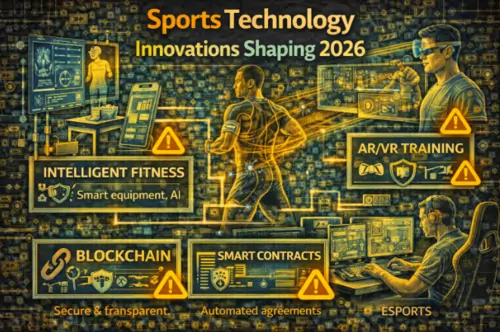
Sports are no longer powered by talent alone. In 2026, data, artificial intelligence, wearable sensors, and smart equipment are reshaping how athletes train, compete, recover, and even connect with fans. Sports Technology Innovations are now part of everyday conversations in professional leagues, universities, and even community-level competitions.
For Filipino athletes, coaches, students, and sports fans, understanding Sports Technology Innovations is no longer optional. Whether you’re playing basketball in a UAAP school, training for a marathon, or following international football, technology is influencing outcomes behind the scenes.
This article explores how Sports Technology Innovations are transforming performance, safety, fairness, fan engagement, and sports business — and what the future may hold.
What Are Sports Technology Innovations?
At its core, Sports Technology Innovations refer to tools, systems, and digital platforms designed to improve athletic performance, enhance decision-making, reduce injury risk, and elevate the fan experience.
These innovations include:
- Wearable tracking devices
- AI-powered video analytics
- Smart equipment and materials
- Officiating technologies
- Virtual and augmented reality systems
- Esports and digital competition platforms
Sports are becoming data-driven ecosystems. The more measurable performance becomes, the more strategic competition becomes.
Performance Analytics and Data-Driven Training
One of the most powerful Sports Technology Innovations today is the use of performance analytics.
Wearable Devices and Tracking Systems
Modern athletes often wear:
- GPS trackers
- Heart rate monitors
- Motion sensors
- Acceleration and deceleration trackers
These devices measure workload, fatigue, sprint distance, and recovery patterns. Coaches can now identify when a player is overtraining before injury happens.
For example, basketball teams track explosive movements and jumps to prevent knee strain. In football, player sprint distance and recovery time are monitored carefully.
Sports Technology Innovations in wearable tracking allow teams to move from guesswork to evidence-based decisions.
AI-Powered Video Analysis
Artificial intelligence can now break down game footage automatically.
Instead of manually reviewing hours of video, AI systems can:
- Track shooting zones
- Measure pass accuracy
- Identify defensive weaknesses
- Predict opponent tendencies
This helps coaches design smarter strategies.
For Filipino university teams, even access to basic video analytics software can significantly improve preparation. Sports Technology Innovations in AI analysis are leveling the playing field for teams willing to embrace data.
Injury Prevention and Recovery Tech
Injuries can end careers. That is why Sports Technology Innovations increasingly focus on prevention.
Biomechanics and Motion Science
Advanced motion capture systems analyze how athletes move. Small inefficiencies — like improper landing mechanics — can lead to serious injury over time.
Biomechanics tools detect:
- Joint alignment issues
- Muscle imbalances
- Risk patterns in running or jumping
Correcting these small issues reduces long-term damage.
Smart Rehabilitation
Rehabilitation is no longer limited to clinic visits. Athletes now use:
- Sensor-based rehab equipment
- Digital progress trackers
- App-guided therapy exercises
Sports Technology Innovations in rehab allow trainers to monitor recovery remotely while ensuring exercises are done correctly.
Smart Equipment and Advanced Materials
Equipment design is another field transformed by Sports Technology Innovations.
Examples include:
- Smart basketballs that measure arc and rotation
- Tennis rackets that track swing speed
- Sensor-embedded insoles measuring pressure
- Carbon fiber materials reducing equipment weight
Footwear is one of the fastest-evolving categories. Shoe designers use pressure mapping and motion data to create models that improve balance and reduce injury risk.
For Filipino athletes, access to advanced gear may depend on budget, but even mid-range smart devices are becoming more affordable.
Officiating and Fair Play Technologies
Fairness in sports has improved through technology.
Sports Technology Innovations like:
- Video Assistant Referee (VAR)
- Goal-line technology
- Hawk-Eye systems
- Instant replay review
help reduce human error.
In football, VAR reviews controversial plays. In tennis, Hawk-Eye determines whether the ball is in or out with precision.
While debates remain about over-reliance on technology, these tools increase transparency and accountability.
Fan Experience in the Digital Age
Sports Technology Innovations are not only for athletes — they are transforming how fans experience games.
Augmented and Virtual Reality
Fans can now:
- Watch immersive 360-degree replays
- Experience virtual stadium seating
- Simulate game scenarios
These tools make sports more interactive.
Real-Time Data and Second-Screen Apps
Live stats apps provide:
- Heat maps
- Player comparisons
- Instant analysis
For Filipino fans who rely heavily on mobile devices, these innovations make following sports more engaging.
Sports Technology Innovations are merging entertainment and analytics into a seamless digital experience.
Esports and Competitive Gaming
Esports is one of the fastest-growing segments influenced by Sports Technology Innovations.
Advanced gaming systems use:
- High-performance processors
- AI-based training simulations
- Real-time performance tracking
- Streaming optimization platforms
In the Philippines, esports has gained massive popularity, particularly in mobile gaming. Tournaments, sponsorships, and professional teams are expanding quickly.
Here, technology is not just enhancing sports — it is creating entirely new forms of competition.
Business and Investment in Sports Tech
Sports Technology Innovations represent a growing global industry.
Key opportunity areas include:
- Sports analytics startups
- Wearable fitness companies
- Performance tracking software
- Smart stadium technologies
- Recovery equipment markets
As data becomes more valuable, teams and investors recognize the financial potential of technology in sports.
For Filipino entrepreneurs, opportunities exist in digital fitness platforms, youth performance apps, and esports infrastructure.
Ethical Concerns and Data Privacy
With more technology comes responsibility.
Athlete performance data includes:
- Biometric information
- Health records
- Performance trends
Privacy and data protection must be prioritized.
Sports Technology Innovations raise questions such as:
- Who owns athlete data?
- Can biometric data be misused?
- Does wealth create unfair tech advantages?
Regulation and ethical frameworks will shape the next phase of innovation.
Sports Technology in the Philippines
Adoption in the Philippines is growing gradually.
We see Sports Technology Innovations in:
- University athletic analytics
- Digital ticketing platforms
- Amateur fitness tracking
- Esports leagues and streaming
Challenges remain, including cost and infrastructure limitations.
However, as digital literacy improves, Filipino athletes and fans are becoming more open to technology-driven training and engagement.
The Future of Sports Technology Innovations
Looking ahead, Sports Technology Innovations will likely focus on:
- Real-time AI coaching assistants
- Fully immersive VR training simulations
- Predictive injury modeling
- Personalized fan experiences
- Deeper integration of wearable data into long-term athlete development
Sports will increasingly blend physical performance with digital intelligence.
The future athlete may train not only with a coach but also with an AI system analyzing every movement.
Why Sports Technology Innovations Matter
Sports Technology Innovations are not about replacing human talent. They are about enhancing it.
Data helps athletes train smarter.
Analytics helps coaches strategize better.
Technology helps referees make fairer calls.
Digital platforms help fans feel closer to the game.
In 2026 and beyond, the teams and organizations that understand technology will gain competitive advantages.
For Filipino students and young athletes, learning about data, analytics, and performance science could open new career paths in sports management, engineering, and digital media.
FAQs
What are Sports Technology Innovations in simple terms?
They are tools and digital systems that improve athlete performance, safety, fairness, and fan engagement.
How does AI help athletes?
AI analyzes performance data, identifies patterns, and provides insights that improve training and strategy.
Are wearables accurate?
Modern wearables are reliable for tracking trends, though professional systems offer higher precision.
Does technology make sports unfair?
Leagues create regulations to ensure technology enhances fairness rather than creating imbalance.
What careers exist in sports technology?
Sports analytics, data science, wearable development, sports engineering, esports management, and digital broadcasting are growing fields.