

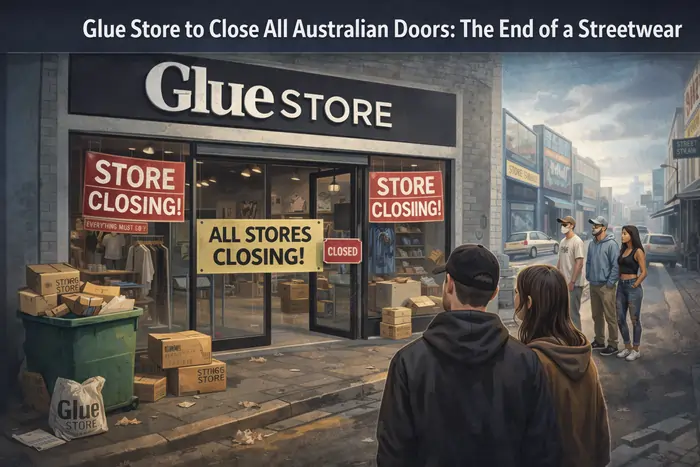
After nearly three decades in business, Glue Store is set to close all of its remaining Australian doors, marking the end of one of the country’s best-known youth streetwear chains. Parent company Accent Group has confirmed that the business will be wound down or sold, with all 16 remaining stores to shut by the end of the 2026 financial year after the chain posted multi‑million‑dollar losses.
Overview of Glue Store’s Shock Closure
The closure announcement landed via an ASX trading update and was quickly picked up by major outlets, with headlines noting that Glue Store will “close all shops across Australia” after recording an EBIT loss of about AU$8.4 million in the first half of FY26. Accent Group described the business as “no longer profitable,” confirming it would cease operations and either close or sell the remaining stores.
For many Australian shoppers, this news signals more than just another retailer exiting the market—it feels like the end of a streetwear icon that helped define youth style for a whole generation. Social posts sharing that “after nearly 28 years in business, popular Aussie fashion chain Glue Store will shut its remaining stores” captured the shock and nostalgia spreading through Glue’s loyal customer base.
Coverage from sites like Yahoo Finance Australia and 7NEWS outlines the financial and strategic details behind the decision.
How Glue Store Became an Australian Streetwear Staple
Founded in the late 1990s, Glue Store built its reputation as a go‑to destination for youth fashion, mixing global streetwear labels with denim, sneakers and a growing stable of in‑house brands. Long before “streetwear” became mainstream, Glue positioned itself as a house of brands, curating everything from Nike and Adidas to cult labels like Nobody Denim and emerging Aussie designers.
By the time Accent Group acquired the business in 2021, Glue Store operated around 21 locations and an integrated online store, generating roughly AU$90 million in annual sales and boasting some 500,000 loyalty programme members. The chain’s stores—often located in major shopping centres—became fixtures for teens and young adults looking to buy jeans, hoodies, sneakers and accessories in one hit, with visual merchandising and playlists that reflected a street‑culture aesthetic.
Accent Group’s acquisition announcements in 2021 described Glue Store as “a leading Australian youth apparel, shoe and accessory retailer offering an aspirational range spanning global street, fashion and sport cultures.” Articles like “Accent Group to acquire Glue Store and Next Athleisure” emphasised the strategic fit in the youth market.
The Business Behind the Decision to Shut Doors
Despite its strong brand recognition, Glue Store’s recent financials told a different story. In its half‑year FY26 update, Accent Group disclosed that Glue recorded an EBIT loss of AU$8.4 million, including provisions associated with closing the chain. The group also recognised impairment charges against Glue’s retail stores, writing down assets as performance deteriorated and future profitability looked unlikely.
Accent Group—known for banners such as Dr. Martens, Platypus, The Athlete’s Foot, Hype DC and others—has been reshaping its store portfolio, closing underperforming concepts like Glue while expanding what it calls higher‑potential brands. Its trading statement made the situation clear: “The company has made the decision to cease the operations of Glue Store… the business will be wound down or sold.”
All 16 remaining Glue stores are slated to be closed or transitioned by the end of the fourth quarter of FY26, affecting staff across multiple states and territories. Reports from Ragtrader and other trade publications detail how Glue’s mounting losses, asset impairments and inventory write‑downs ultimately pushed Accent to exit the business.
Timeline: From Growth to Closure
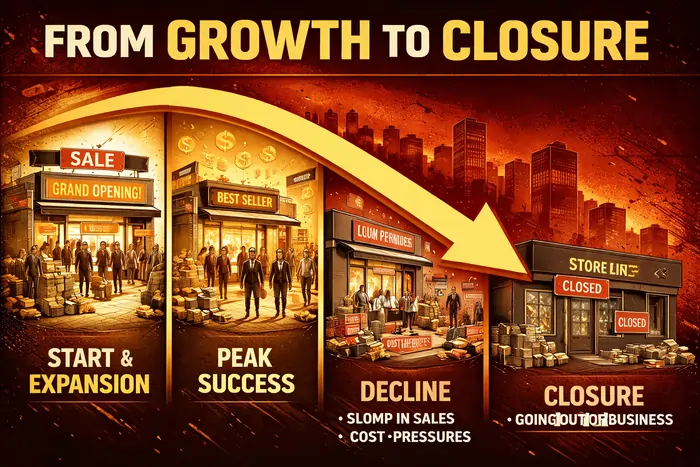
Glue Store’s trajectory over the last five years shows a rapid shift from growth asset to exit candidate. Before the Accent acquisition, Glue operated about 21 stores and had ambitions to grow its youth lifestyle footprint across Australia and New Zealand. In 2021, Accent presented the deal as a springboard to accelerate its apparel strategy, bringing Glue and Next Athleisure’s wholesale brands under a new “Accent Lifestyle” division.
However, by 2024, the store count was already shrinking. Accent Group closed around 17 underperforming Glue stores that year, halving the network and focusing on 16 locations it expected to be profitable. Those hopes didn’t materialise: in FY26, the remaining stores still underperformed, leading to fresh losses and an impairment test that ultimately triggered the decision to exit entirely.
According to Accent’s statements, all 16 remaining stores will be closed or transitioned by the end of FY26, with closing‑down sales now advertised both online and in‑store. A social update shared widely on Facebook summed up the moment: after nearly 28 years, Glue Store, once a staple in Aussie shopping centres, is preparing to shut its doors for good.
Why Glue Store Struggled in Today’s Retail Landscape
Glue Store’s difficulties reflect broader pressures facing mid‑tier fashion chains in a tough retail environment. On one side, fast fashion giants and global sportswear brands have expanded aggressively, capturing price‑sensitive youth shoppers with constant new drops and heavy marketing budgets. On the other, niche online labels and resale platforms offer highly curated streetwear, appealing to trend‑focused consumers who increasingly shop via Instagram, TikTok and specialty marketplaces.
The youth apparel market in Australia is “highly fragmented,” as Accent itself noted during the acquisition of Glue, with intense competition and rapidly shifting tastes. Rising operating costs—from rents to wages and logistics—have combined with cost‑of‑living pressures that squeeze discretionary spending, making it harder for mid‑priced, mall‑based chains to sustain healthy margins.
Analysts commenting on Accent Group’s broader results have pointed out that while the company has grown total sales and opened 27 new stores across stronger banners, it simultaneously closed 21 underperforming locations, including many Glue outlets. In this context, shutting an “unprofitable” chain to concentrate on banners like Platypus and The Athlete’s Foot can be seen as a rational portfolio move—even if it’s painful for fans of Glue’s streetwear mix.
What Happens to Glue Store’s Brands and Inventory?
A big question for customers is what will happen to the brands and product lines that Glue Store carried. Historically, Glue acted as a house of brands, stocking marquee names such as Nike, Adidas, Carhartt and The North Face alongside Australian labels and vertical brands from the Next Athleisure portfolio. Owned labels like Nude Lucy, Beyond Her, Lulu & Rose and Article One made up more than 25% of Glue’s sales at the time of Accent’s acquisition.
As the chain winds down, Accent’s update indicates two pathways: stores will either close or be transitioned, and the business as a whole will be “wound down or sold.” In practice, that means:
- Closing‑down sales: Glue’s online sale pages and in‑store signage already promote significant discounts as inventory is cleared, giving shoppers a last chance to grab streetwear and sneakers at reduced prices.
- Brand redistribution: Many of the global brands stocked by Glue already appear in other Accent banners (for footwear) or could be absorbed into other apparel concepts or wholesale channels.
- Future of vertical labels: Vertical brands like Nude Lucy and Beyond Her, which sit within Accent’s broader portfolio via Next Athleisure, are likely to continue through other retail or online channels, even if the Glue Store banner disappears.
Trade coverage such as Shopping Centre News’ report on the acquisition and Just Style’s summary provides useful context on how those brand rights are structured.
The End of a Streetwear Era for Australian Youth
Beyond balance sheets, Glue Store’s closure hits a cultural nerve. For many Australian teens and young adults, visiting Glue at their local Westfield or high‑street centre was a rite of passage: a place to buy their first “proper” jeans, sneakers or festival outfits with friends. The chain’s marketing leaned heavily on music, skate and street culture, positioning it as more than just another clothing store.
Reaction on social media has mixed sadness with nostalgia. Posts circulating on Facebook and Instagram talk about Glue as “a popular Aussie fashion chain” and “youth fashion staple,” sharing memories of shopping there in the 2000s and 2010s. Some users on forums like r/AustralianMFA had already noted in recent years that Glue felt squeezed between fast fashion and more directional streetwear stores, but its sudden exit still feels like the closing of a chapter in Australian retail.
In that sense, “the end of a streetwear icon” is less about the legal entity and more about what Glue represented—a mass‑market gateway into streetwear for suburban shoppers who didn’t necessarily have access to niche boutiques or international drops.
Where Will Aussie Streetwear Fans Shop Now?
With Glue Store gone, Australian streetwear fans will redistribute their spending across a mix of physical and online channels. On the bricks‑and‑mortar side, sneaker‑centric banners within Accent Group—such as Platypus, Hype DC and SUBTYPE—will continue to serve footwear‑focused shoppers, while multi‑brand apparel retailers and department stores cover some clothing categories.
Online, the options are even broader. Dedicated streetwear e‑commerce sites, global platforms that ship to Australia, and resale marketplaces like Depop and Grailed have already become go‑to destinations for younger consumers hunting limited releases or niche labels. Many of the brands Glue stocked—both global and local—maintain their own direct‑to‑consumer websites, giving shoppers the option to buy straight from the source.
Community resources such as this summary of Australian men’s online clothing retailers on Reddit’s r/AustralianMFA highlight just how many alternatives now exist, from budget to premium. For customers who liked Glue’s blend of street, denim and sneakers, the challenge will be rebuilding that curated experience across multiple stores and sites.
As physical chains like Glue Store close, more youth fashion spending will inevitably flow through e‑commerce, brand apps, resale platforms, and social‑commerce channels, reflecting a wider shift toward mobile‑first shopping behavior. For a broader look at how this is playing out across industries, this breakdown of mobile app economy trends 2026 shows how apps, in‑app purchases, and embedded marketplaces are reshaping where and how consumers discover brands, compare prices, and complete purchases.
What Glue Store’s Closure Tells Us About Retail in 2026
From a retail strategy perspective, Glue Store’s shutdown illustrates how difficult it has become for mid‑market fashion banners to survive unless they have a very sharp proposition or deep pockets. Accent Group’s FY26 commentary emphasised that it is “reshaping its store portfolio” by closing loss‑making Glue stores while opening 27 new outlets for higher‑potential banners, effectively reallocating capital to where returns are stronger.
The case also underlines how acquisitions don’t always deliver the long‑term growth story originally envisioned. When Accent bought Glue and the Next Athleisure wholesale business in 2021 for AU$13 million, the deal was hailed as a way to accelerate its presence in the lifestyle and youth apparel market. Within five years, the same chain is being wound down as the group leans into other formats and brands that better fit current conditions.
More broadly, Glue’s demise speaks to 2026 retail trends: consolidation around strong brands, the rise of direct‑to‑consumer and digital‑first players, and the increasing difficulty of operating large mall‑based apparel networks without a truly distinctive identity or pricing edge. For other youth‑focused retailers, the lesson is clear—be laser‑focused on your core customer, channel mix and economics, or risk being squeezed out.
Final Thoughts: Remembering Glue Store’s Legacy
Glue Store’s closure closes a significant chapter in Australian retail and youth culture. For almost three decades, it served as an accessible entry point into streetwear, offering a blend of global labels and local brands under one roof, long before “sneaker culture” and hype drops became mainstream buzzwords. Its stores were part of the backdrop of adolescence for many Australians, from after‑school mall trips to last‑minute festival outfit runs.
While the financial logic behind Accent Group’s decision is clear—sustained losses, underperforming stores and better returns elsewhere—the emotional impact on long‑time customers is harder to quantify. As Glue Store signs come down across the country and closing‑down sales empty the shelves, what remains is a legacy: the memory of a chain that helped bring streetwear into the mainstream for a generation of Aussie shoppers.
In the end, “the end of a streetwear icon” doesn’t mean the end of streetwear itself in Australia, but it does mark a changing of the guard. Other retailers, platforms and brands will fill the gap—but for many, there will always be a soft spot for the old Glue Store logo glowing at the entrance of their local shopping centre.